Doing It Yourself
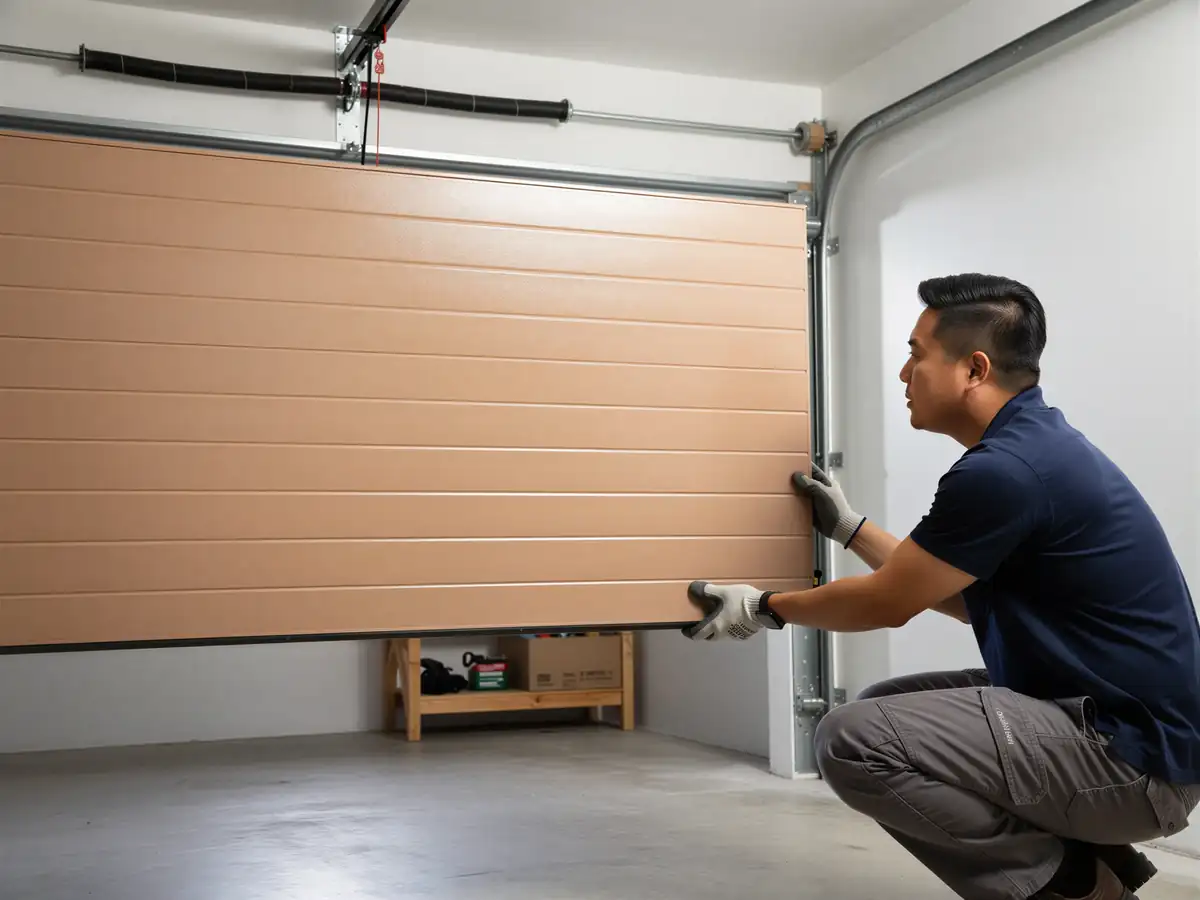
A torsion spring holds enough stored energy to break a finger or worse if it lets go while you're working on it, and on a house built around 1985 like most of Yorkshire's stock, that spring has had close to forty years to fatigue. We won't walk you through winding one down over the phone - that's the one job in this trade we tell people flat out not to attempt without the right bars and a winding cone that fits. If your door has two springs and only one broke, you can sometimes get by lifting the door manually for a day or two, but don't run the opener on a single working spring; it strains the opener's drive gear and the remaining spring unevenly, and now you're paying for two repairs instead of one. If you're comfortable popping the plastic end caps off the spring to check the wind direction before we get there, that's useful information for us. Past that, leave the bar work to someone who does it daily. We'd rather talk you out of a mistake than show up to fix a hand injury along with the door.
How We Fix It
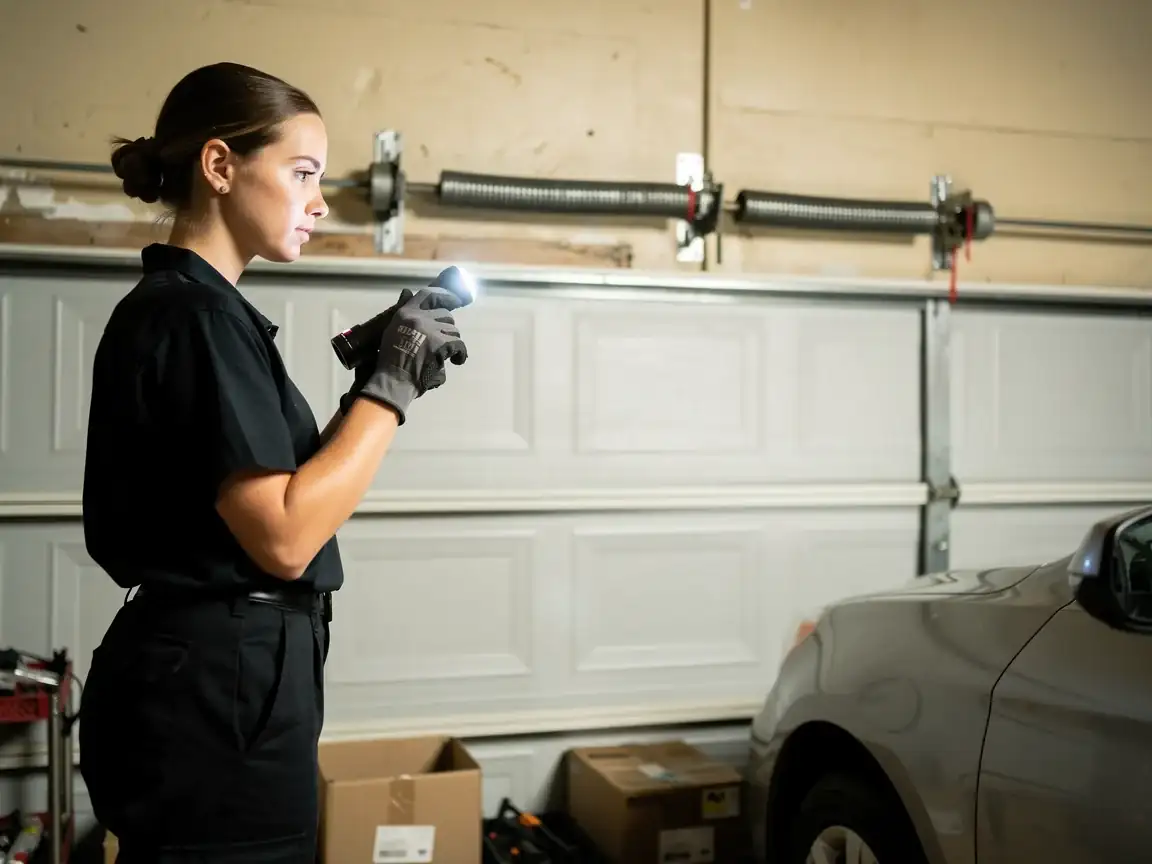
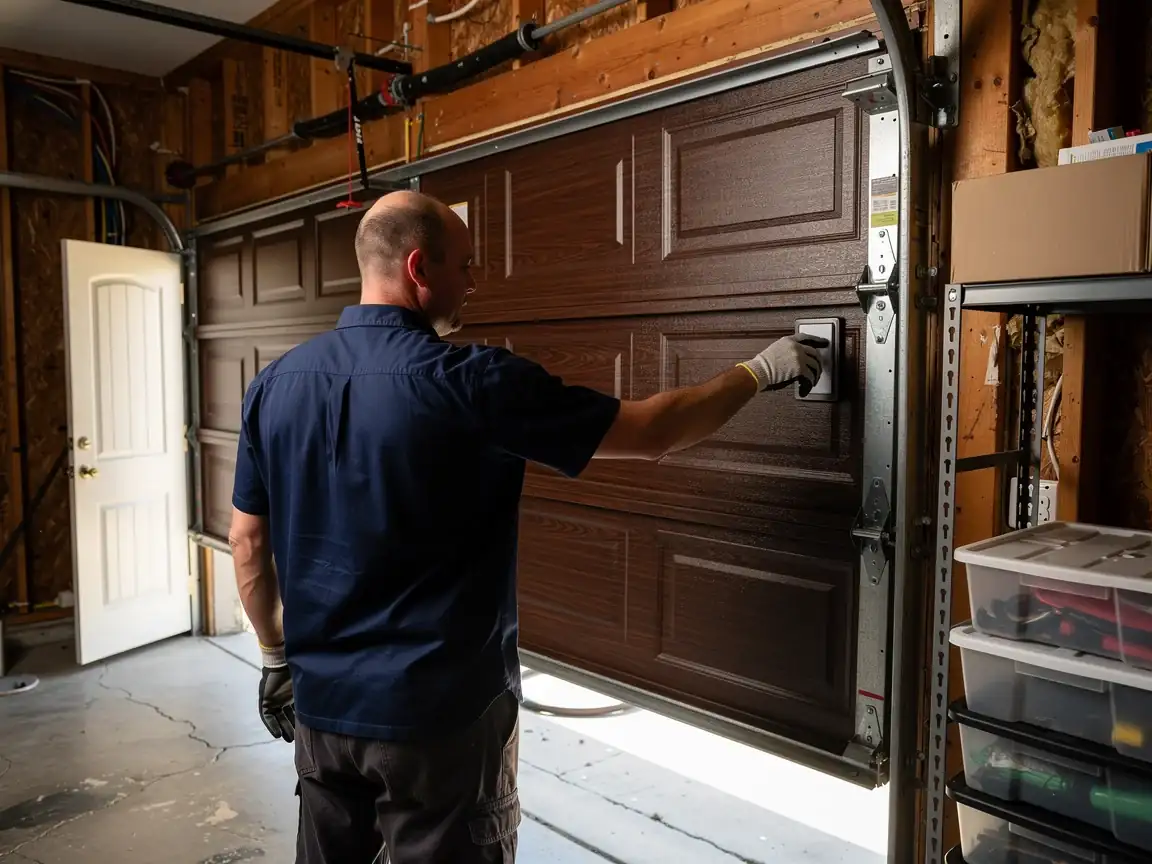
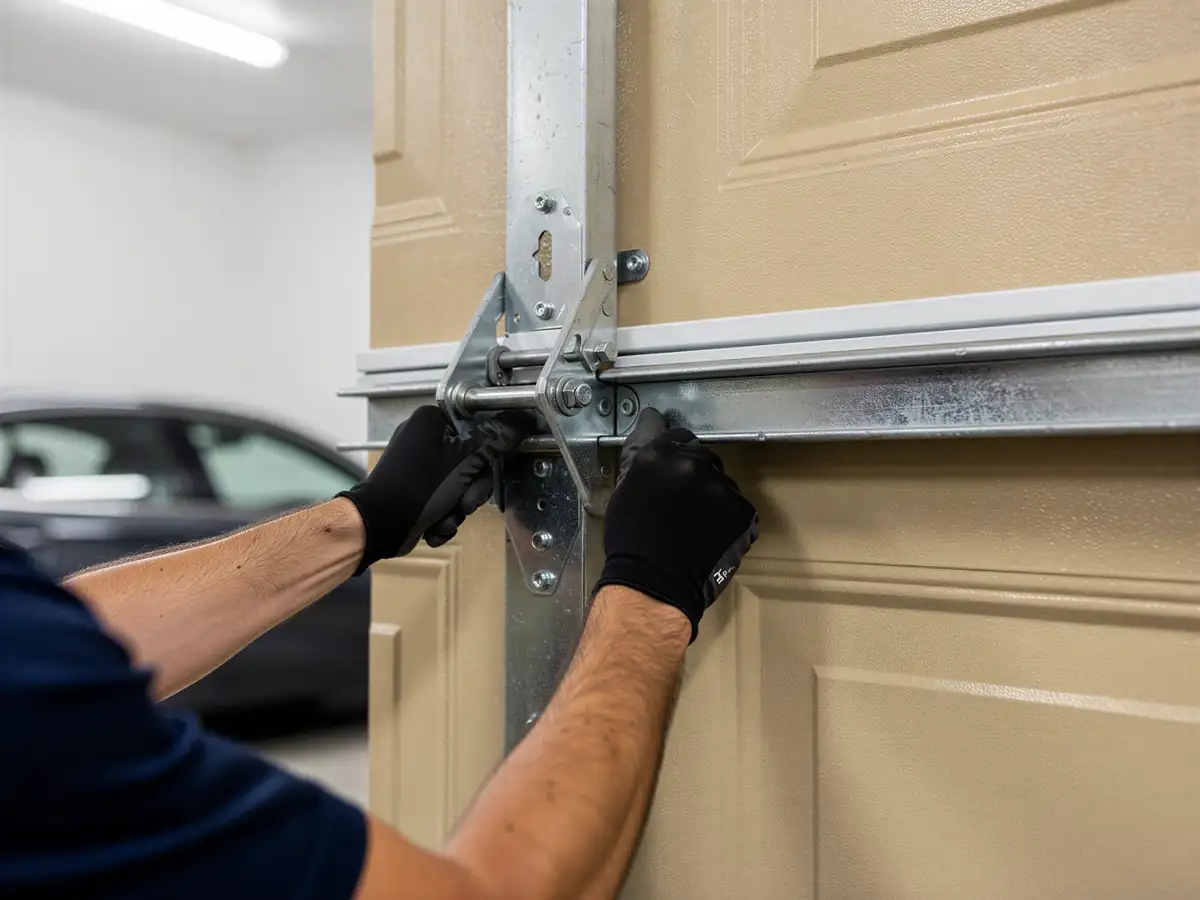
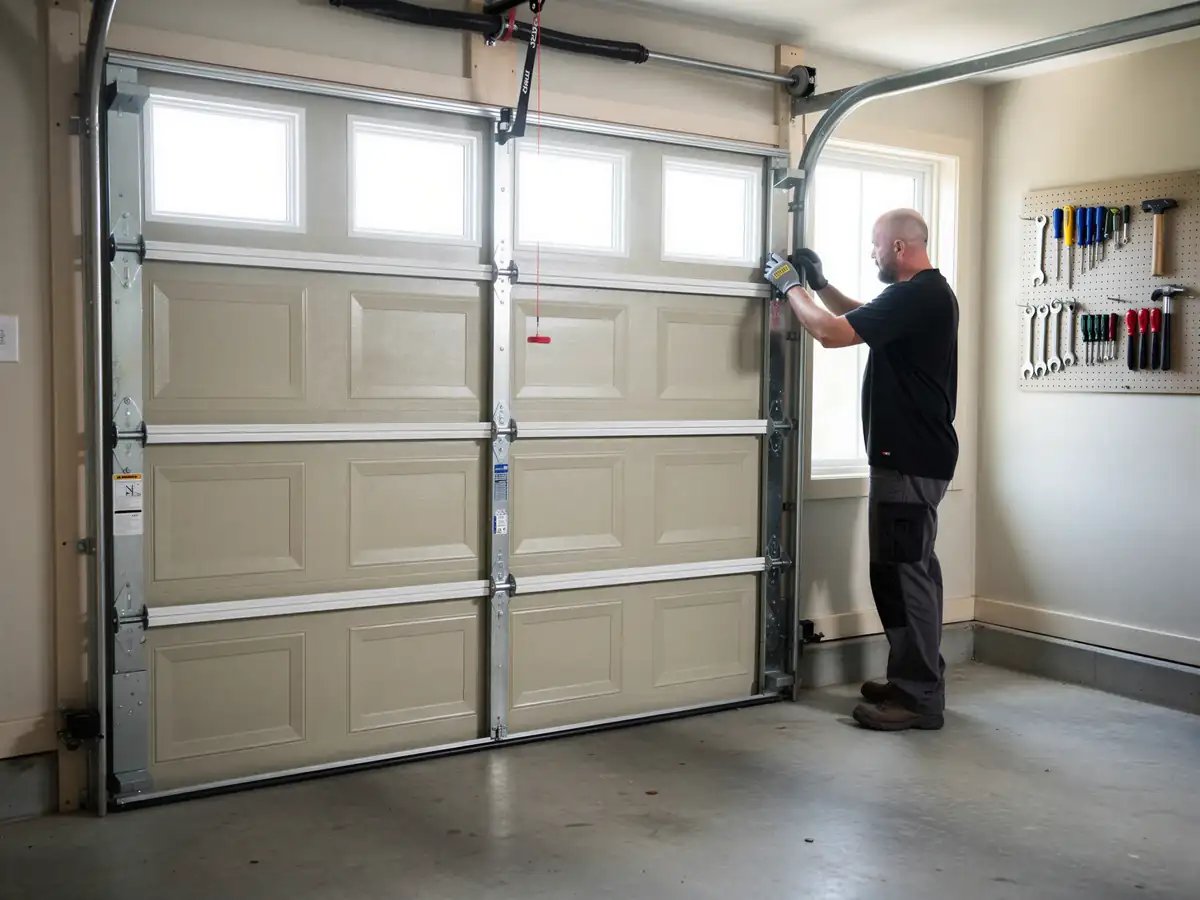
We come out from Gainesville, about 10 miles up the road, with torsion springs sized to the shaft and drum setup common on doors from the early-to-mid 1980s build era - that's most of what's on the ground in Yorkshire. We check the spring's wire gauge, inside diameter, and wind length against the door's weight rather than guessing off the old spring's label, because a mismatch like that is what makes a replacement spring die early instead of lasting. We unwind the broken spring, pull the cable drums to inspect for wear grooves, lubricate the track rollers while the door's open, and test the balance by hand once the new spring is in place - a correctly balanced door should hold at waist height on its own. If the bearing plate at the center is worn out from four decades of cycles, we'll say so and replace it in the same visit rather than leaving a new spring on an old bearing.
What You Are Seeing
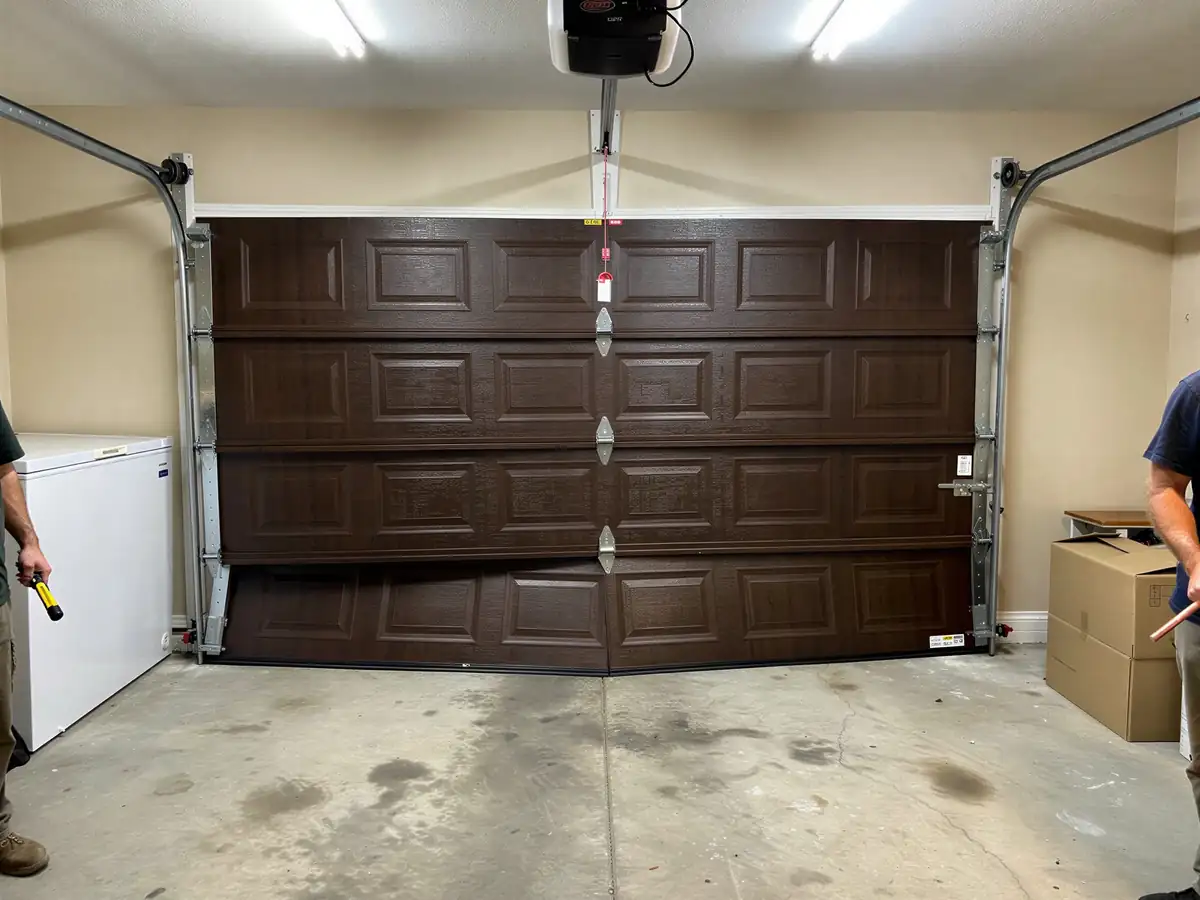
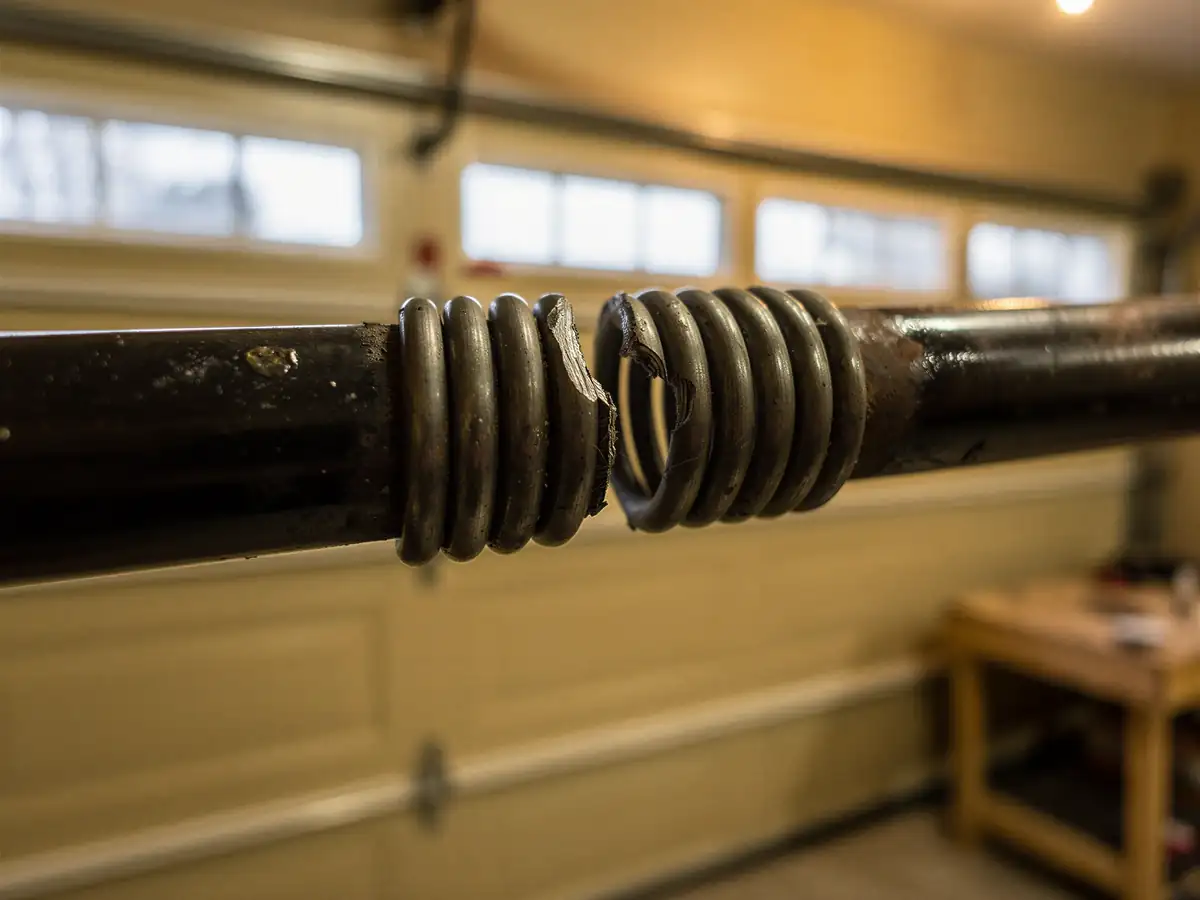
On a door from the mid-1980s build era, the usual sign is the door sounding like it's working harder than it used to - a grinding or straining noise from the opener right before the spring lets go, sometimes a loud bang if it snaps outright. Cold weather makes steel springs more brittle, and this area sits in a cold-winter climate zone, so late fall and deep winter are when we see the most breaks on hardware this old. You might also notice the door won't stay up on its own, or it slams down faster than it used to when you pull the emergency release. None of that means the whole door is bad - on houses built around 1985, the spring is often the first original part to fail because it's the one part that's always under load, even when the door's just sitting shut.