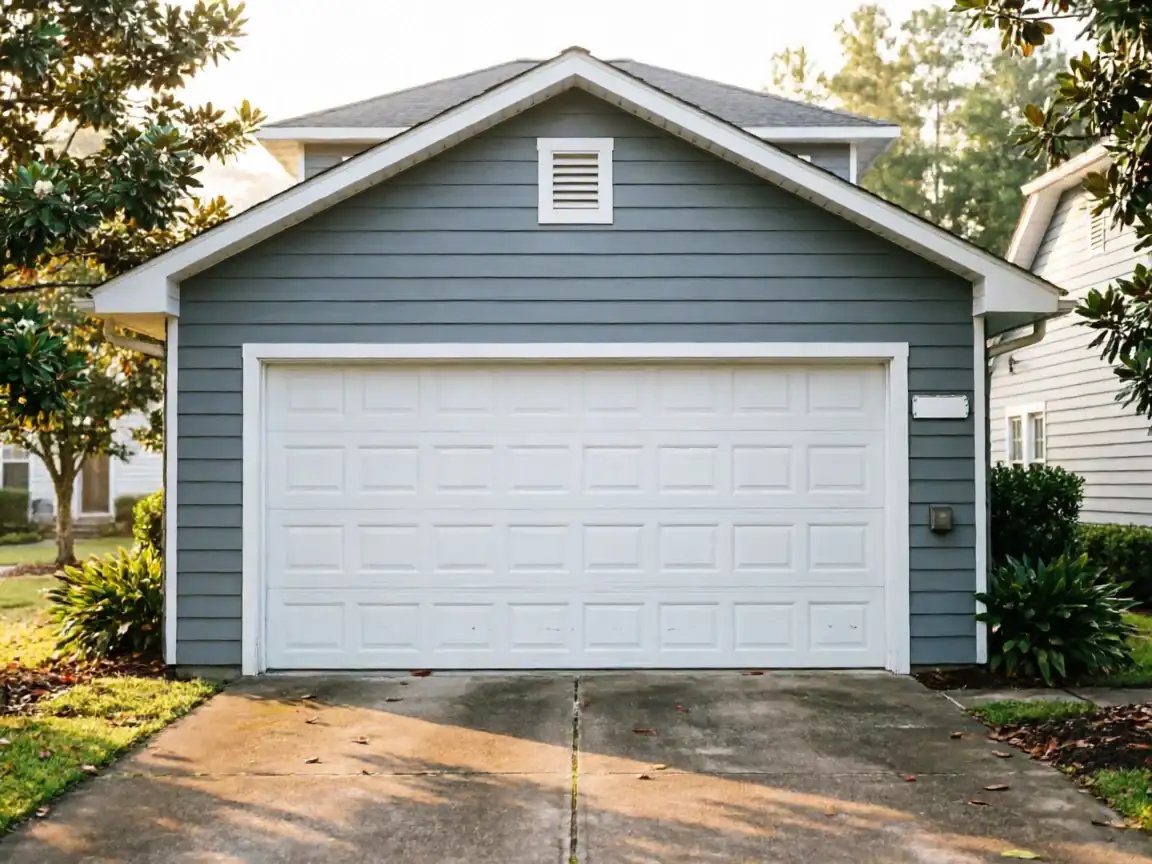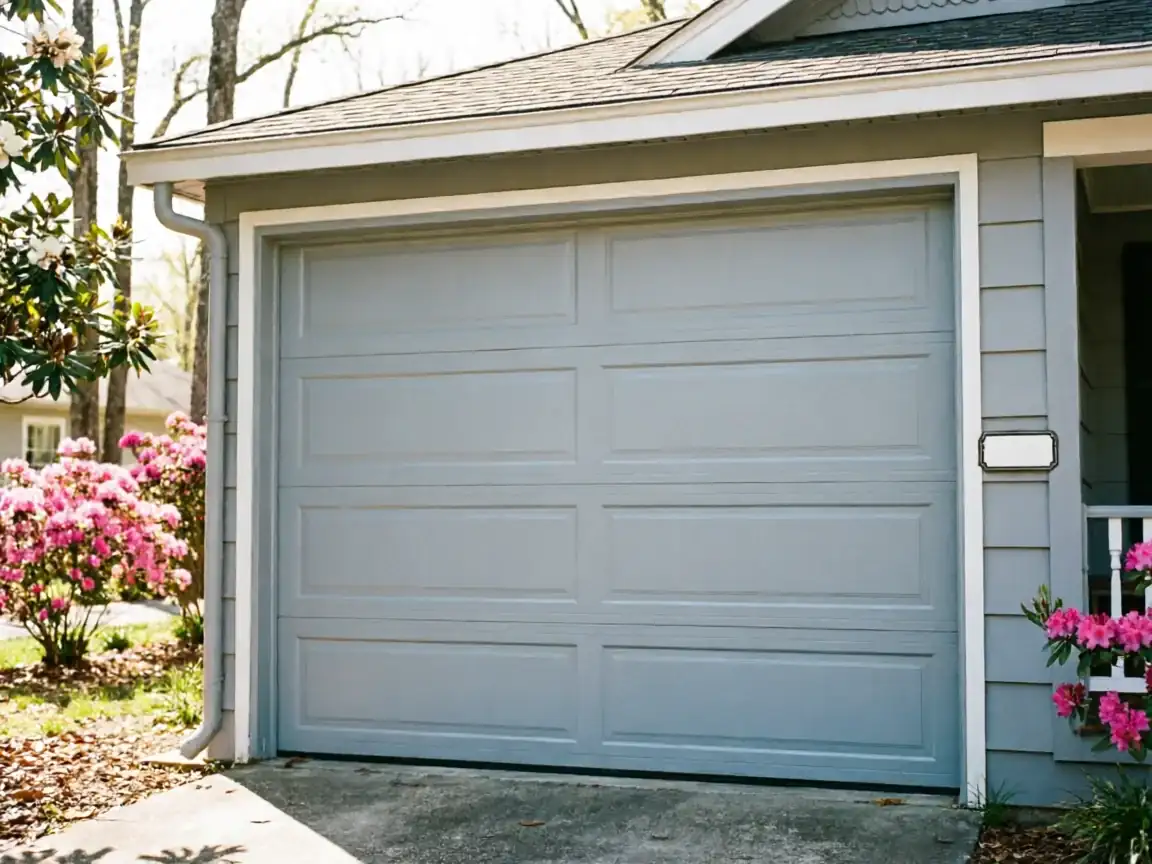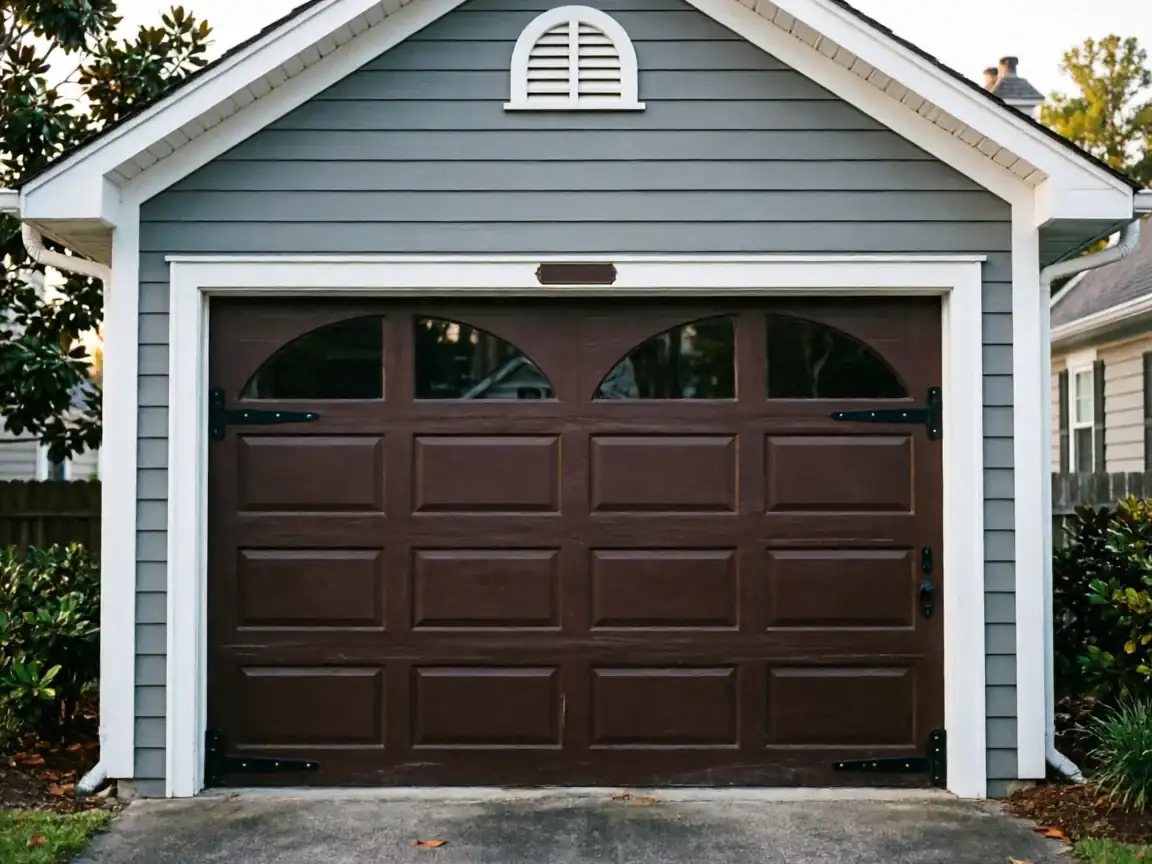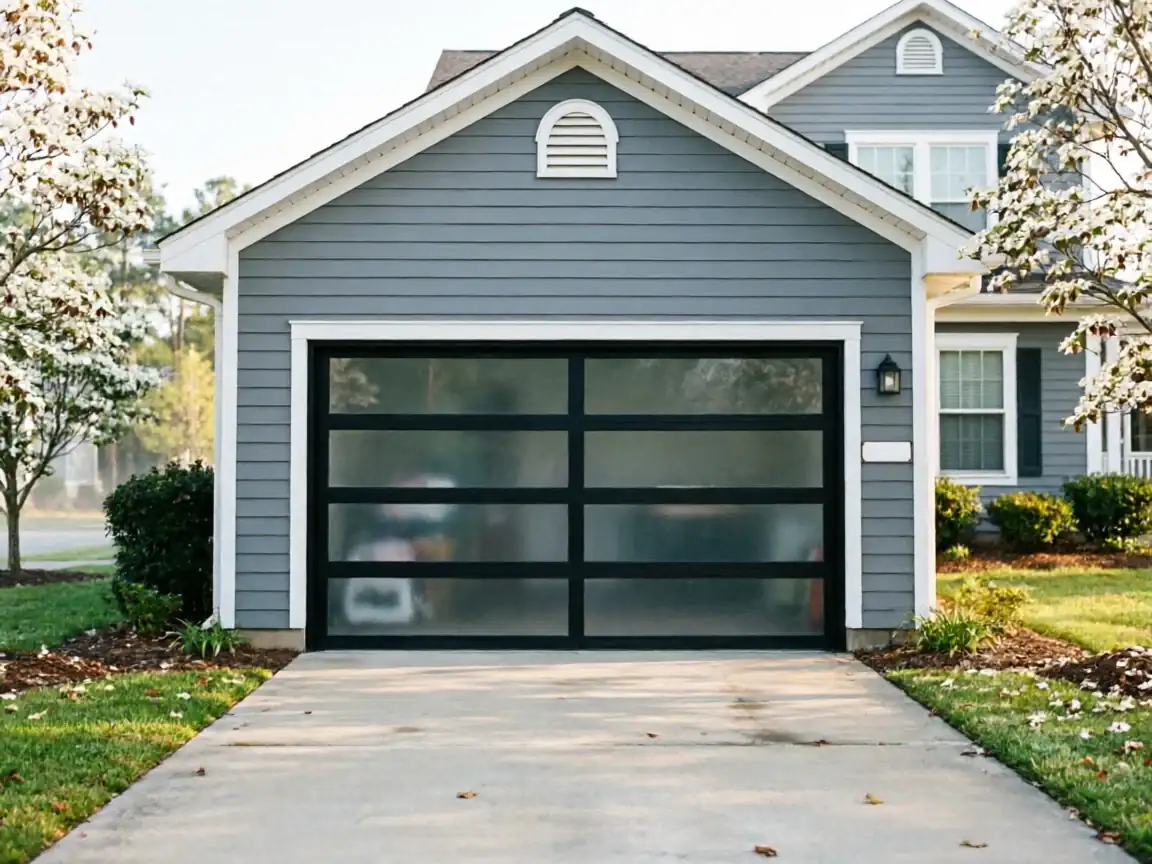
Why This Fails Locally
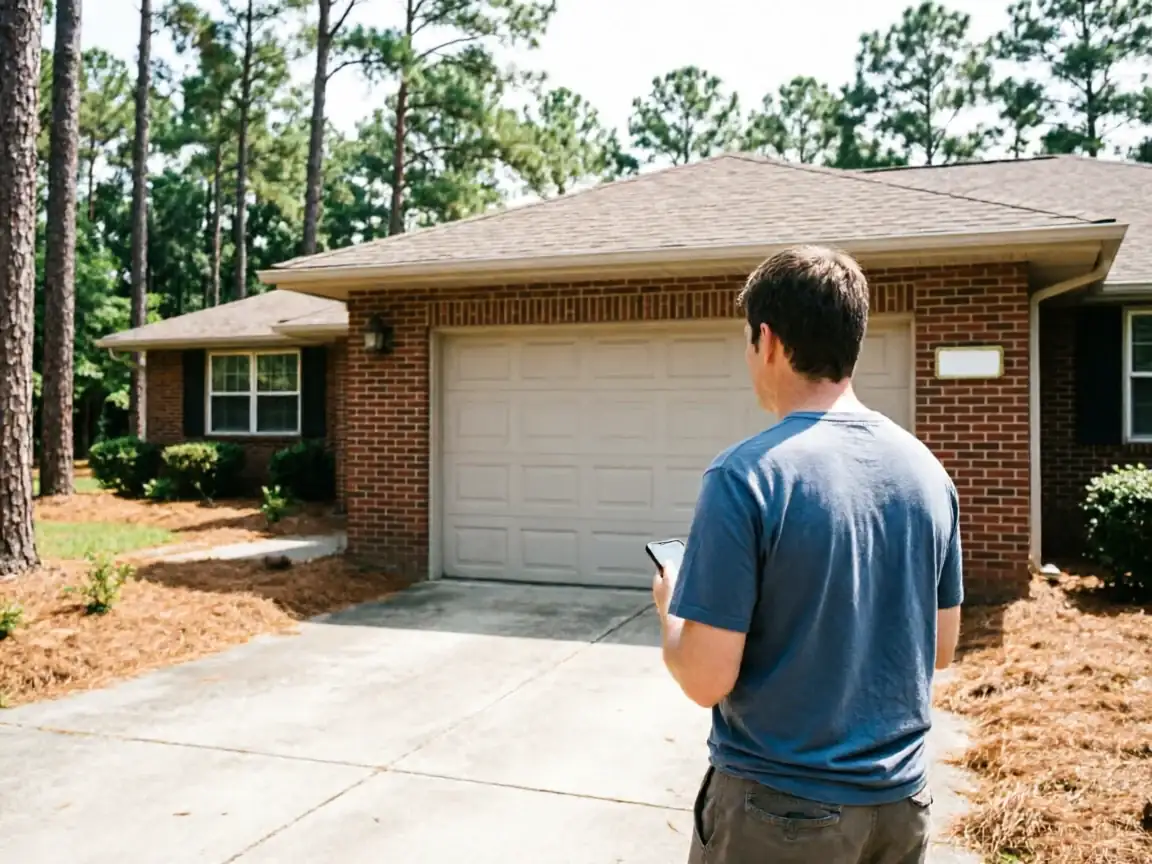
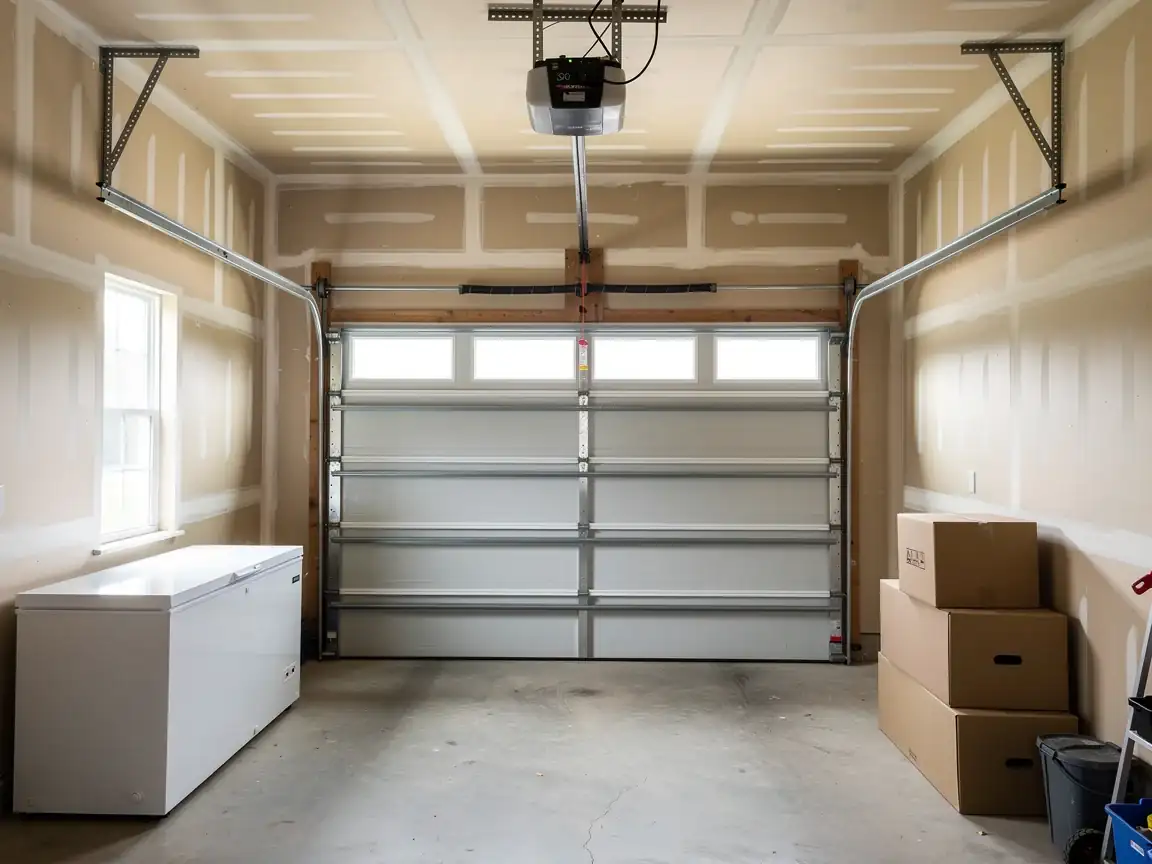
A door comes off its tracks because a roller binds, a bracket bends, or a cable slips its drum, and then one side of the door keeps moving while the other doesn't. In our service area that's not rare. Housing here spans 1938 to 2015 with a median build year of 1982, and most of what we work on falls in the 1980s-90s wave across the 17 named areas we cover. That generation of door came with steel tracks and brackets sized for milder expectations than the winters actually deliver. We sit in a severe cold climate band, and freeze-thaw cycling is what loosens track bolts and warps brackets over the years - not one storm, but repeated contraction and expansion on hardware that's now three or four decades old. A door that's run fine for twenty years can start walking off track the first week temps swing hard. This isn't a defect in any one house; it's what happens when 1980s-vintage track hardware meets a real winter for long enough.
What You Are Seeing
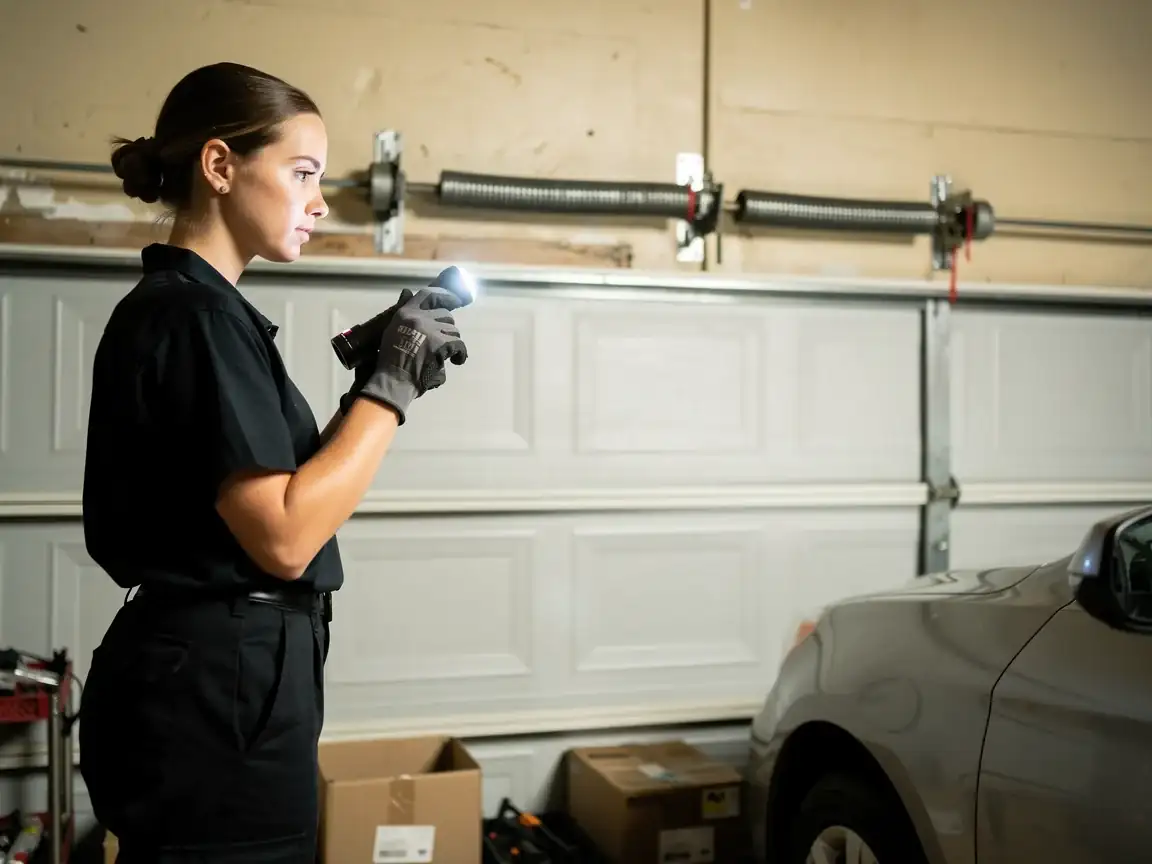
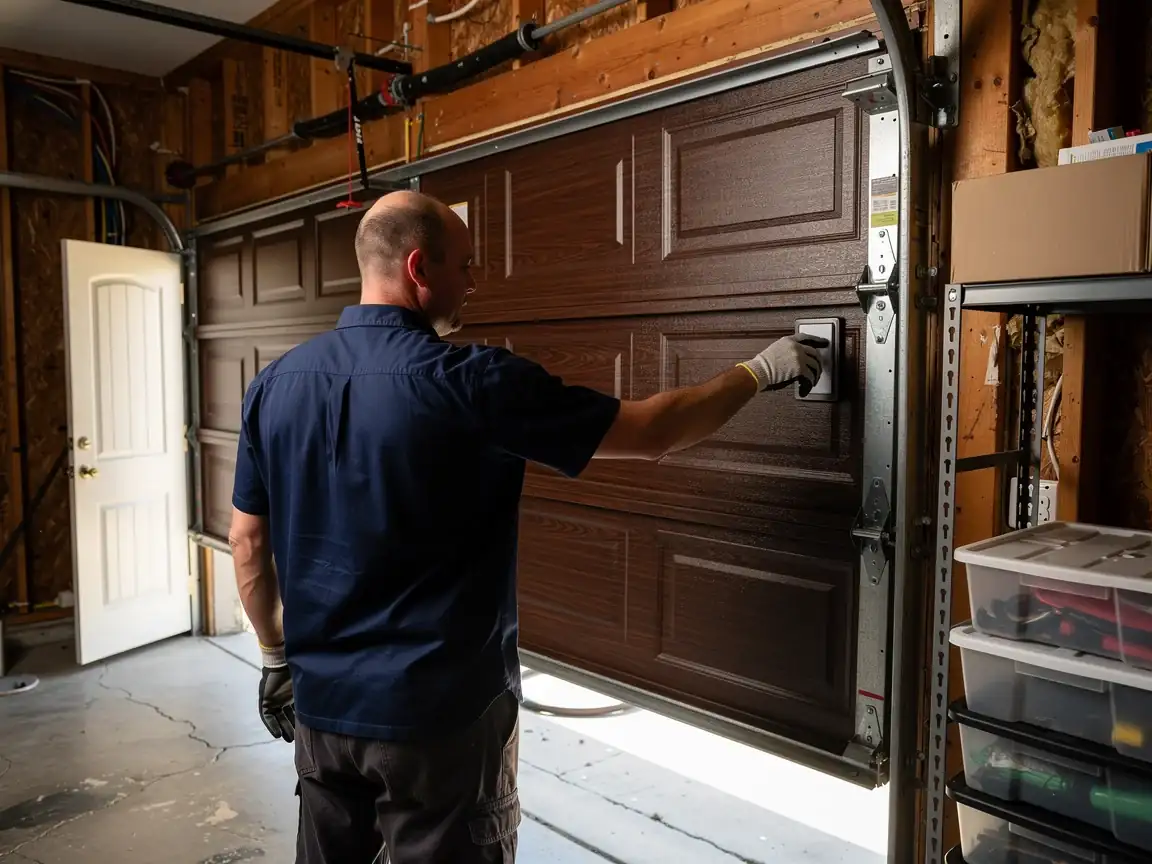
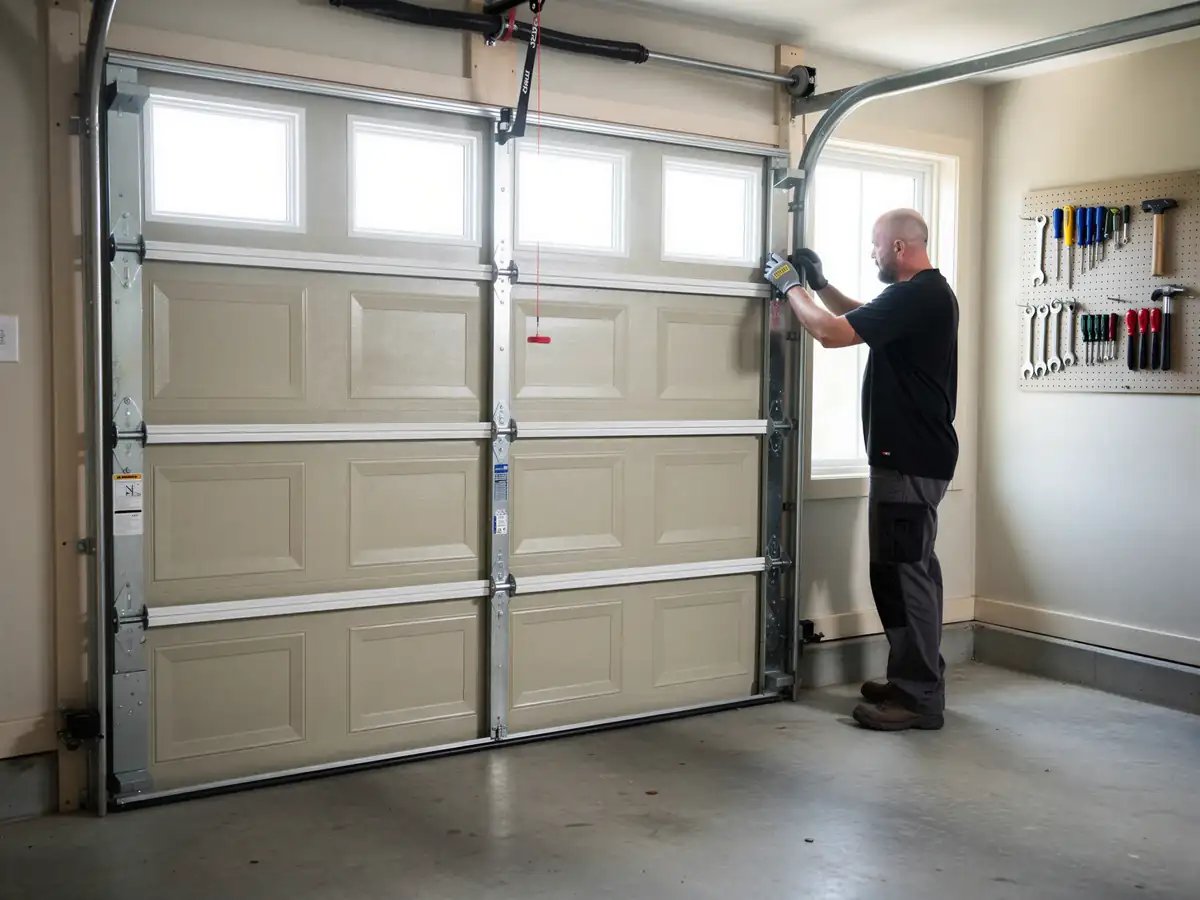
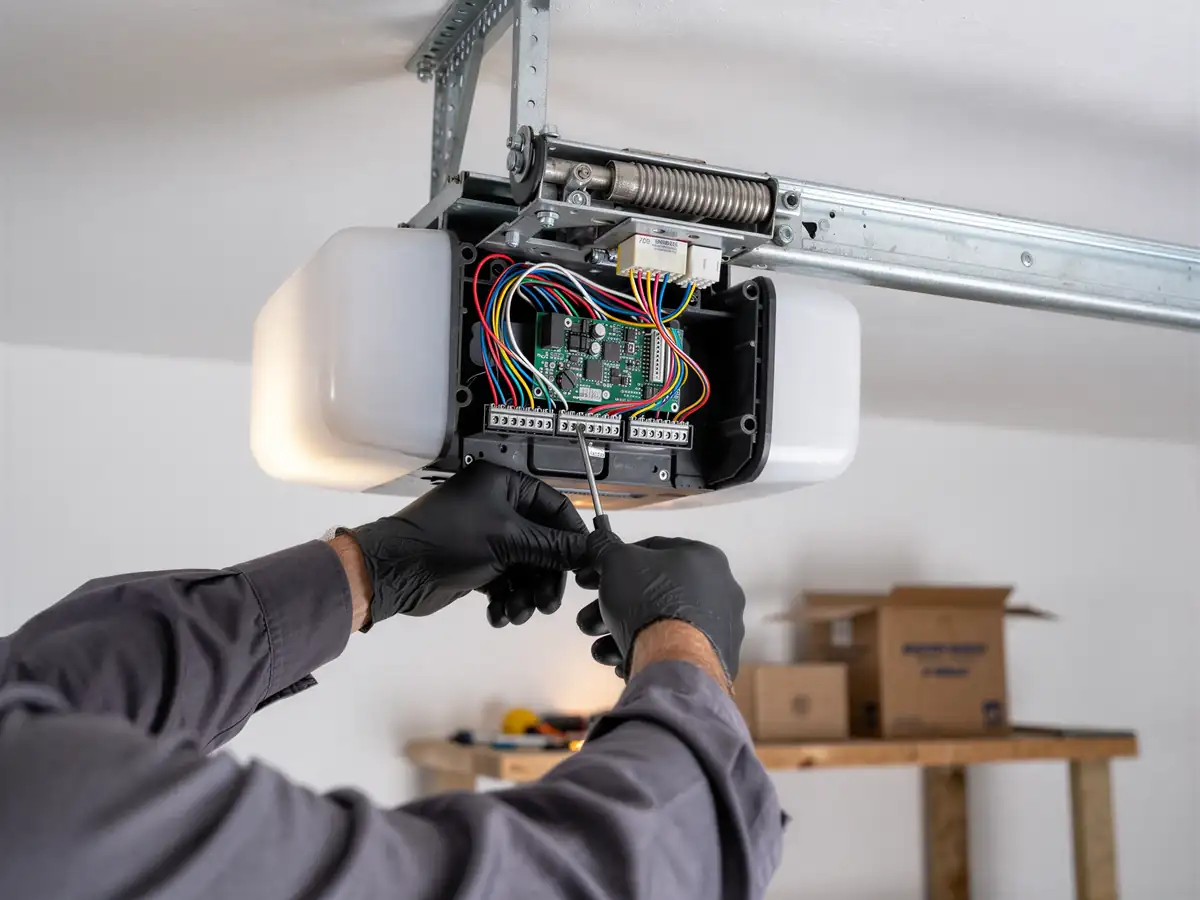
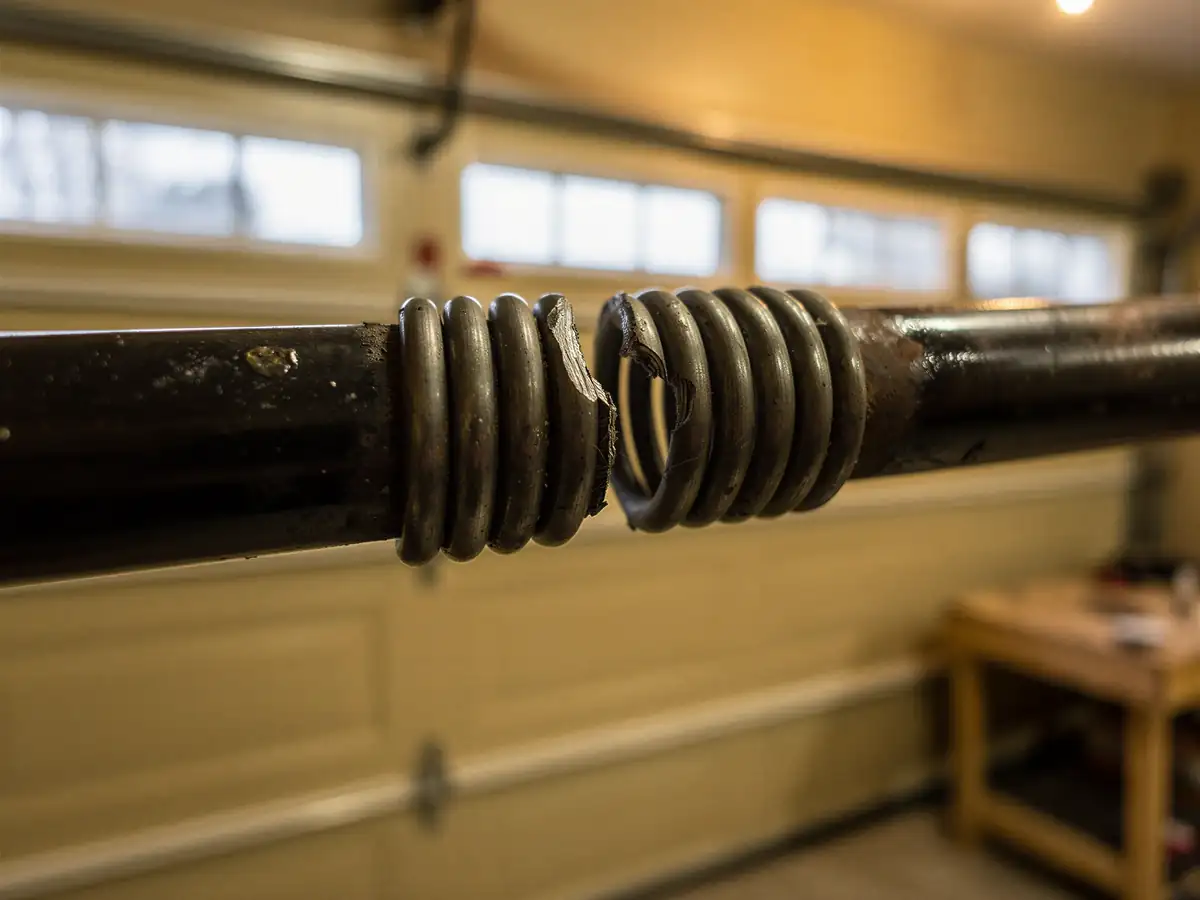
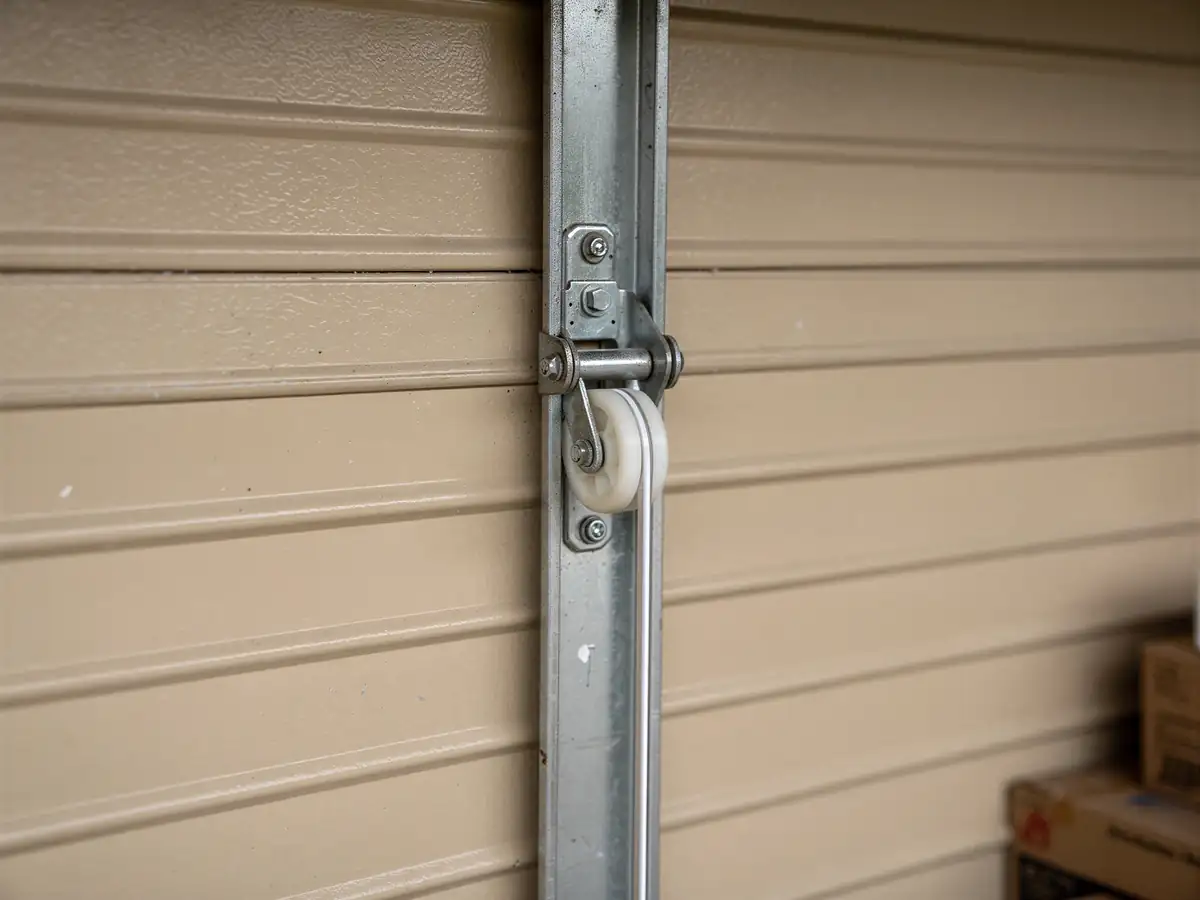
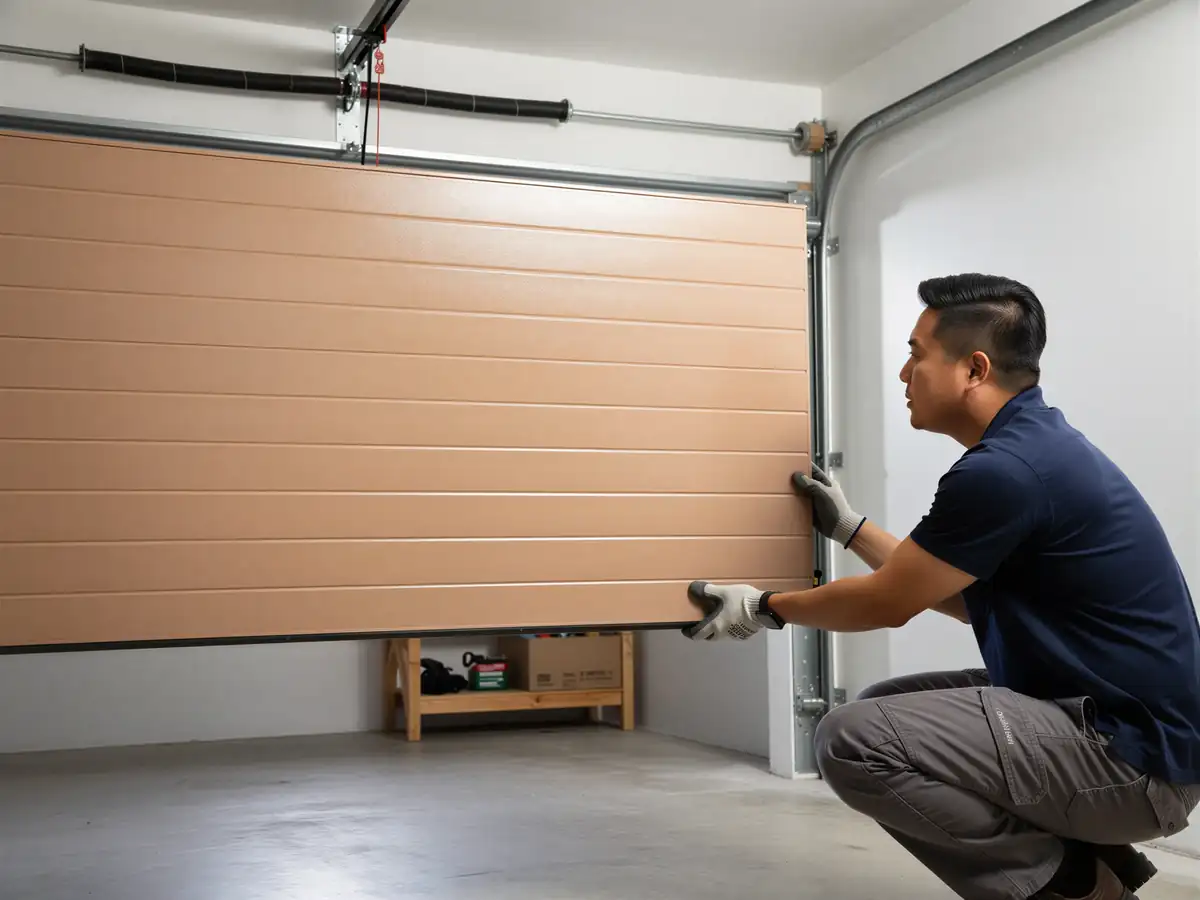
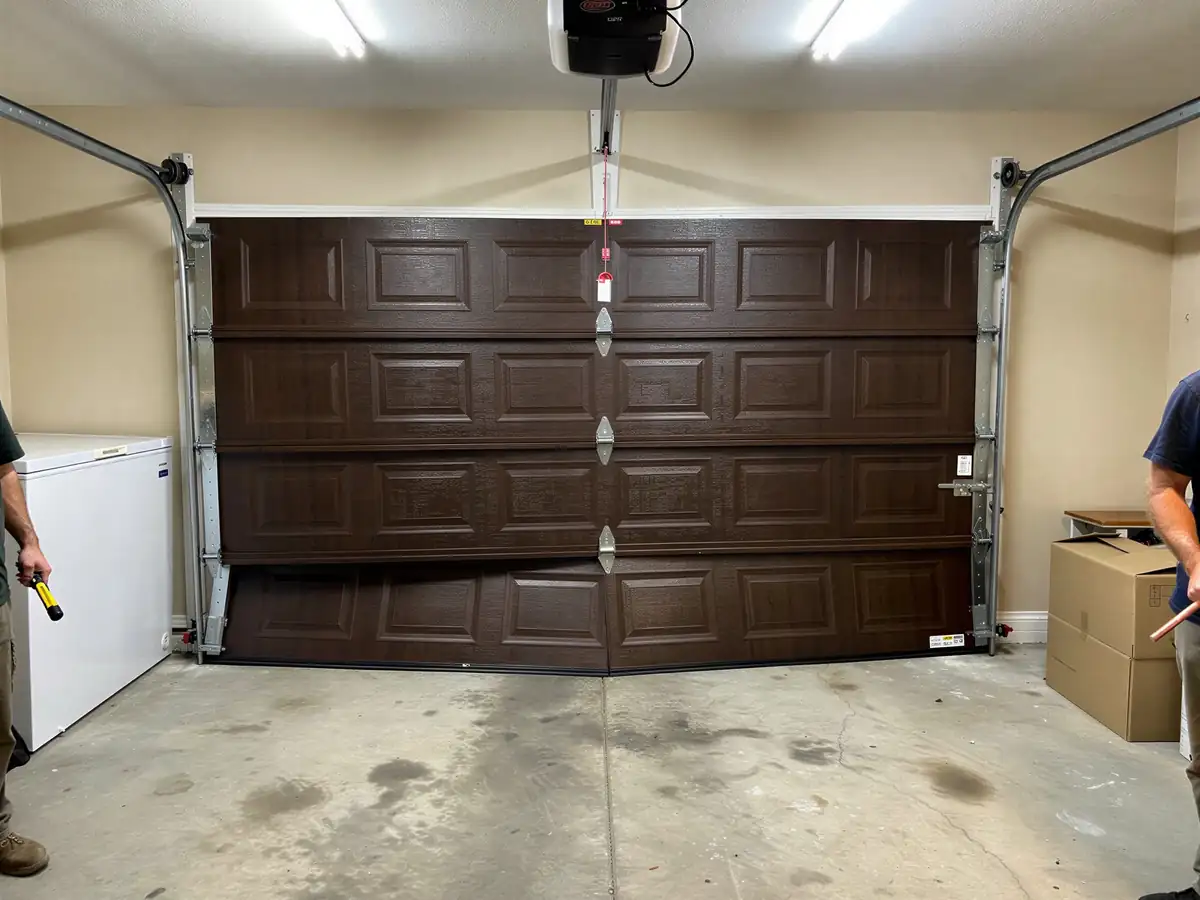
Usually it's one of a few patterns. The door looks crooked in the opening, cocked to one side, or there's a visible gap between a roller and the track on one or both sides. Sometimes the door only runs partway before stopping, because the opener's safety sensor reads the misalignment as an obstruction. On older systems with the original tracks - common in the 1938-2015 housing stock we work across - you'll often find a bent track section near a bracket, usually from an impact (a car bumper, a stored ladder) or from a bracket that worked loose and let the track flex under load. Cold makes it worse: metal contracts, tolerances tighten, and a track that was marginally out of alignment in July can bind hard in January. If the door has come fully off the rollers rather than just riding rough, do not run the opener again. Running a fully off-track door risks bending the track further or cracking a panel, and that turns a track repair into a door replacement.
Stocked Parts
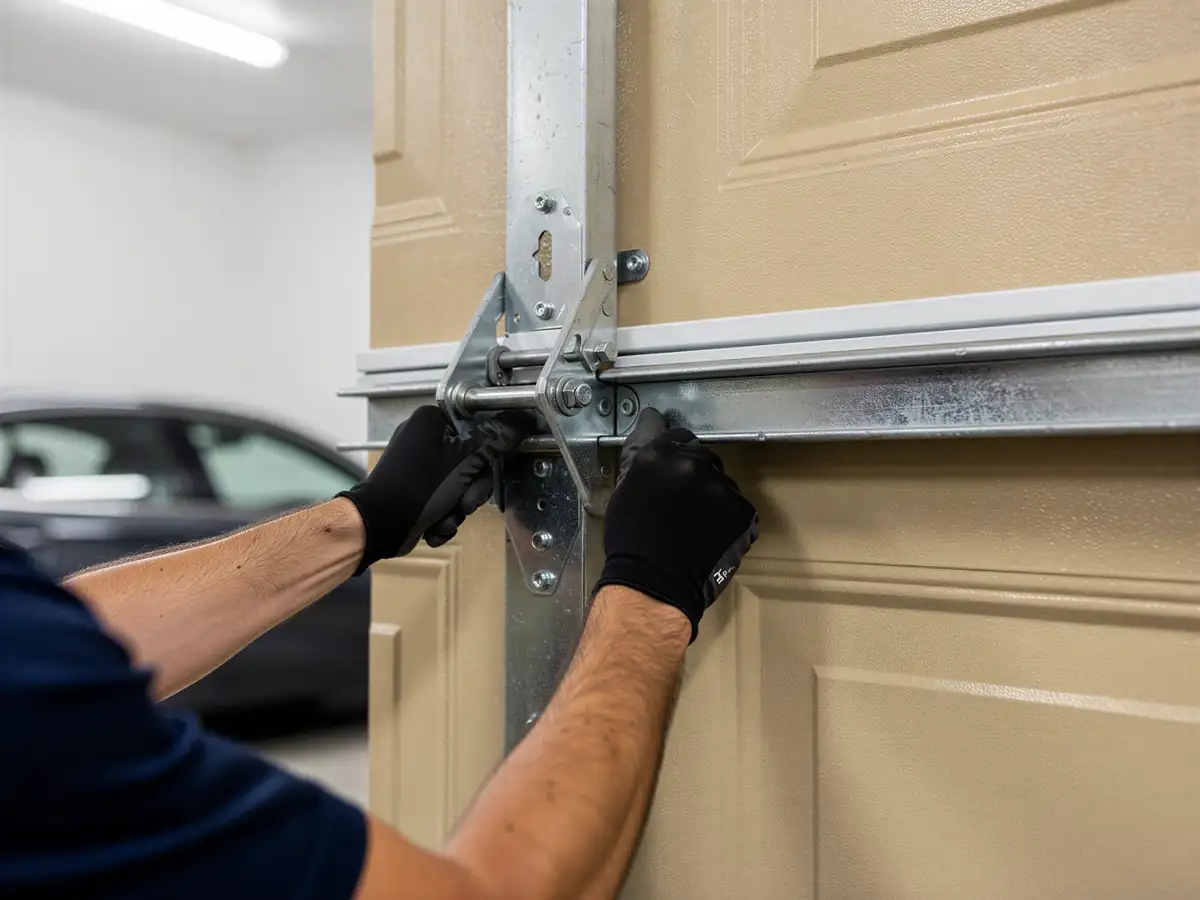
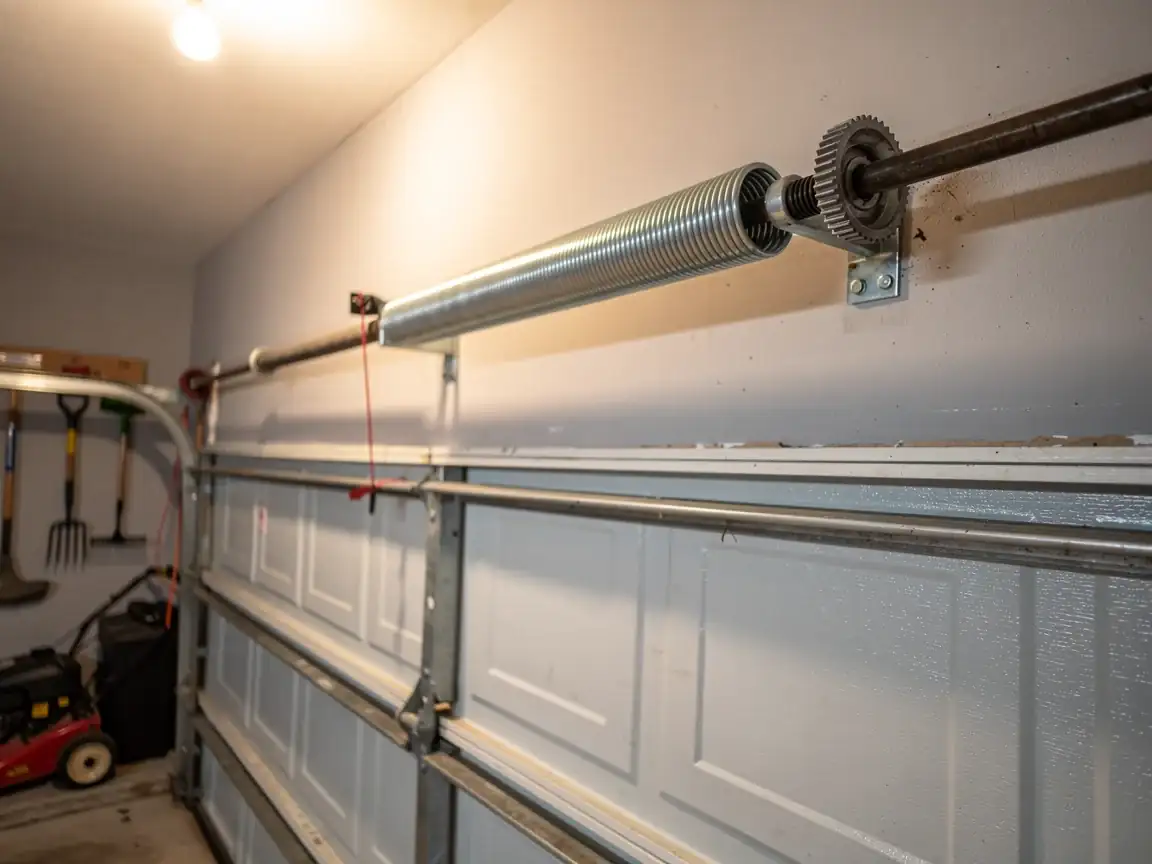
Because off-track calls follow a predictable pattern in homes from the 1980s-90s era that makes up most of our service area, we keep the common fix-it parts on the truck rather than ordering them after we've diagnosed the problem. That means standard track sections, nylon and steel rollers, mounting brackets, and the hardware to reset them into solid framing. What we don't stock on the truck are less common items - certain low-headroom track kits or parts for doors well outside that 1980s-2015 range - and those can mean a short wait while we source them. We'd rather tell you that up front than promise a same-visit fix we can't back up.