Why This Fails Locally
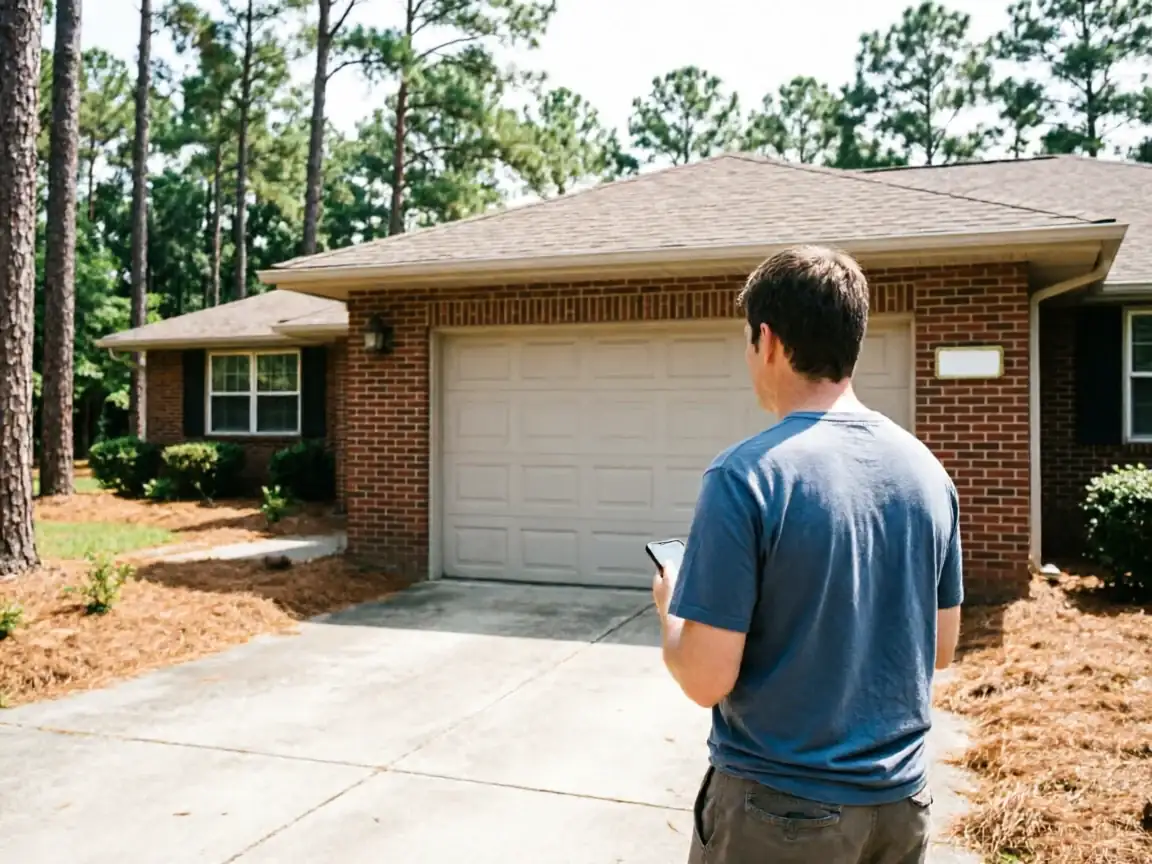
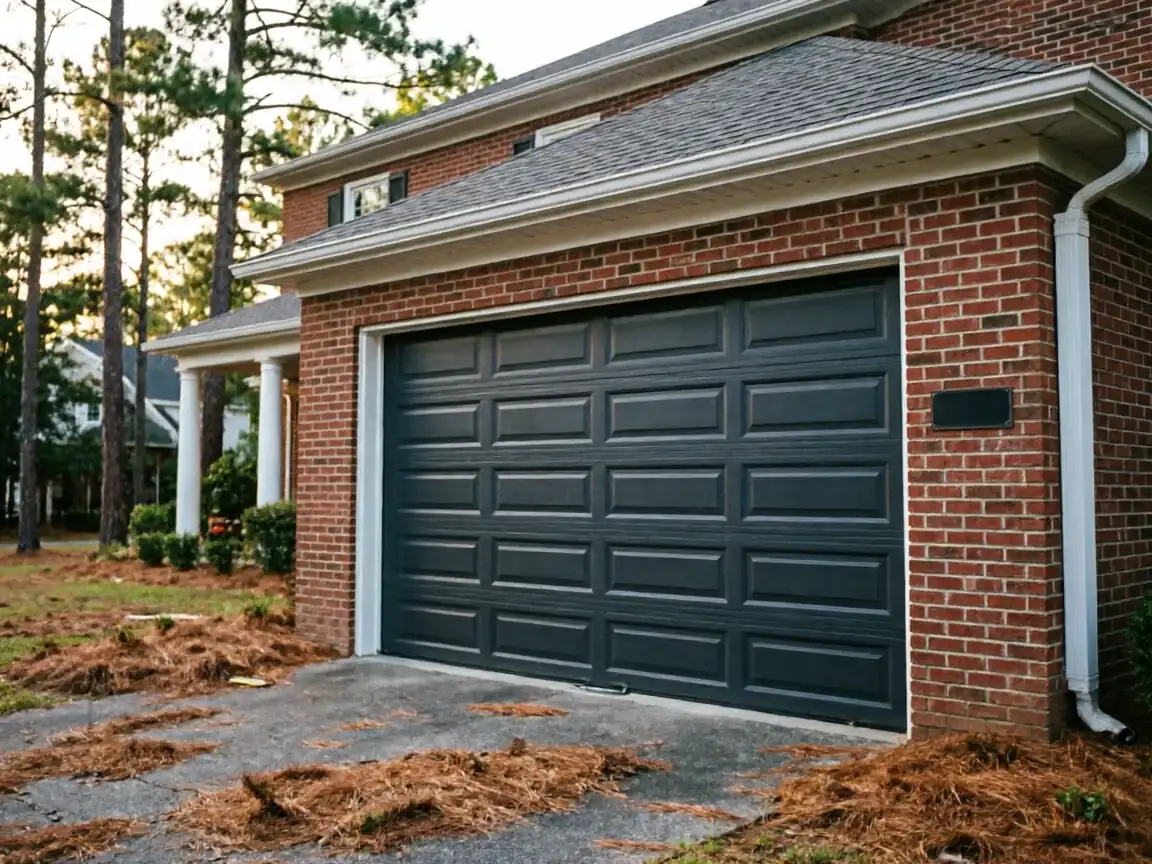
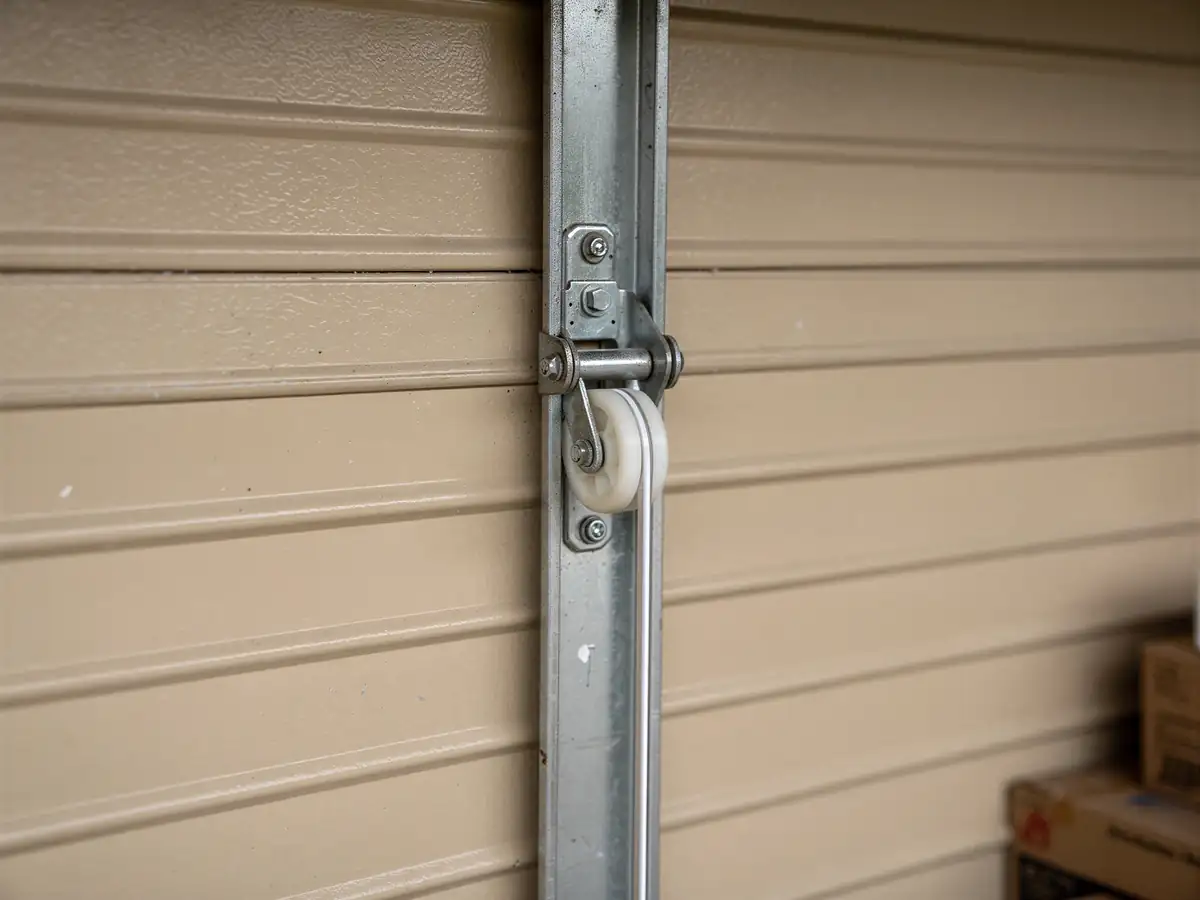
Most of the housing stock across this service area went up between 1938 and 2015, with the median landing around 1982, and the bulk of it clustered in the 1980s and 90s across the 17 named communities we cover. That matters for rollers because doors from that build era shipped with steel rollers on steel tracks, or early nylon rollers without sealed bearings, and thirty-plus years is well past the service life of either.
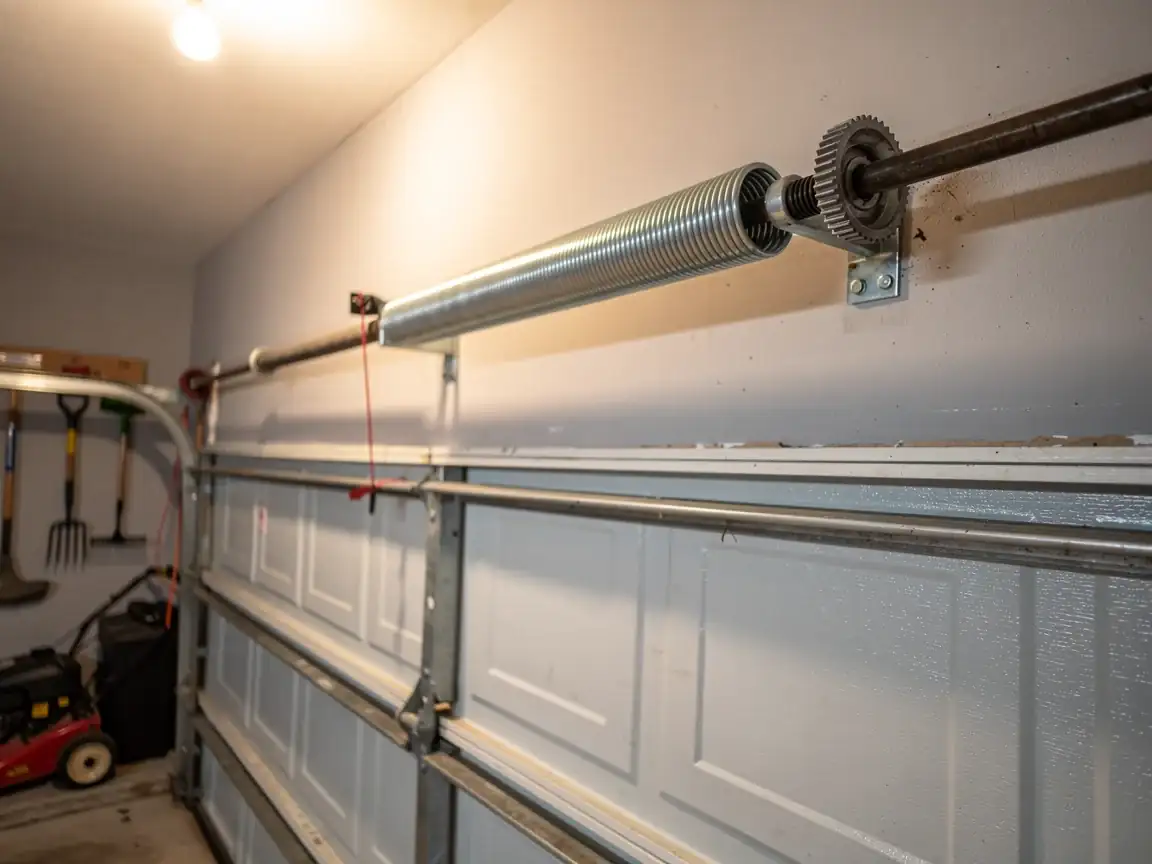
The climate band here is cold and severe, which means the metal in those original rollers contracts hard every winter night and expands again every afternoon. That cycle works the stem loose from the roller wheel and dries out whatever grease was packed in at the factory decades ago. In a mild climate the same roller might limp along another five years. Here, the freeze-thaw swing is what turns a quiet squeak into a roller that's shedding metal shavings onto the floor of the garage by February.
Houses built later in the range, closer to the 2010s, usually came with better nylon rollers from the start, but they still wear - just slower. Either way, the roller is almost never the only thing we find worn when we open the door up.
What You Are Seeing
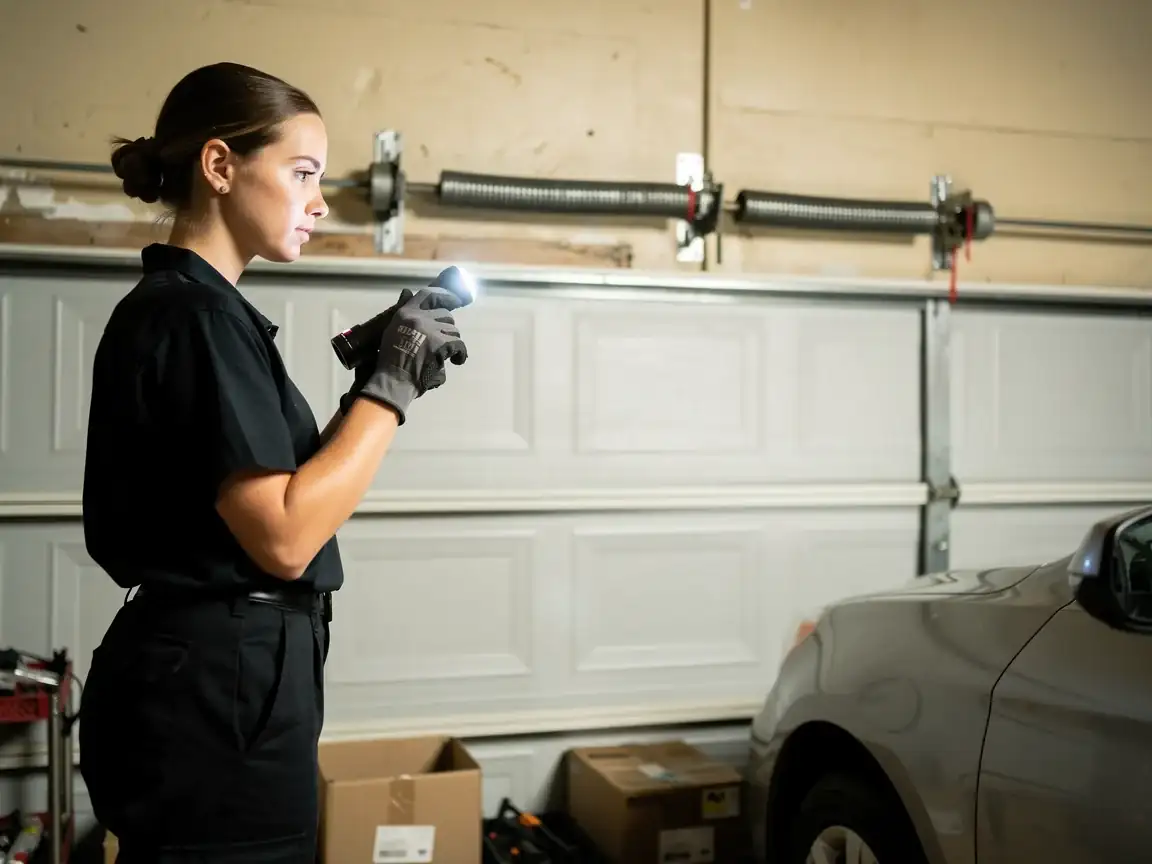
A grinding or rattling noise as the door travels, worse at the top or bottom of the run where the roller carries the most load. Sometimes it's a door that jumps or hops in the track instead of rolling smooth - that's a roller with a flat spot or a cracked wheel. You might see small white or gray plastic chips on the floor under the track, which is nylon roller material shedding off. On older steel-roller doors, you'll sometimes find a fine rust-colored dust instead.
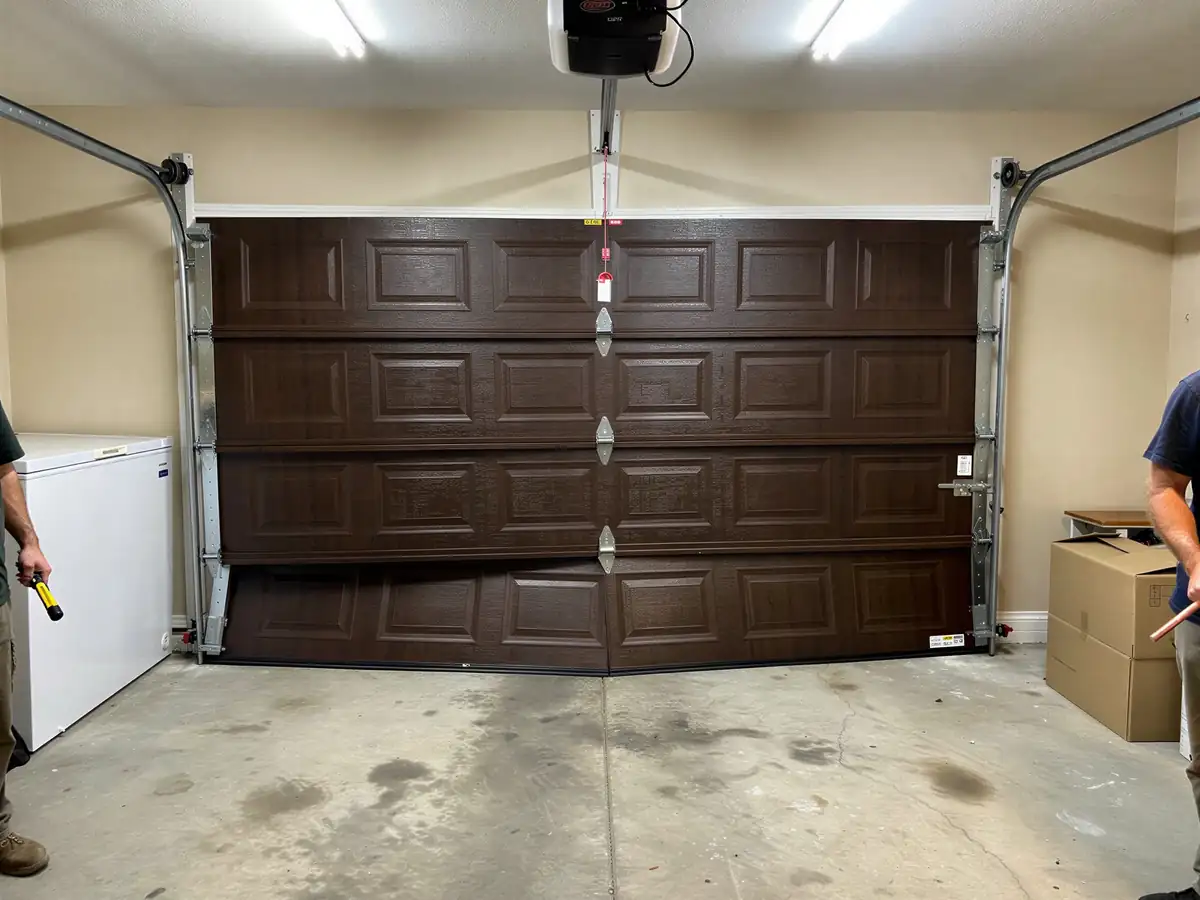
If the noise is loudest in the first cold snap of the season and quiets down once the garage warms up a little during the day, that's the cold-weather contraction doing exactly what it does to aging roller stems. A door that binds in one spot every single cycle, same spot, usually points to one bad roller rather than general wear - those are often the cheaper, faster fixes. A door that's noisy everywhere along the track, with play in several rollers when you wiggle them by hand, is telling you the whole set is near the end.
How We Fix It
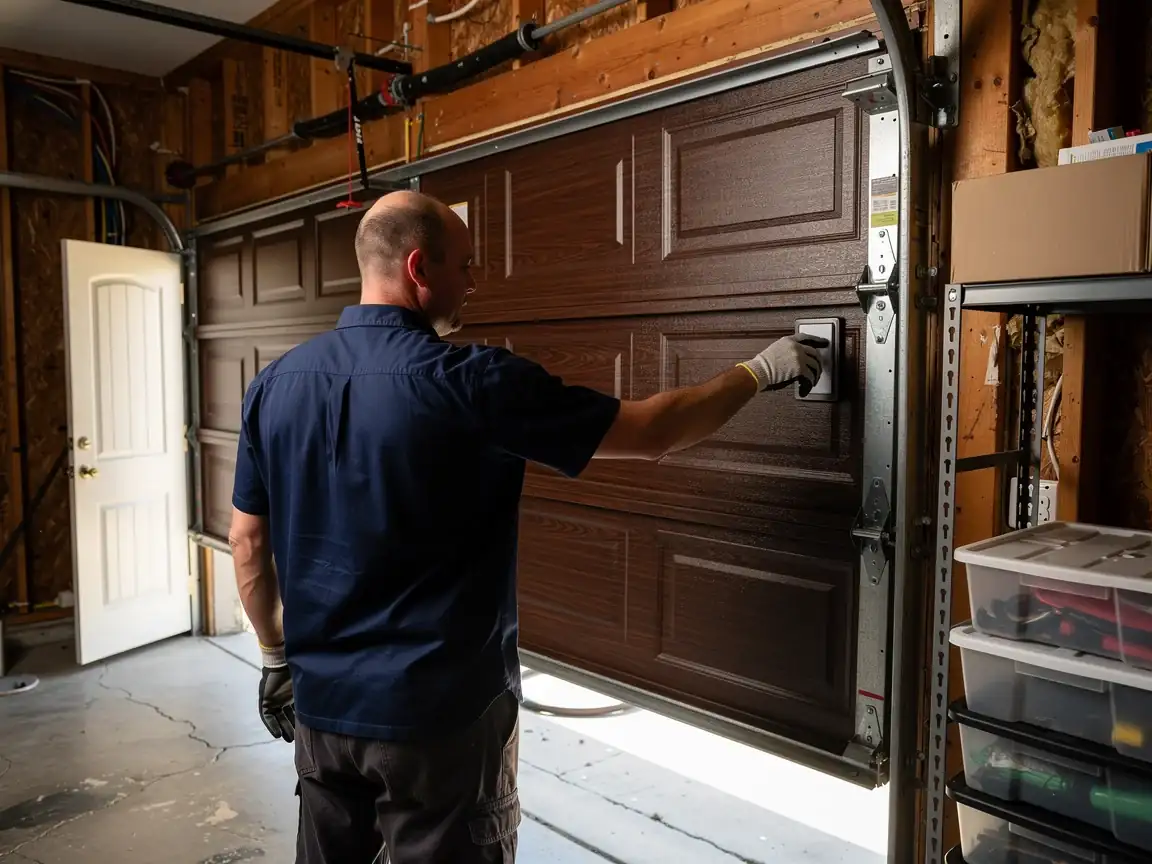
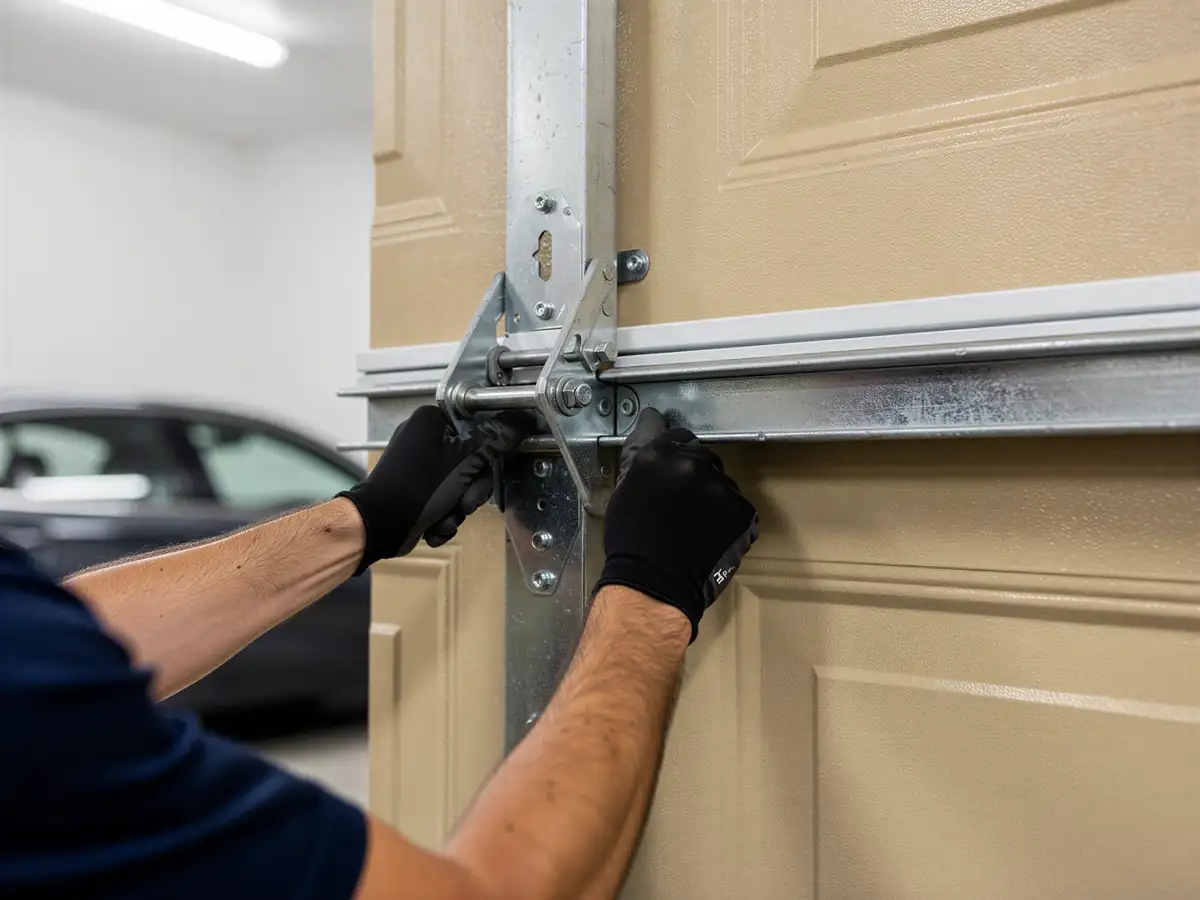
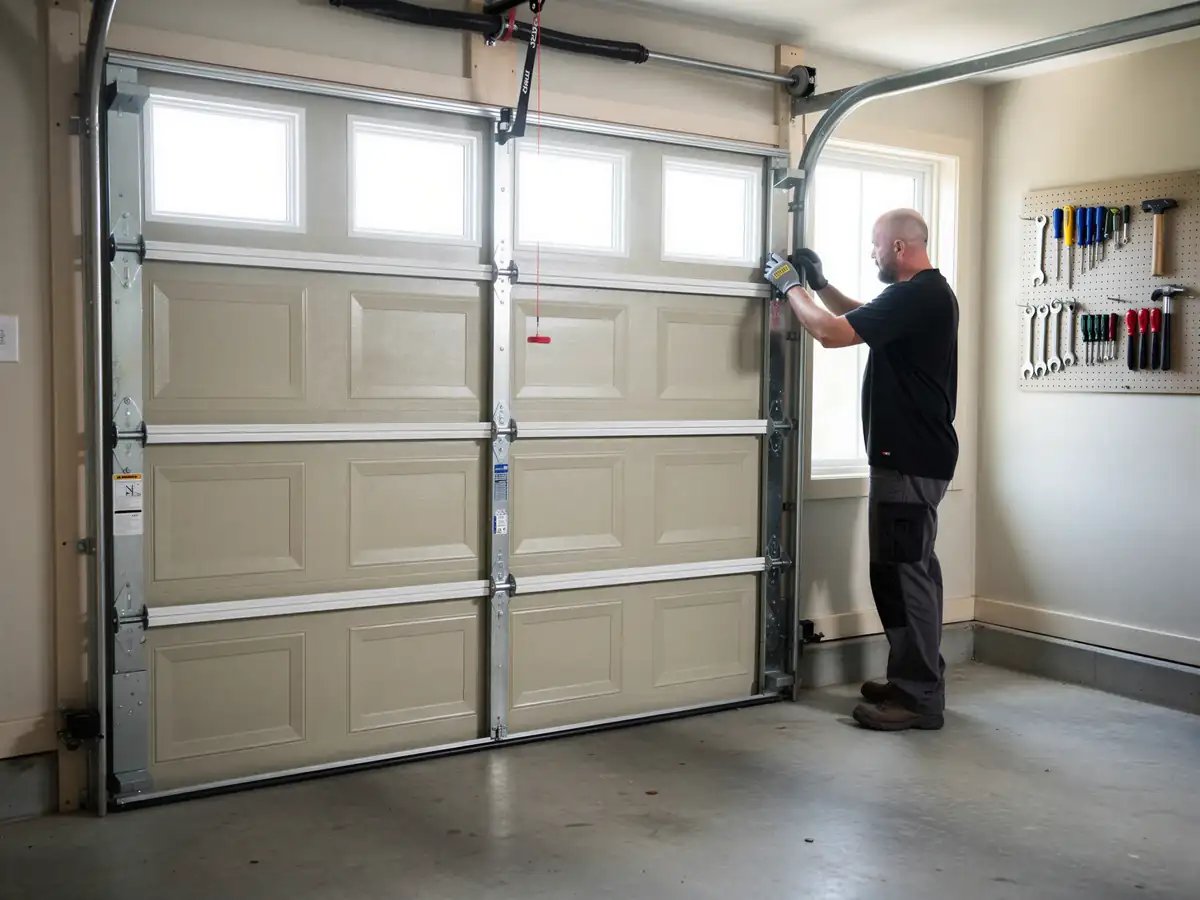
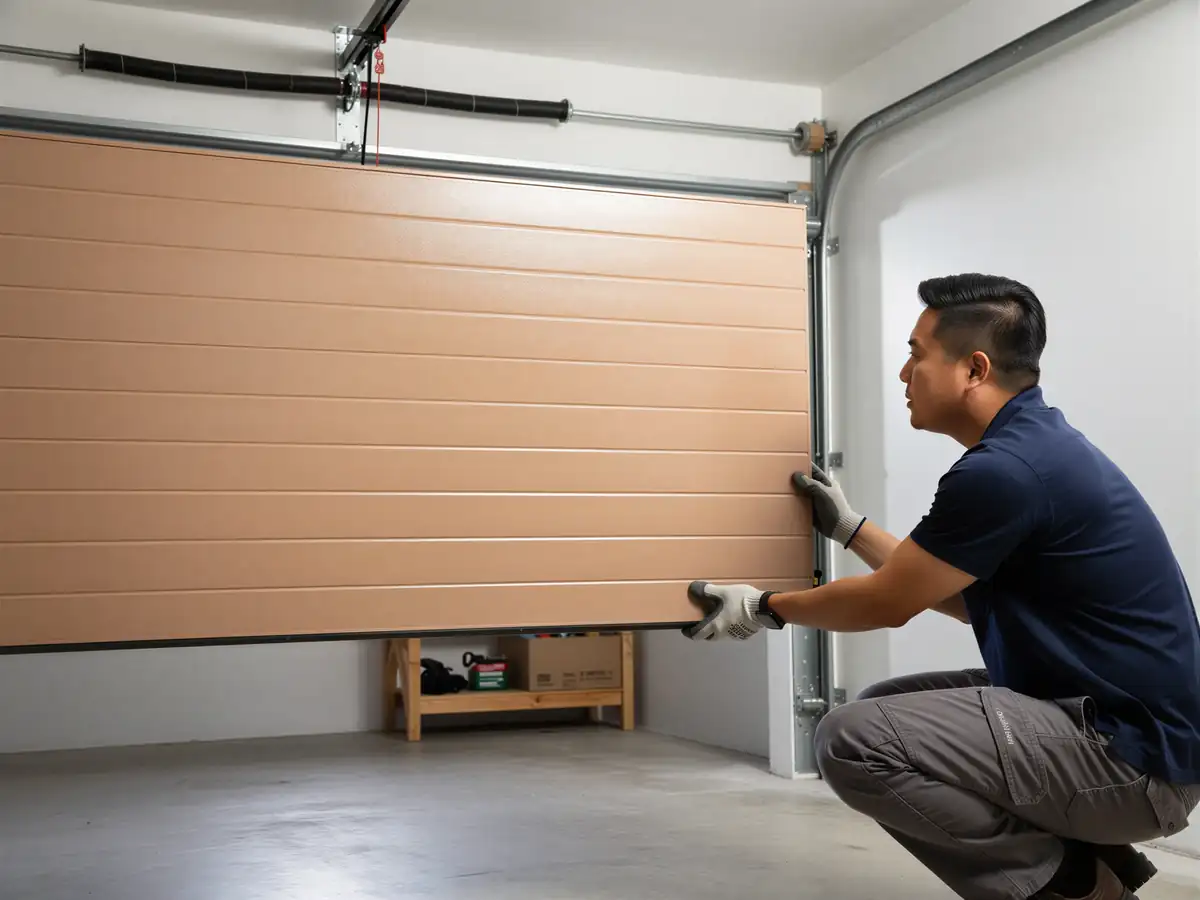
We pull the panel-mounted rollers one at a time with the door under control, never all at once
So the door doesn't drop out of the track mid-job. On most homes in this area we're replacing worn steel or early nylon rollers with sealed-bearing nylon rollers, which run quieter and hold up better through the cold-severe swings than anything that shipped standard in the 1980s and 90s.
We check the track alignment while we're in there
Because a bent or out-of-plumb track is what chews up a brand new roller just as fast as an old one. If a stem is bent or a bracket is cracked, we replace that hardware too rather than bolt a new roller onto a bad mount - that's a repair that doesn't hold and we won't sell it to you as one.
One honest limitation
If the rollers are failing because the door itself is sagging or the panels are rusted through at the bottom, new rollers won't fix that. At that point we'll tell you straight that roller replacement is a band-aid and point you toward what the door actually needs, even if that's a harder conversation than just swapping parts.
Stocked Parts
We carry sealed-bearing nylon rollers in the stem lengths and wheel sizes that fit the door generations most common across this service area - the 1980s through 2000s builds that make up most of what's out there, plus the newer nylon-roller doors from houses built closer to 2015. We also stock the roller brackets and short track sections that usually go along with a roller job on an older door.
What we don't keep on the truck is roller hardware for uncommon or discontinued door brands - if your door is an odd make, we may need a day to get the exact stem size in. We'd rather tell you that up front than make you wait at home for a part that isn't coming that day.