Why This Fails Locally
Most garage doors in the Gainesville service area went up between 1938 and 2015, with the bulk of that stock dating to the 1980s and 90s. That matters because torsion springs have a rated cycle life, and a spring installed when a 1985 colonial went up has usually put in thirty-plus years of lifts and closes by now. Steel fatigues. It doesn't fail because of one bad day, it fails because it's been wound and unwound tens of thousands of times.
The climate here makes it worse. This area sits in the severe end of the cold band, and cold steel is less forgiving than warm steel. A spring that's been stretching its limit all summer can snap on the first hard freeze, because the metal contracts and loses a little flex right when the door gets heaviest to lift by hand. We see this pattern every winter: doors that worked fine in October stop working in January.
If your house falls into that 1980s-90s build window that covers most of the area, your spring is either original or a prior replacement that's now aging into the same failure window. It's not a defect in your door. It's just steel doing what steel does on a schedule.
What You Are Seeing
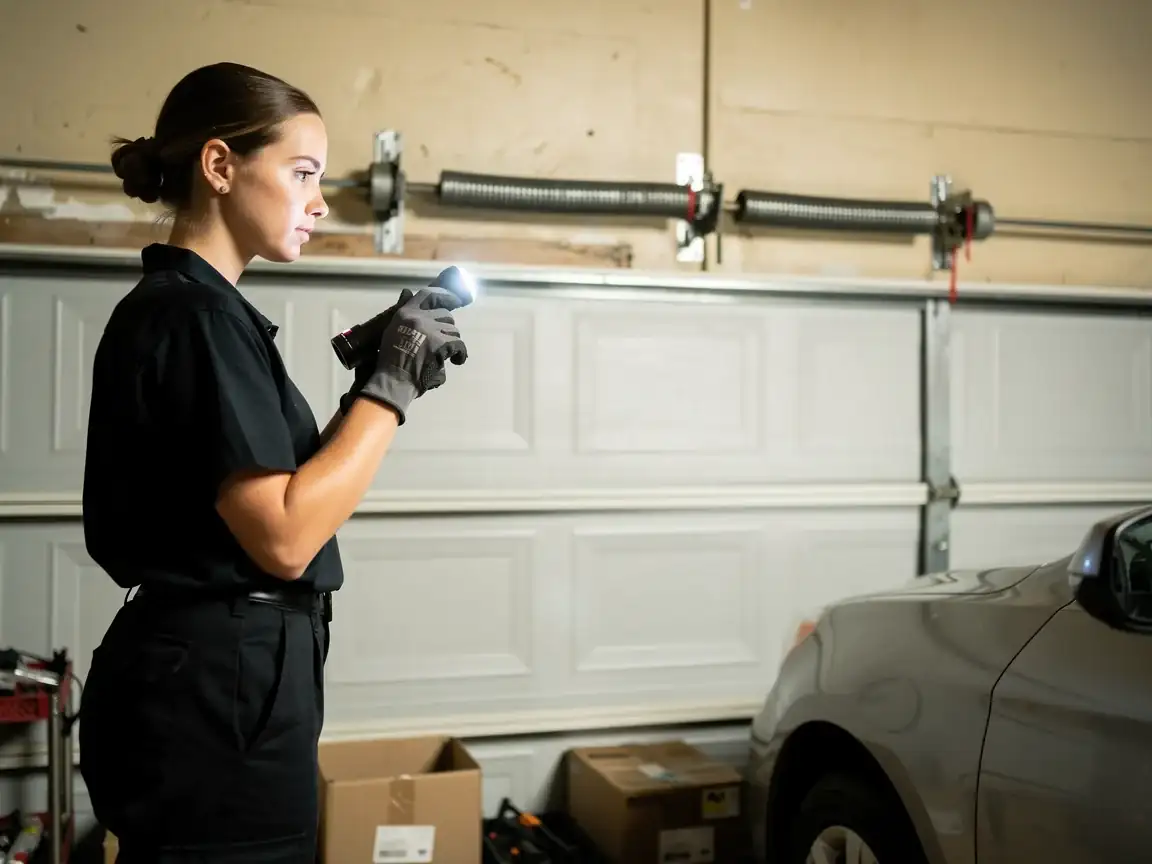
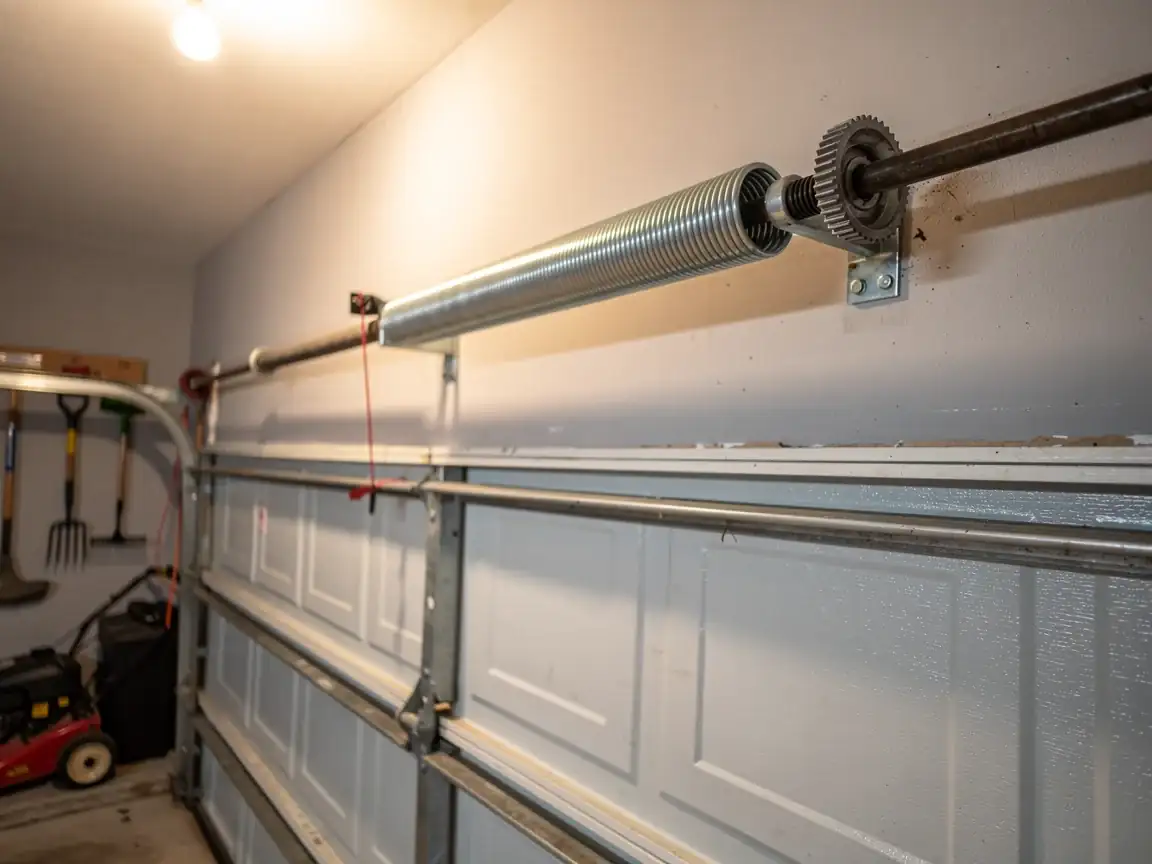
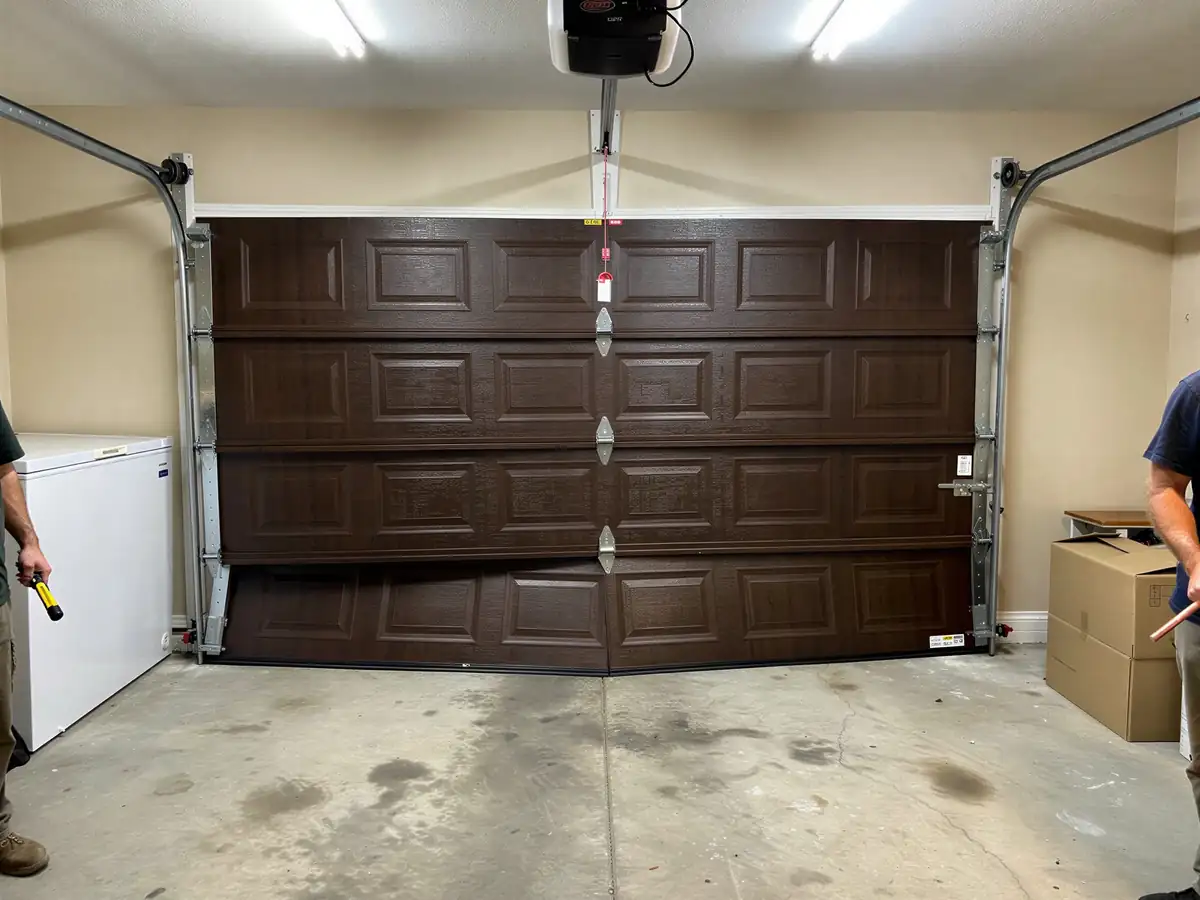
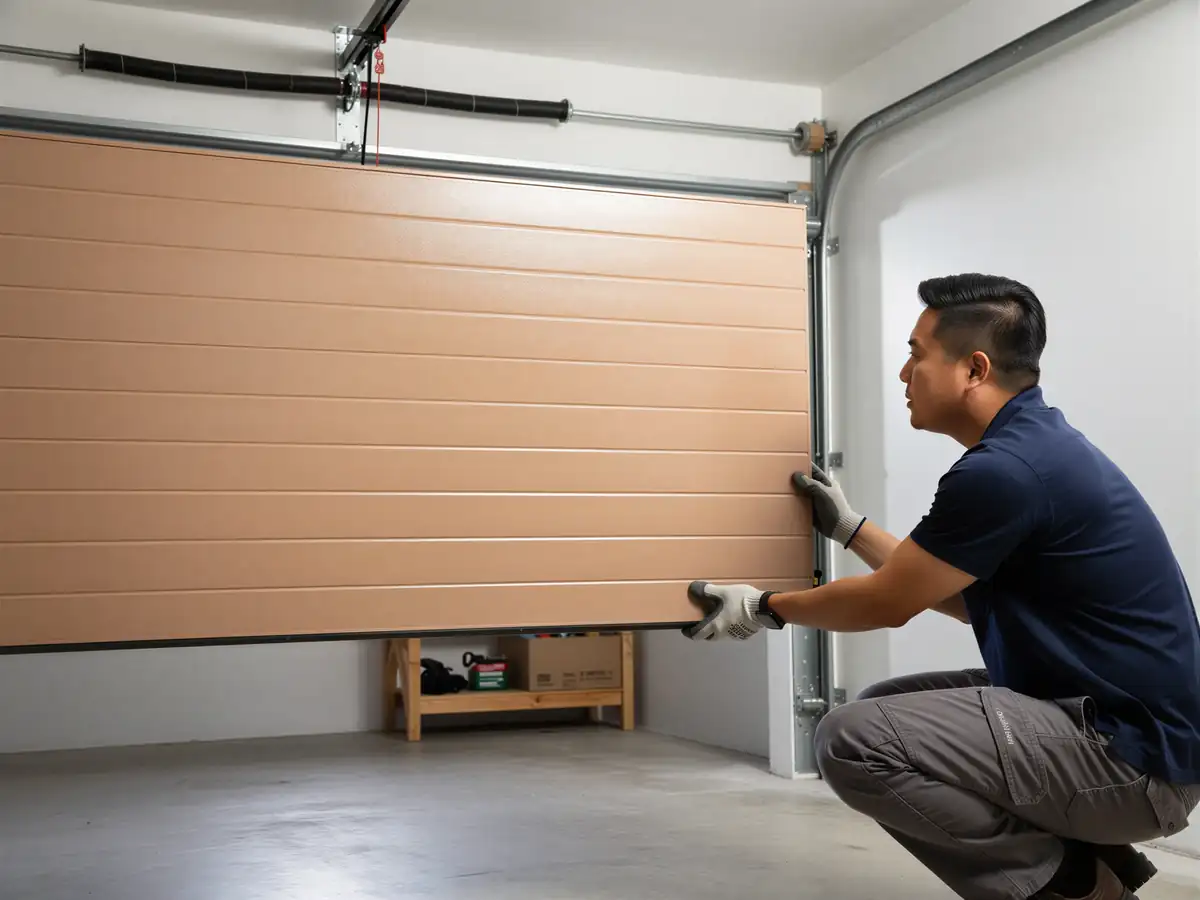
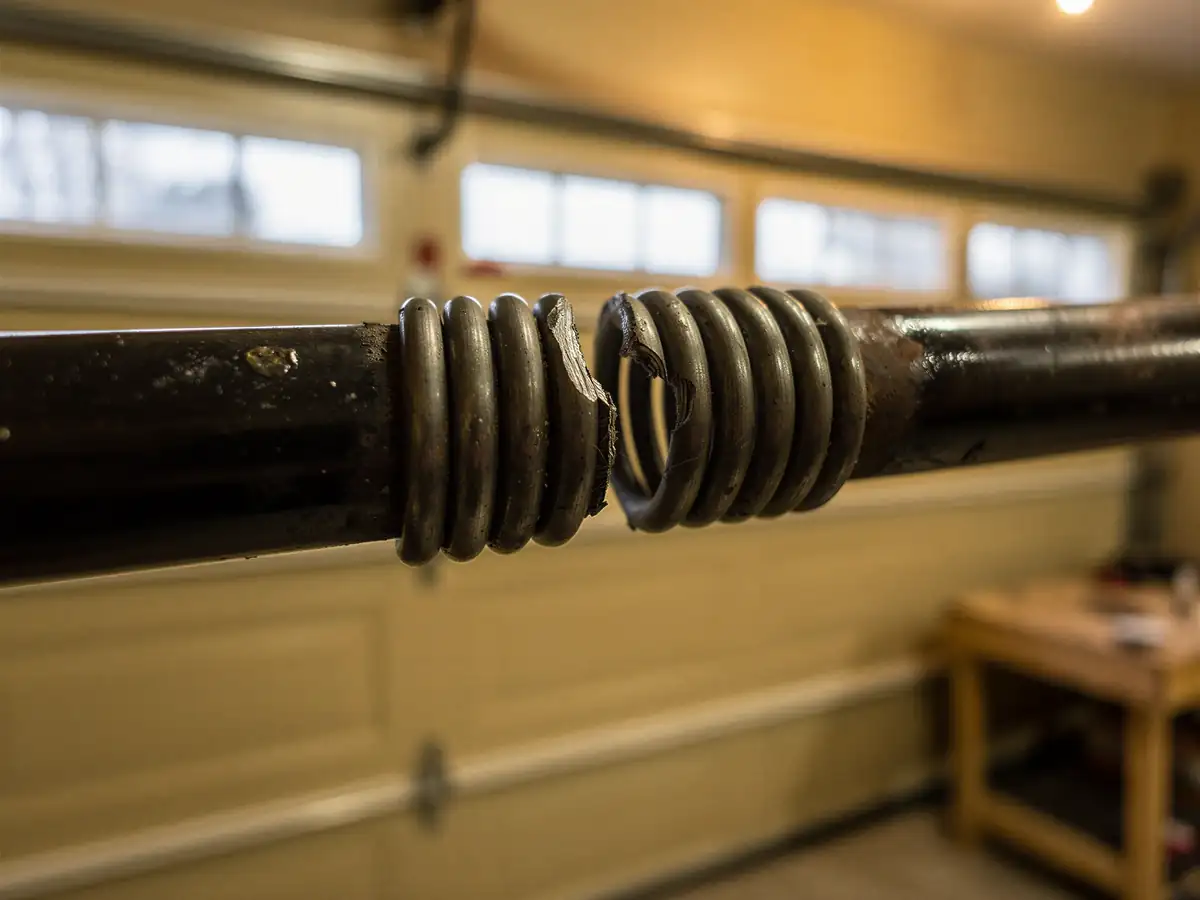
The classic sign is a door that won't lift, or one that lifts a few inches and stops. If you hear a loud bang from the garage - like a car backfiring - that's almost always a torsion spring letting go. Look up at the spring above the door: a clean break shows as a visible gap in the coil.
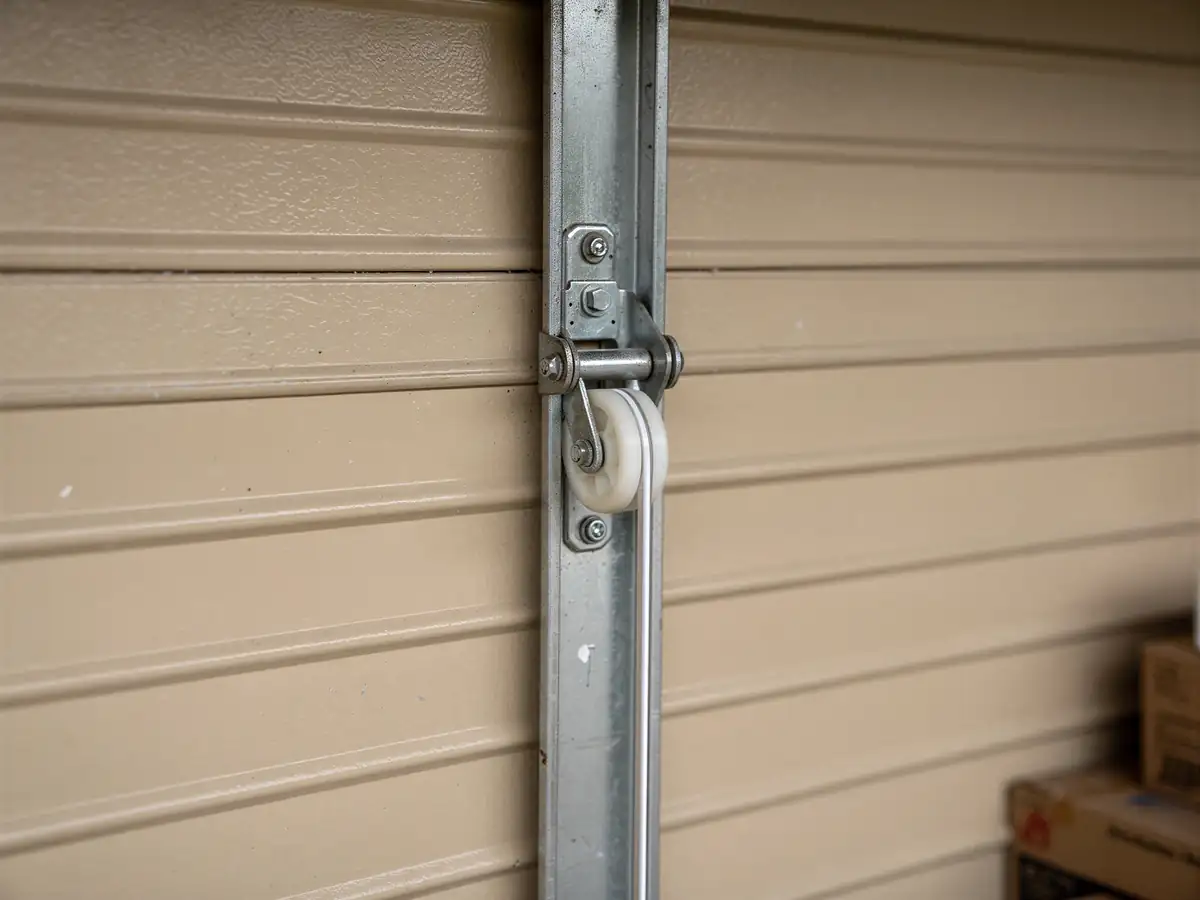
Other signs are less dramatic. A door that feels heavier than it used to when you lift it manually, an opener that strains and clicks without moving the door, or cables that look loose and slack at the bottom brackets - all of these point to a spring that's lost tension even if it hasn't snapped outright.
One thing we won't do is tell you a spring problem is something else. If your opener is grinding but the spring is intact, that's a different repair, and we'll say so rather than sell you a spring you don't need. We also won't recommend you try to wind or unwind a torsion spring yourself - the tension stored in that coil can break bones, and it's not a DIY job regardless of what a video makes it look like.
How We Fix It
We replace torsion springs in matched pairs on double-spring setups, even if only one has failed
Because the surviving spring is usually close behind on cycle life and mismatched springs wear your opener unevenly. We size the replacement to your door's actual weight and track configuration, not a generic chart.
With 18,943 households in the service area and roughly half of them owner-occupied detached houses
We're working on a fairly narrow band of door weights and spring sizes most weeks - mostly single and double-car doors on side-mounted or center-mounted torsion hardware from the 1980s through the 2010s. That's a limitation worth being honest about: if you've got an unusual door, a custom carriage-house style with heavier panels, or hardware from well outside that build range, we may need to order a spring rather than have it on the truck, and that adds a day or two.
- 18,943 households
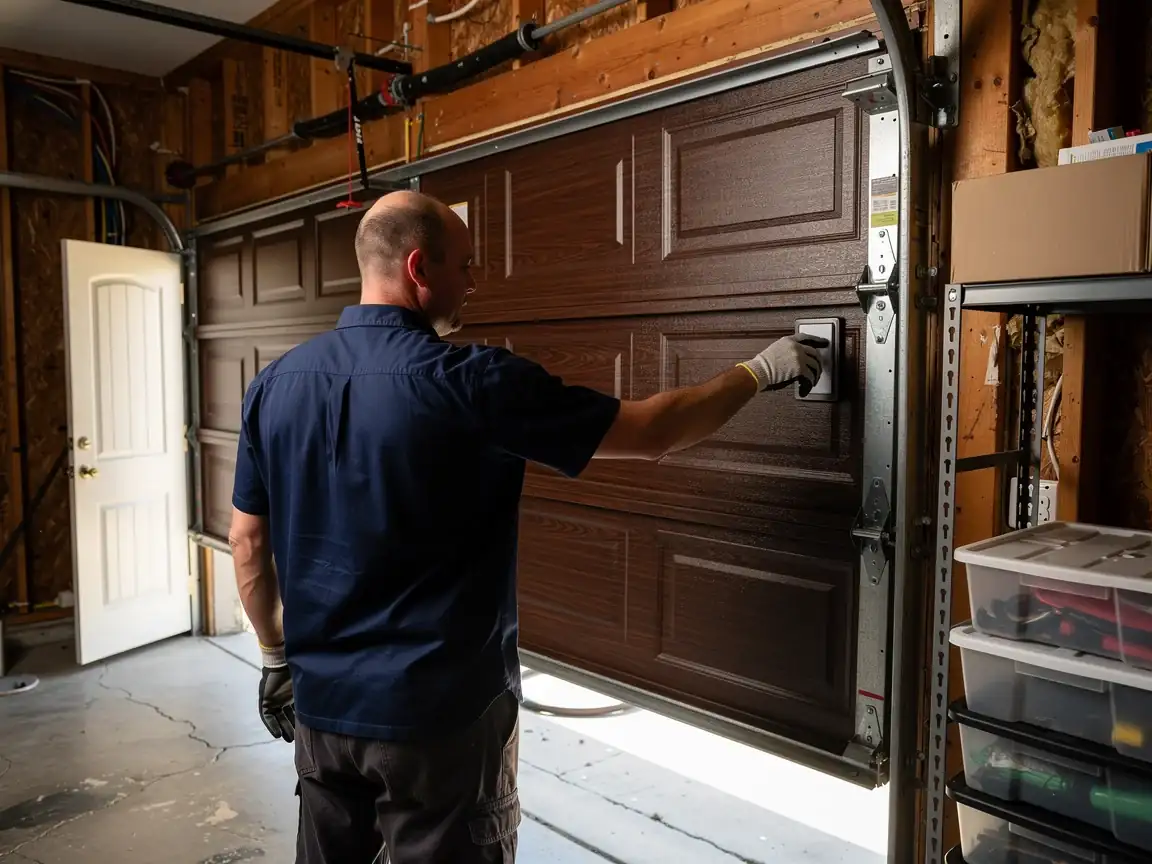
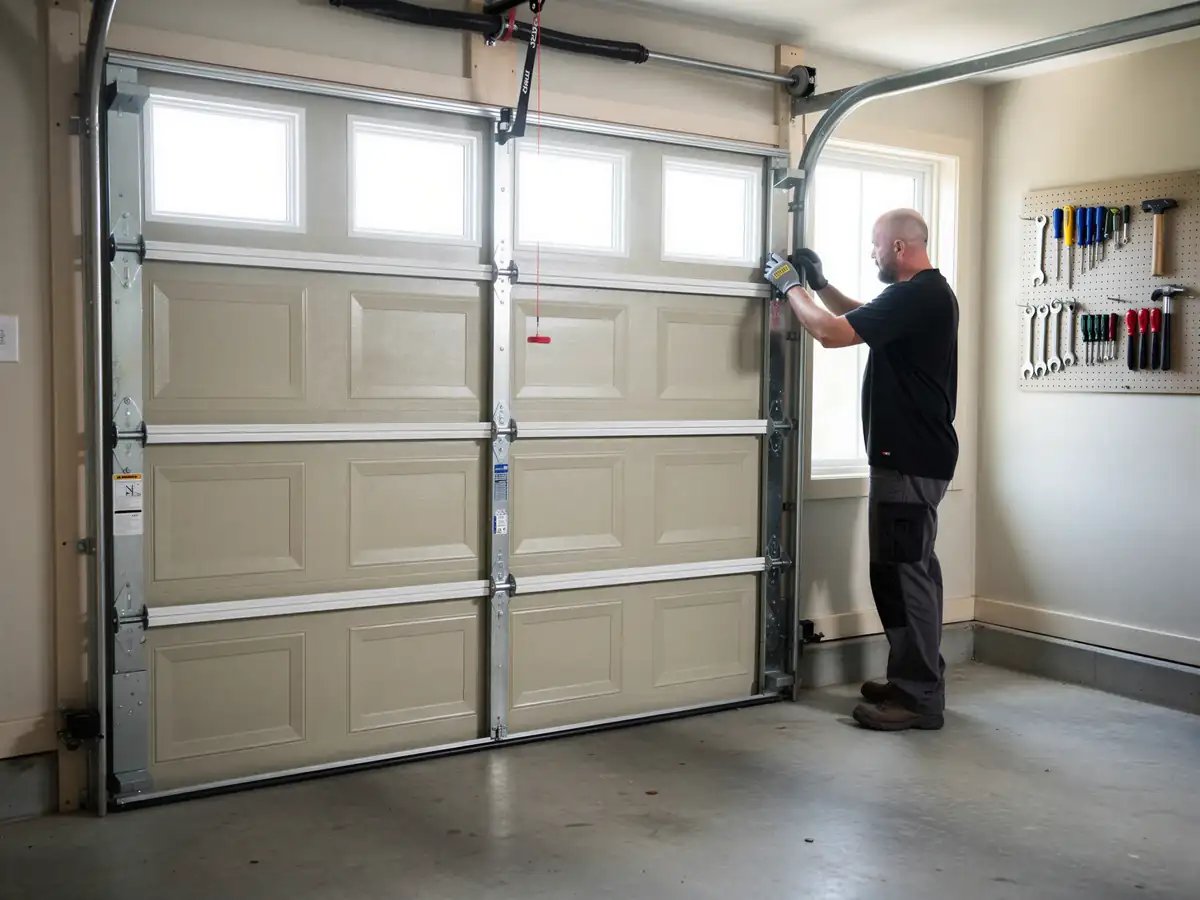
Once the new spring is on, we balance the door by hand
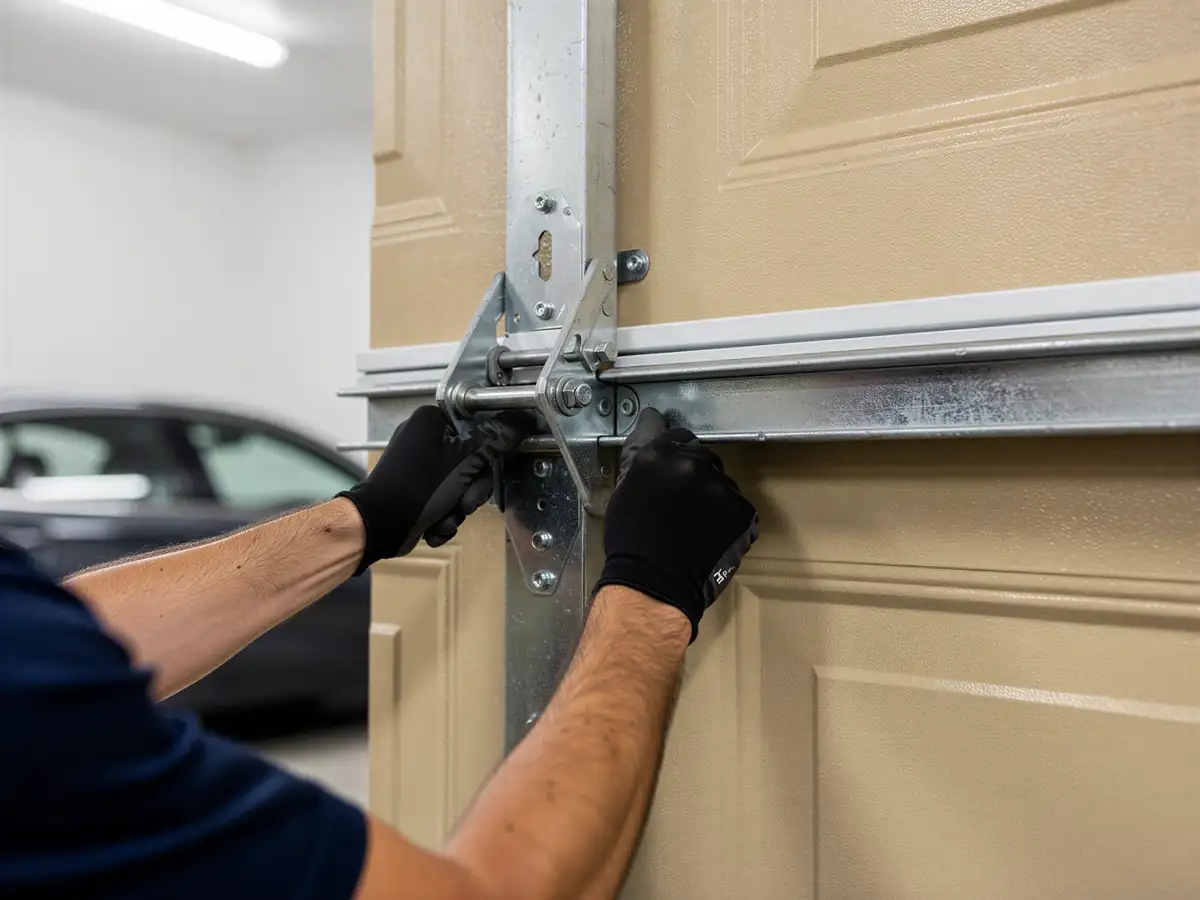
Check the cables and bottom brackets for wear while we're in there, and test the opener's force settings so it isn't straining against a door that's now properly counterweighted.
Stocked Parts
With a median household income of $111,503 in this area, most owners choose a straight replacement over a patched-together fix, and we stock accordingly - standard torsion springs sized for the door weights common to houses built from the 1980s through the 2010s, plus the matching cables and end bearing plates that tend to wear alongside an old spring.
Our coverage runs from Haymarket, about a mile up the road, out to Remington, roughly 20 miles out, with Nokesville, The Plains, Bull Run, Catlett, Warrenton, Yorkshire, Marshall, Arcola, Aldie, Middleburg, Clifton, Midland, Bealeton, Fairfax Station, and Upperville in between. Door sizes and spring wind direction vary a bit by neighborhood and build era, but the stock on the truck covers the range we see across that whole footprint.
What we don't carry on the truck is anything custom - oversized doors, non-standard track setups, or specialty coil configurations. Those get special-ordered, and we'll tell you up front if that's what your door needs rather than force-fit a part that's close but not right. For other garage door work in the area, our home page covers what else we handle.