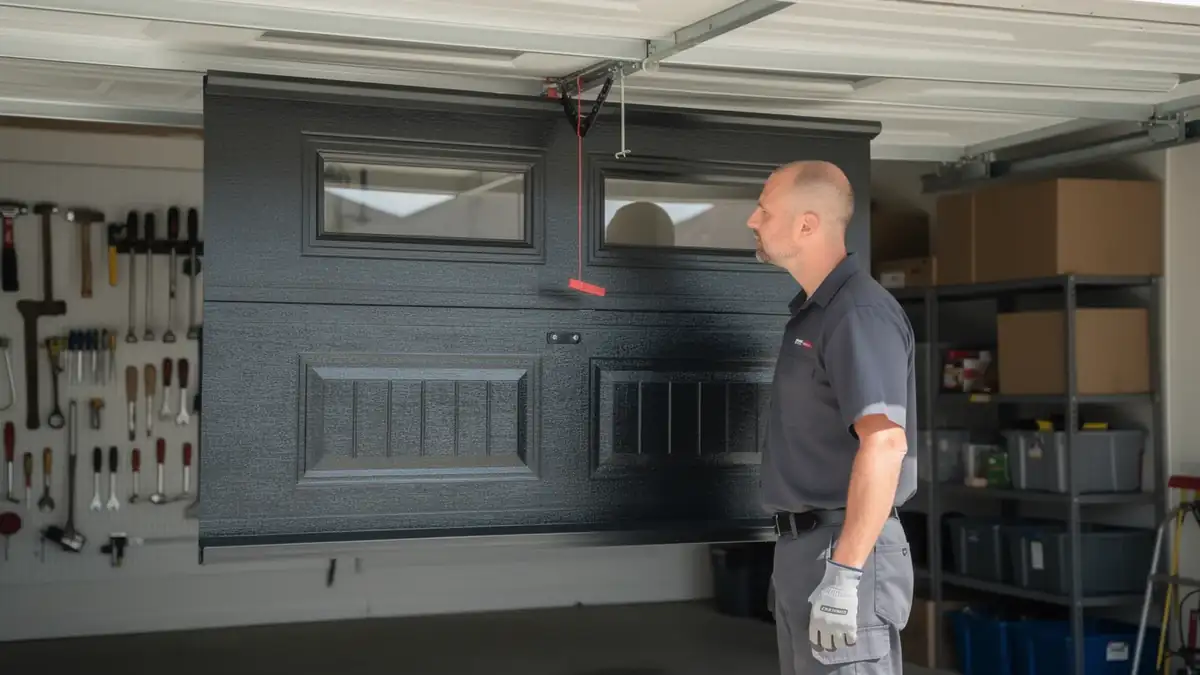
Doing Nothing For Now
Not every sound needs a truck. A door that hums a little louder in January than it did in July is just cold grease moving slower through old bearings - that's normal in this climate band, and it's not a reason to call anyone. The sound worth tracking is a change, not a volume. If a door has clicked the same way for years and still clicks that way, leave it.
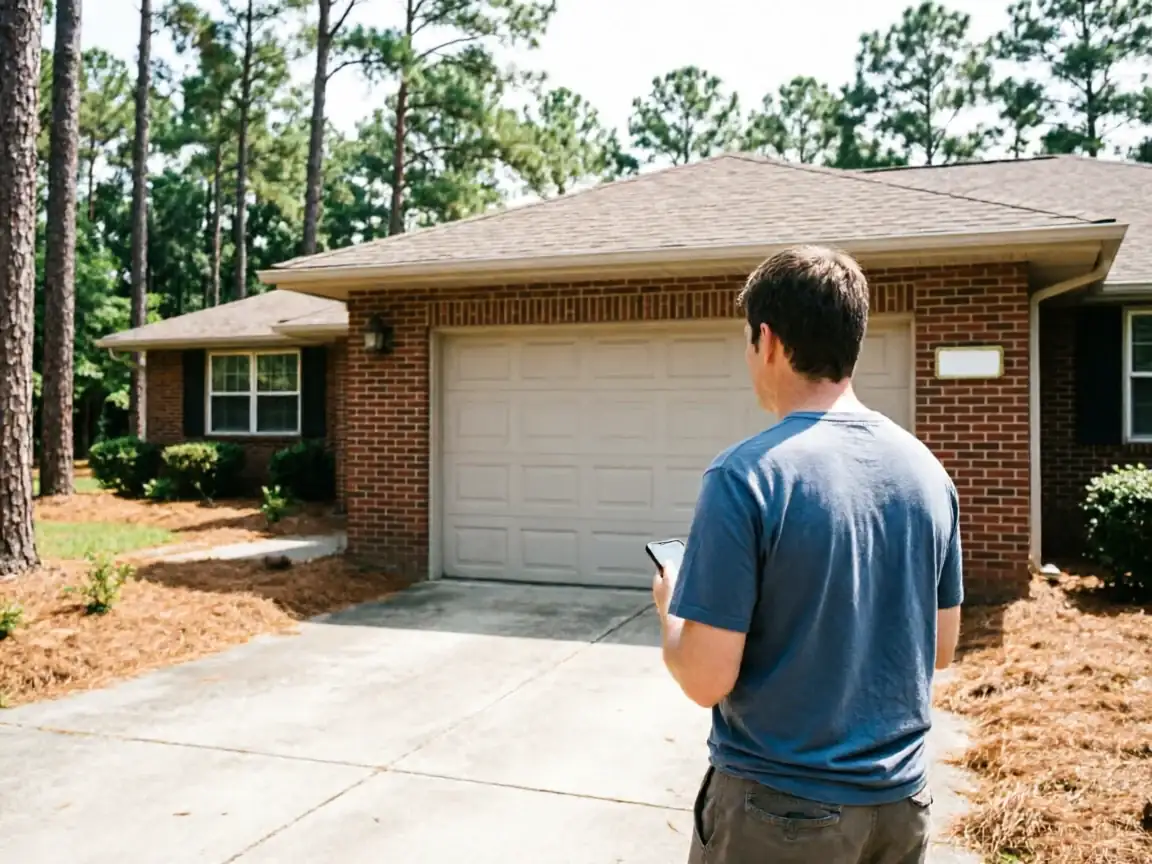
What changes the math is age. A lot of the housing stock in this service area went up in the 1980s and 90s, with the median build year across the 17 named communities sitting around 1982. That means a large share of doors out there are running on their original torsion hardware, or a first replacement that's itself aging out. A noise that would be background static on a five-year-old door is a different signal on a door that's been cycling twice a day since the Reagan administration.
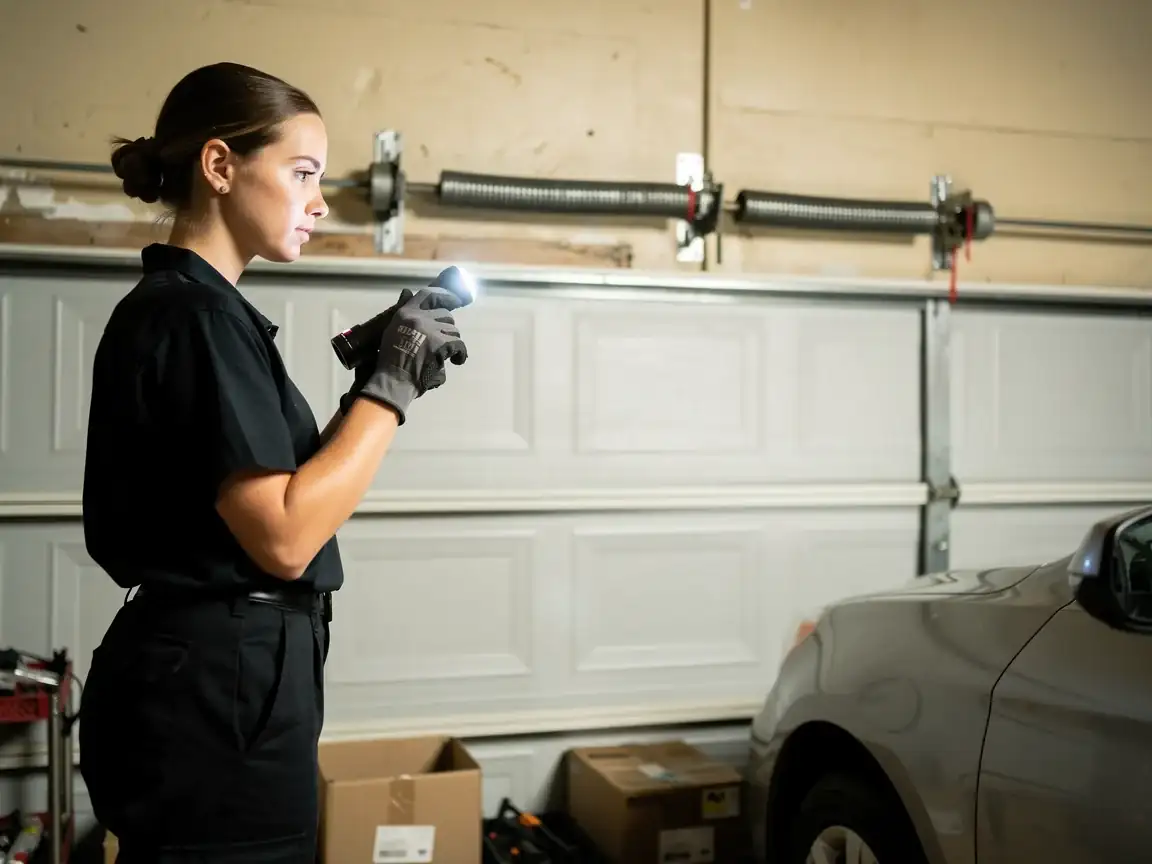
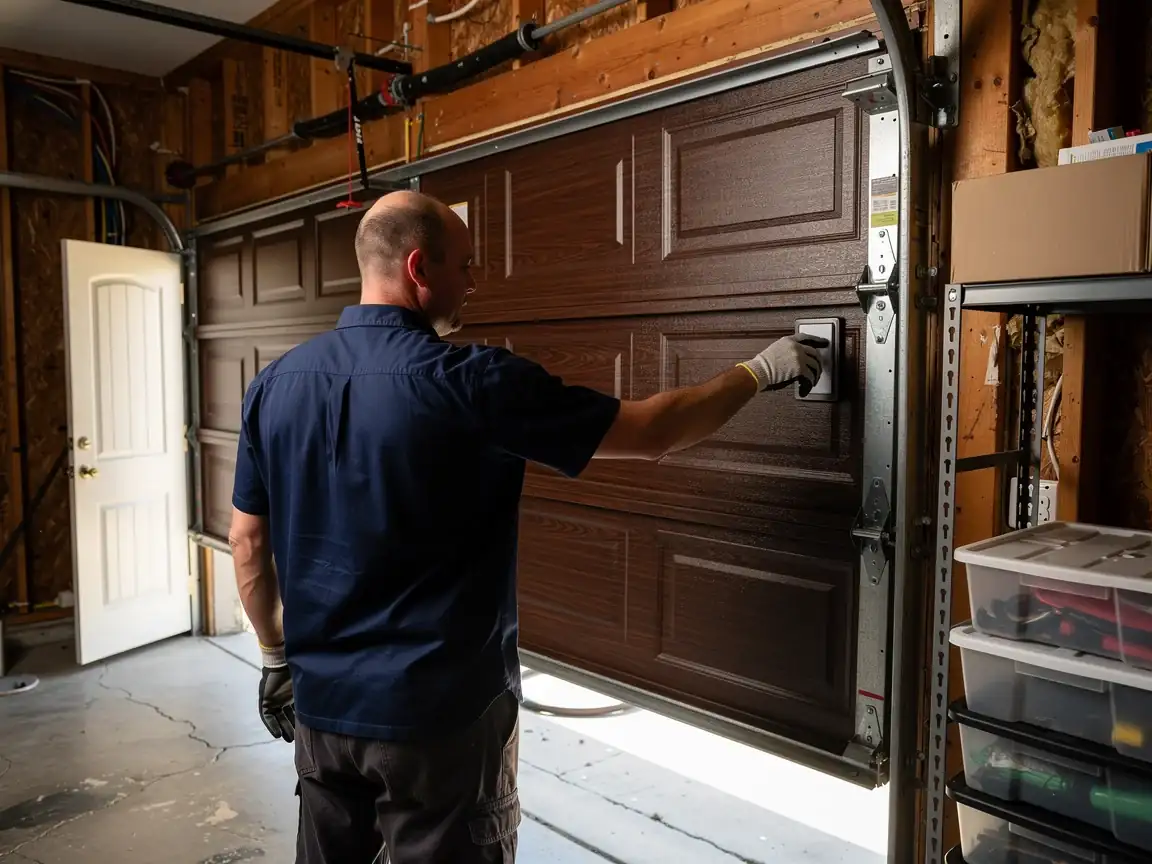
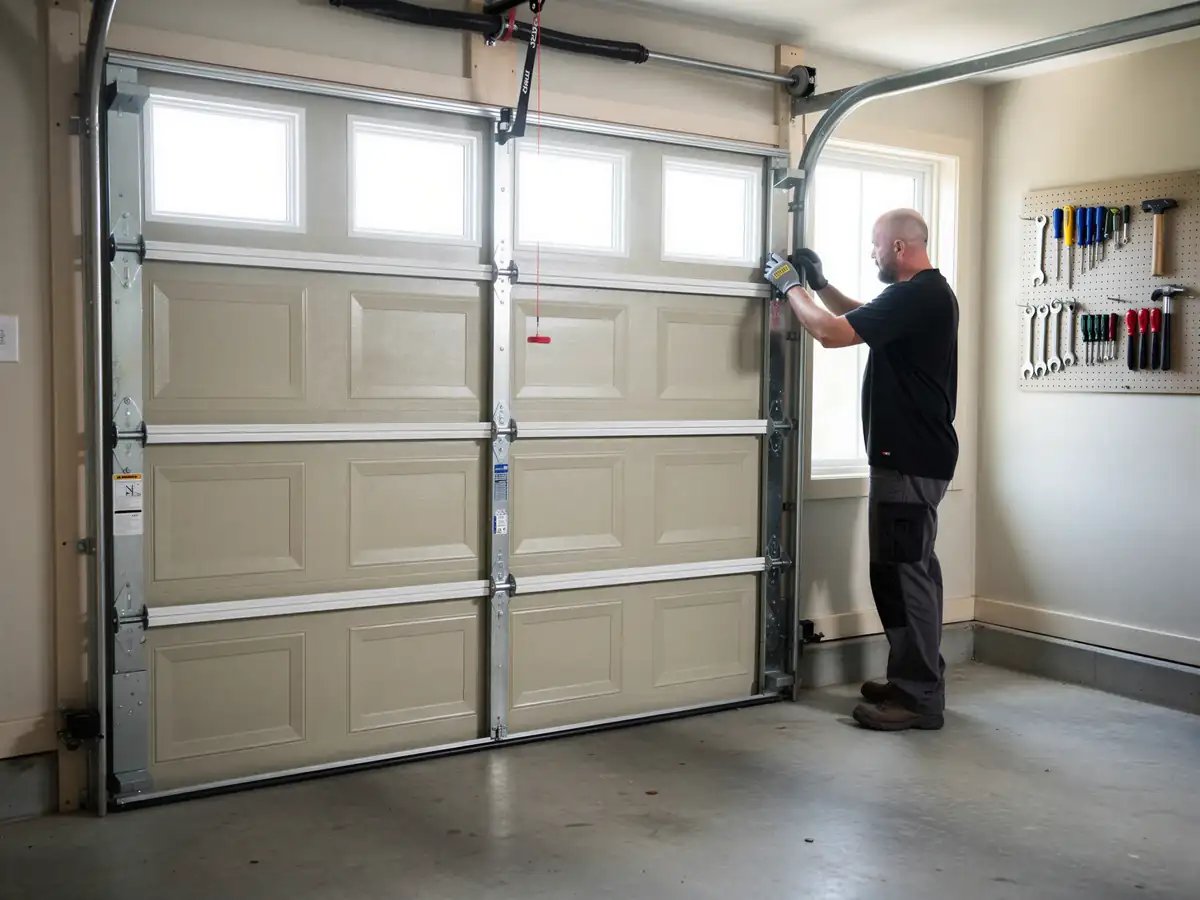
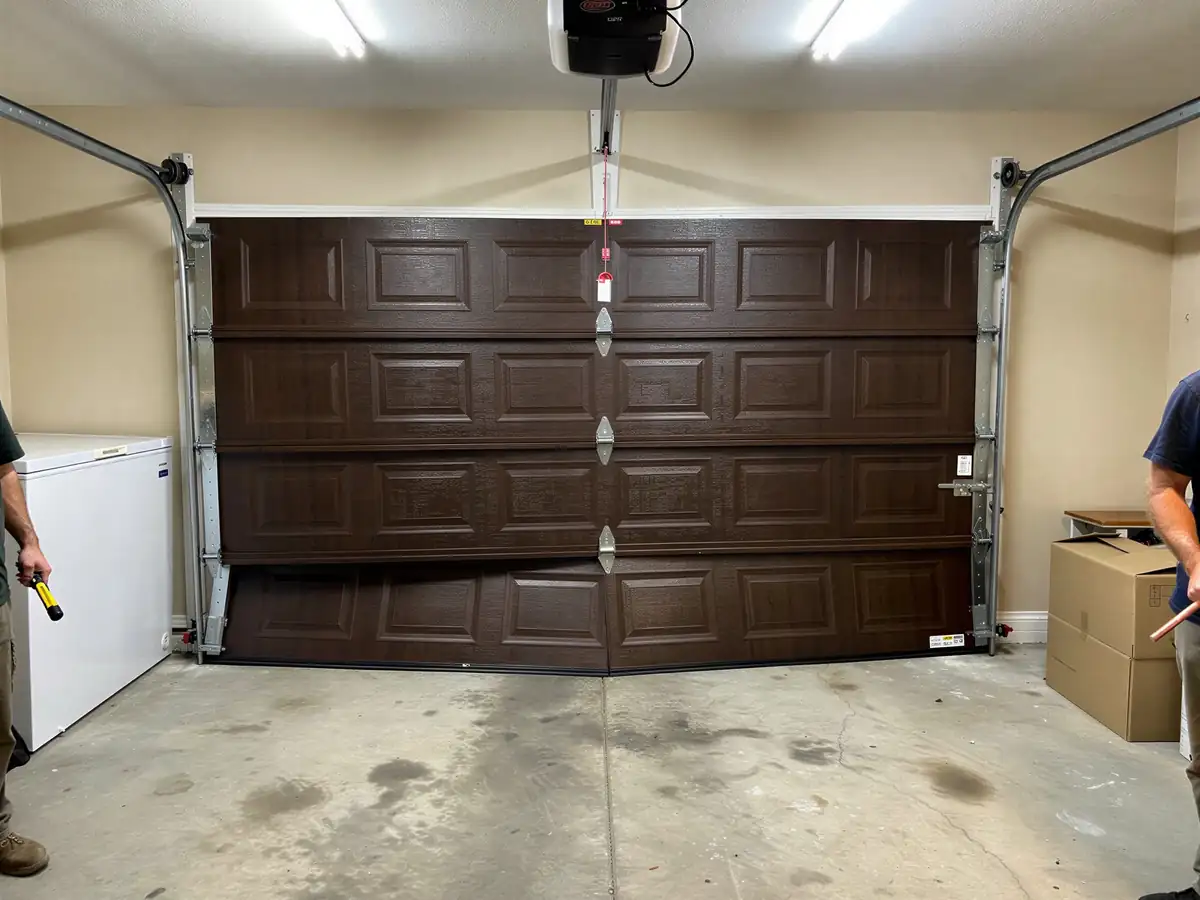
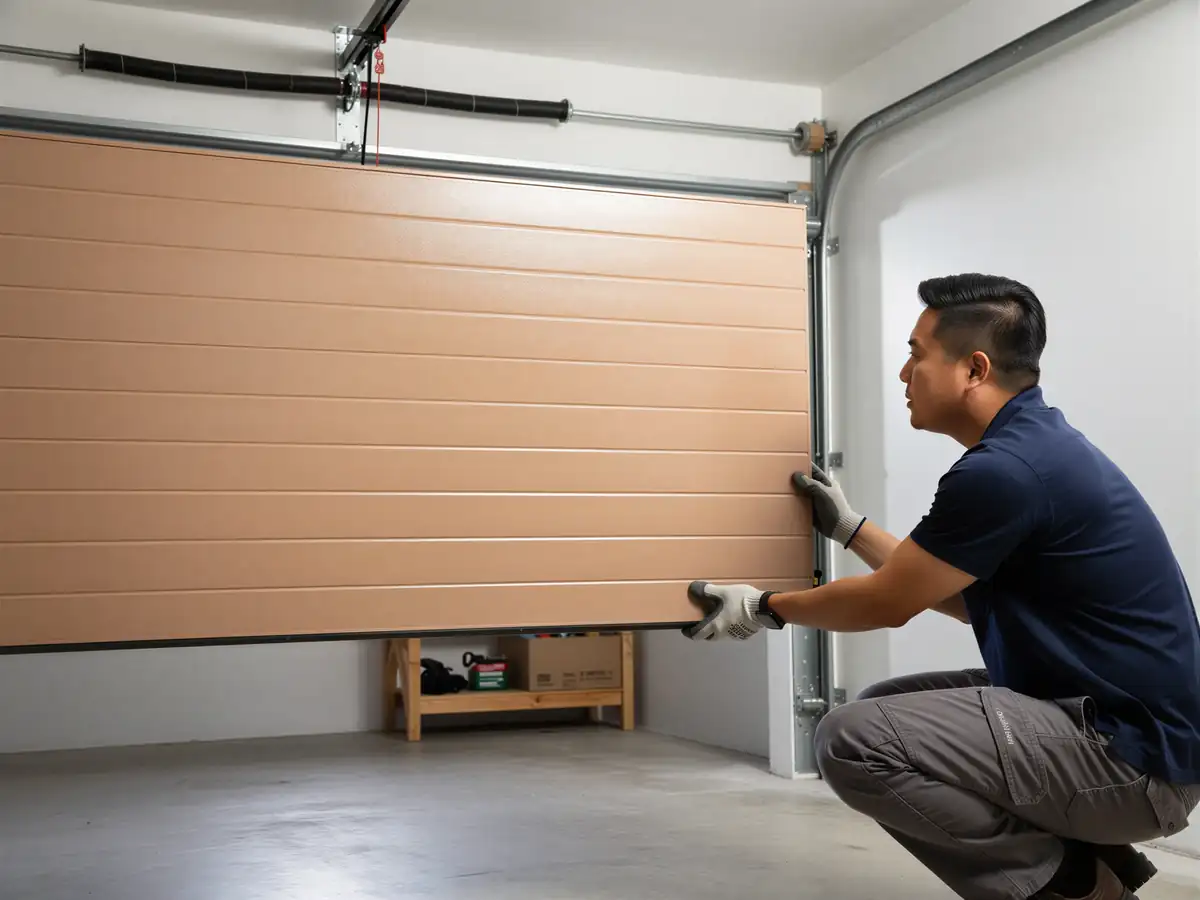
Our honest limitation here: we can't tell you over the phone whether your specific noise is nothing or something. Spring wear, roller wear, and track misalignment can all sound similar from inside the house. If you want a real answer, someone has to put a hand on the door.
What Local Conditions Do
This area sits in a cold-severe climate band, and that matters more to a garage door than most owners assume. Steel contracts in cold and expands in heat, and a torsion spring wound tight around a steel shaft does that contracting and expanding every single day, all winter. Lubricant that's fine at 65 degrees turns gummy at 20, which means an opener motor that's already working against a stiff spring has to work harder still on the coldest mornings - and that's usually when you hear it.
Most of the doors in this service area were installed during the 1980s-90s building run that covers the bulk of the local stock. Galvanized hardware from that era wasn't built with today's sealed bearings or coated cable, so cold-weather stiffness shows up as noise years before it shows up as failure: a groan on the first open of the day, a pop partway up the track, a chain that slaps instead of runs smooth.
None of this means the door is about to drop. It means the hardware is telling you it's working harder than it should, in a climate that doesn't let up for months at a time. That's a different message than a door making noise in a mild climate, and it's worth treating differently.
The Cost of This Job
We don't have a flat number to hand you here
Because what a noisy door needs ranges from a $20 roller swap to a full spring and drum replacement, and the right call depends on what's actually worn. What we can tell you is how to think about the decision.
The median household income across this service area runs around $111,503
And most of the houses here are owner-occupied - 9,660 of them, out of just under 19,000 households total. That's a market where replacing a door outright is a real option, not just a repair-or-nothing choice, which changes the conversation. On a door from the 1980s-90s housing boom that's already on its second or third opener, sinking money into a spring job on worn-out tracks sometimes just delays the bigger job by a year.
- 19,000 households
The honest version
If your torsion spring is original to a house built in that era, the spring itself is cheap, but the labor and the diagnosis of what else that spring has been masking usually isn't. A tech who looks at the whole system before quoting anything is doing you a favor, even if the number comes in higher than you hoped.
What Is Going On
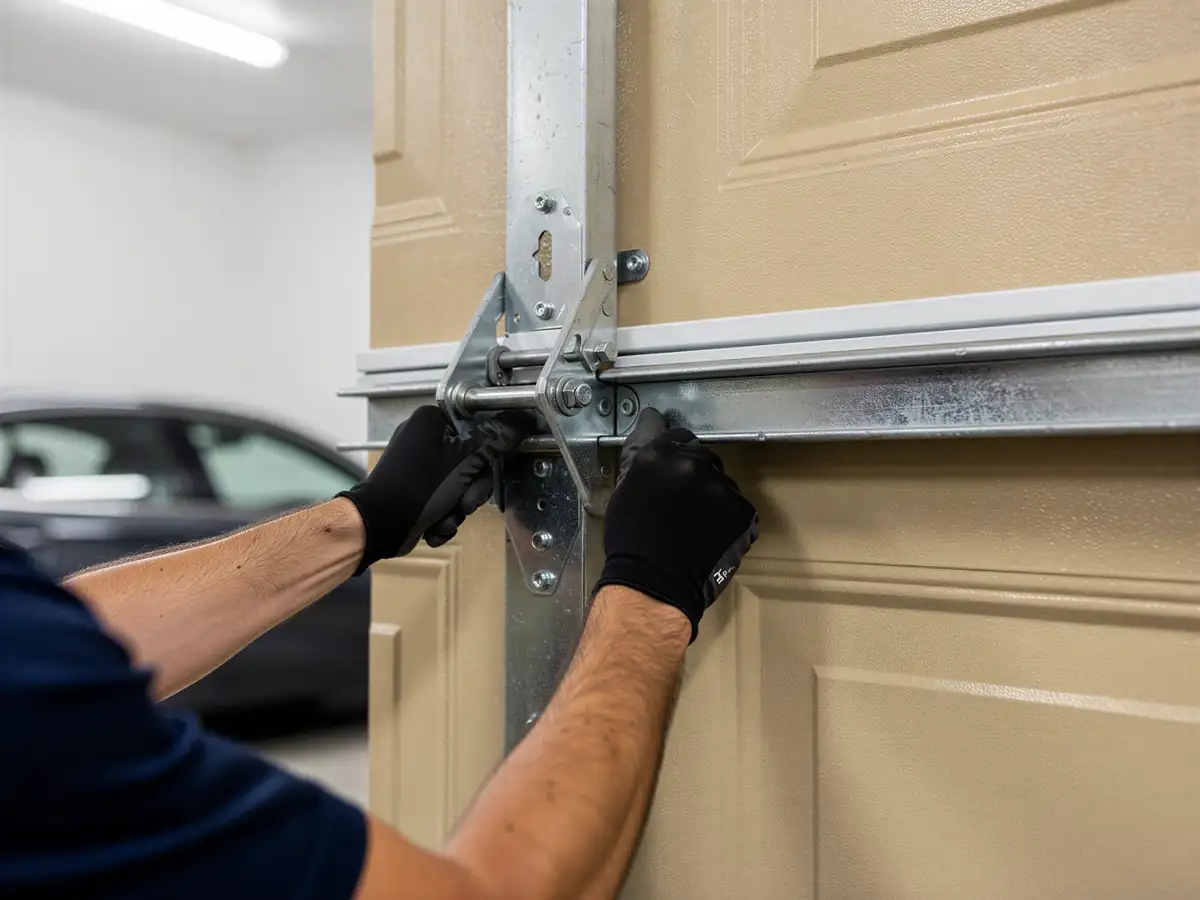
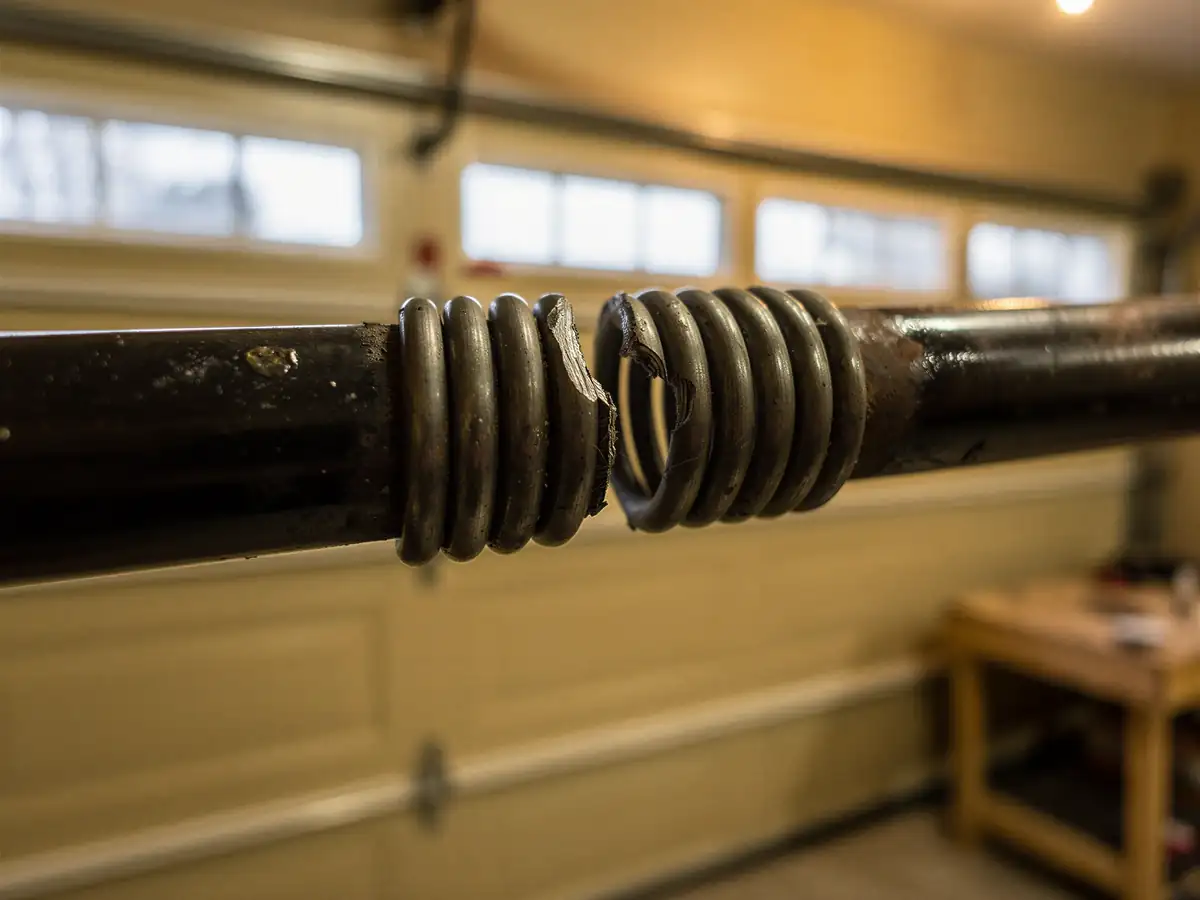
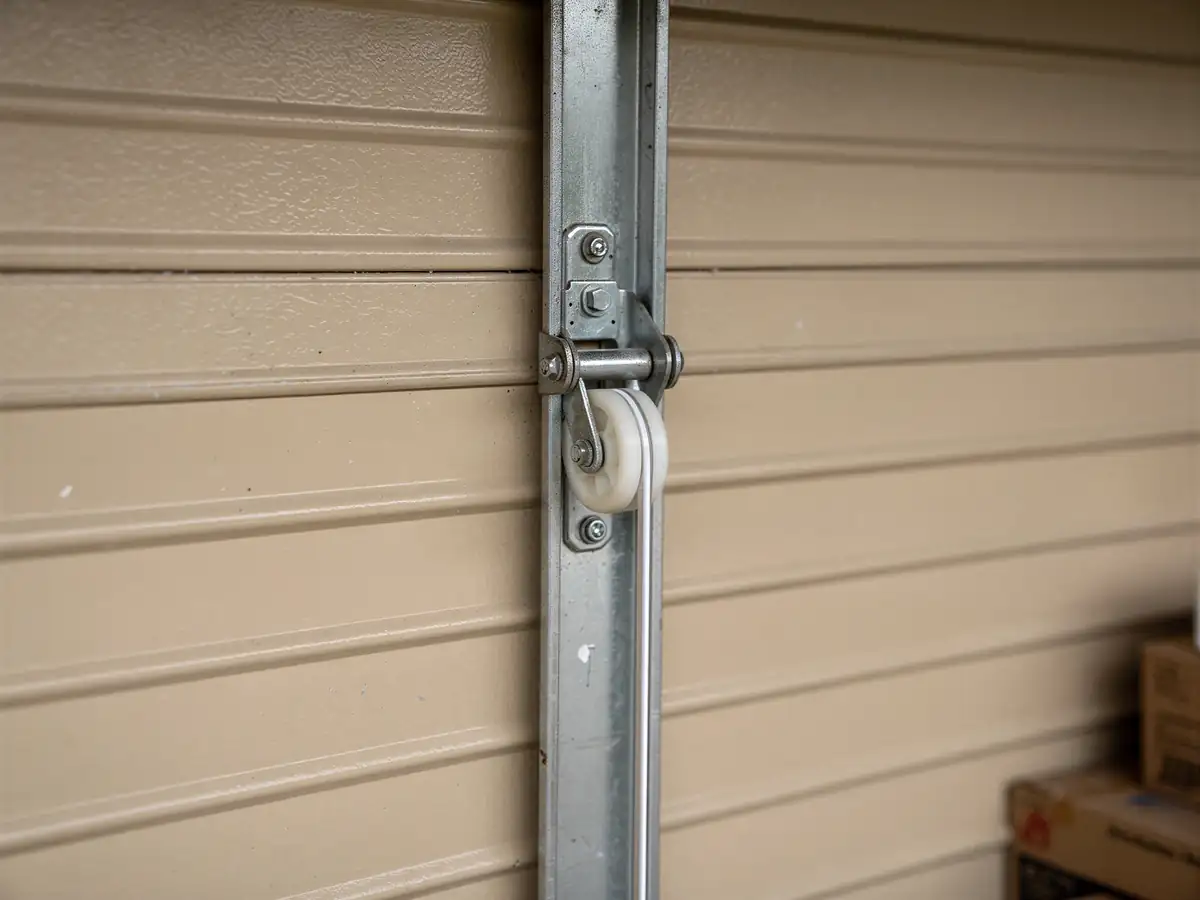
A hard metallic pop followed by the door going still, usually a torsion spring has let go - common on doors original to the 1980s-90s stock that makes up most of this area, since that hardware is now 30 to 40 years into a part rated for far fewer cycles than that. A rhythmic thunk once per rotation points to a flat spot on a roller, not the spring.
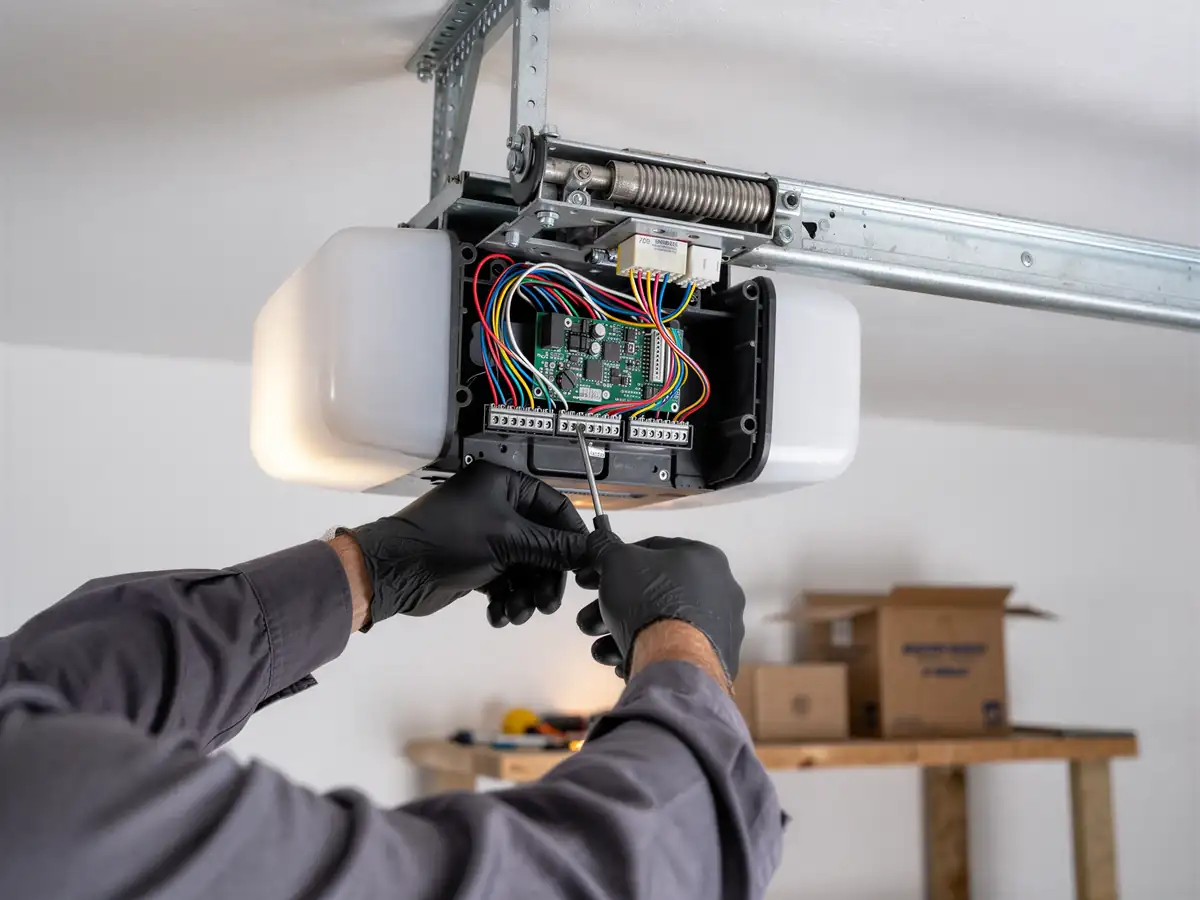
A grinding hum with no movement is usually the opener motor pushing against resistance it can't overcome - often a spring that's lost tension gradually rather than snapping, which is more common than people expect on older torsion setups that were never serviced. A chain that slaps the rail is slack, not broken, and it's a cheap fix if caught early.
In a cold-severe climate like this one, a screech on the first cold morning of the season and then quiet for the rest of the day is almost always grease, not metal - but the fact that it shows up only in the cold is itself useful information for whoever's diagnosing it. Write down when the noise happens, not just what it sounds like.