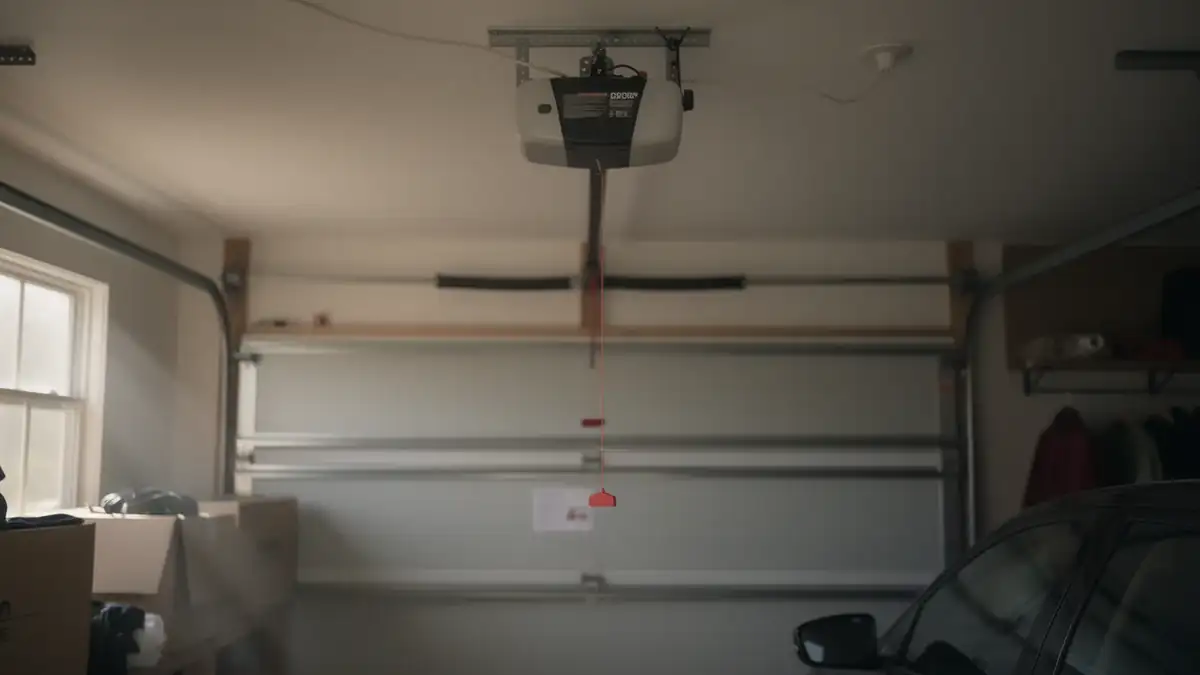
Doing Nothing For Now
It's tempting to leave a slow or noisy opener alone until it quits outright. In most of the country that's a fine bet. Here it's riskier than it looks, because a lot of the housing stock in this service area was built between 1938 and 2015, with the typical home dating to 1982 - which means a sizable share of openers were installed in the 1980s and 90s and are simply old. Chain and belt mechanisms from that era don't have battery backup, and the gearing wears in ways you can't see from the garage floor.
The failure mode that matters locally isn't gradual. It's a winter power cut that hits while the door is mid-cycle, and an old unit with no backup leaves the door wherever it stopped - sometimes half open, sometimes jammed on the track. Waiting is fine if your opener is newer and you know where the manual release is. If you're not sure of either, this is the one thing worth checking before the next cold snap, not after.
We're not going to tell you every delay ends badly. Plenty of these units run another five years with nothing more than a lubrication. But "it still works" and "it'll work when the power drops in January" are different claims.
What Local Conditions Do
This area sits in a cold, severe climate band, and that matters more for openers than people expect. Cold thickens the grease in the gearbox, which makes the motor work harder on every cycle - and a motor working harder on a 30-year-old unit is a motor closer to failing. It also matters for the sensors: photo-eye safety sensors drift out of alignment more in temperature swings, and a misaligned sensor reads to the owner as "the opener is broken" when it's really a half-inch of movement in the bracket.
Power cuts tied to winter weather are the other half of the problem. An opener with no battery backup is just dead weight during an outage - you're on the manual release, pulling the door by hand, which is fine once and miserable on the third try that week. Across the 17 named pockets of this service area, most of the stock dates to the 1980s and 90s, meaning a lot of homes are running exactly this kind of unit right now, without knowing it until the lights go out.
This corner of Virginia sits about a mile from Haymarket, with the surrounding area built out in stages over seven decades - which is part of why opener age varies block to block even within the same neighborhood.
The Cost of This Job
We don't have a flat number to hand you here, and we're not going to invent one
What we can tell you is how to think about the decision. A sensor realignment or a lubrication service is a small job regardless of the opener's age. Replacing the logic board or the drive gear on a unit from the 1980s or 90s is a bigger call, because parts for openers that old are getting harder to source - and at some point the labor to keep an old unit alive costs more than starting fresh with a unit that has battery backup built in.
Median household income in this area runs $111,503
Which is worth mentioning only because it changes the math on that decision. For a lot of owners here, a full opener swap that adds backup power and better safety sensors is a reasonable one-time cost rather than a stretch - it's not the same conversation as it would be for a budget stretched thin. That doesn't mean replace-everything is always the right call. If your opener is newer, cycling fine, and just needs a sensor nudged back into place, that's a small job and you shouldn't be sold a new motor for it.
What Is Going On
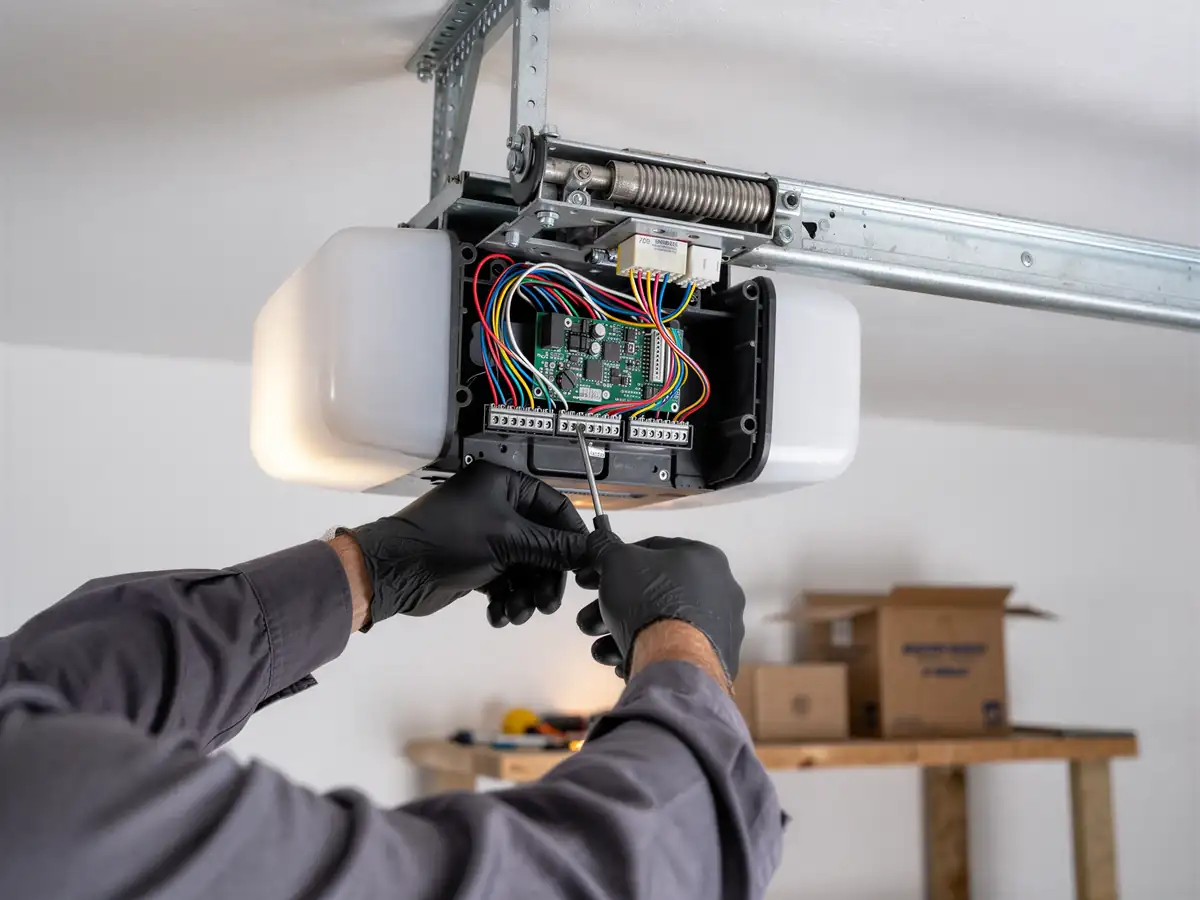
When an opener acts up here, we're usually looking at one of three things: age-related wear in a 1980s or 90s unit, sensor drift from temperature swings, or a backup battery issue that only shows up when the power actually cuts. None of those are visible from across the garage - they show up as symptoms that look identical to each other. A door that reverses halfway could be a bad sensor or a dying logic board. A door that won't budge in a cold morning could be grease gone stiff or a capacitor on its way out.
With roughly 9,660 owner-occupied houses out of 18,943 households across this service area, and most of that stock sitting in a 1980s-to-90s band, we see the same handful of failure patterns again and again. That's useful - it means a first visit is usually enough to tell you which of the three it is, not a guessing game that drags into a second trip.
One honest limitation: if your opener's circuit board is a discontinued model, we may not have the exact replacement part on the truck, and it can take a few days to source. That's not a reason to put off the diagnosis - it's a reason to start it before the part becomes urgent.