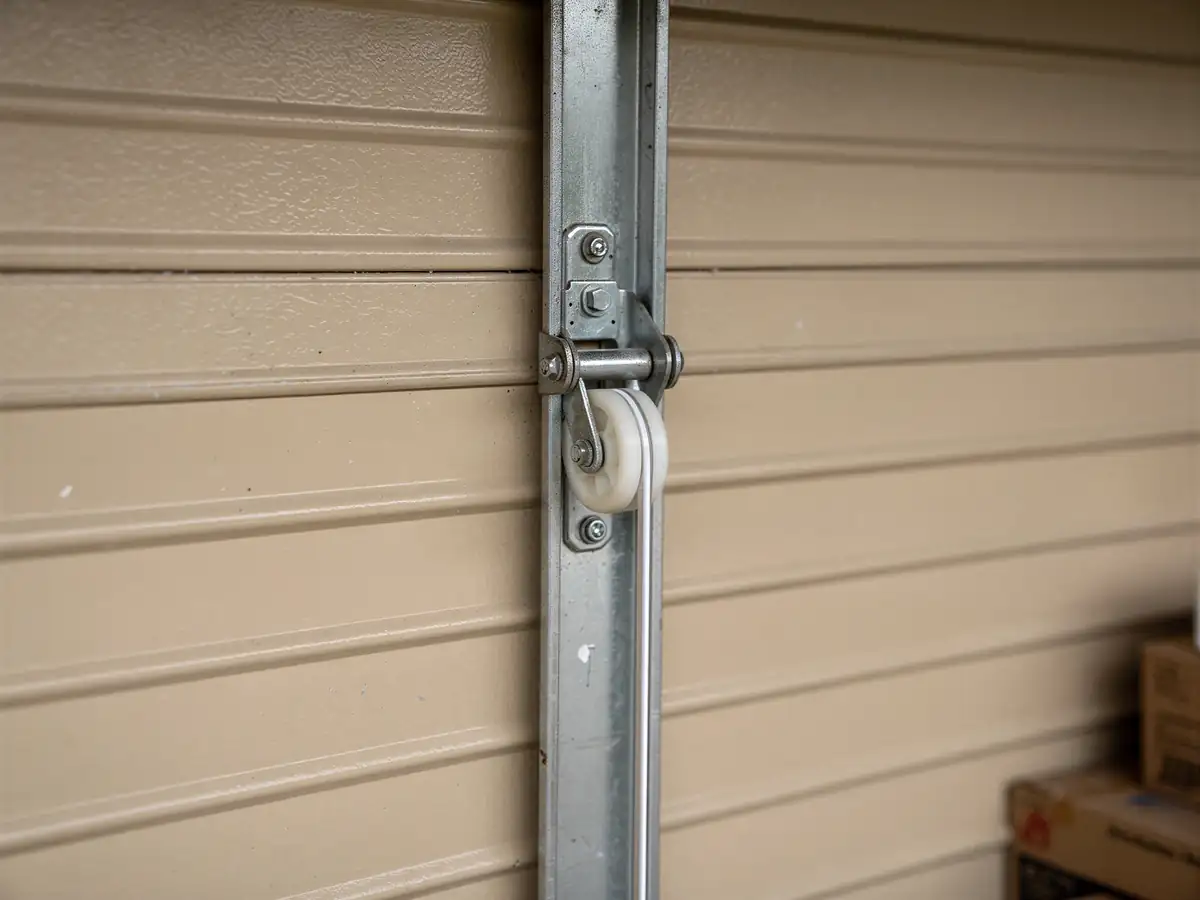
What You Are Seeing
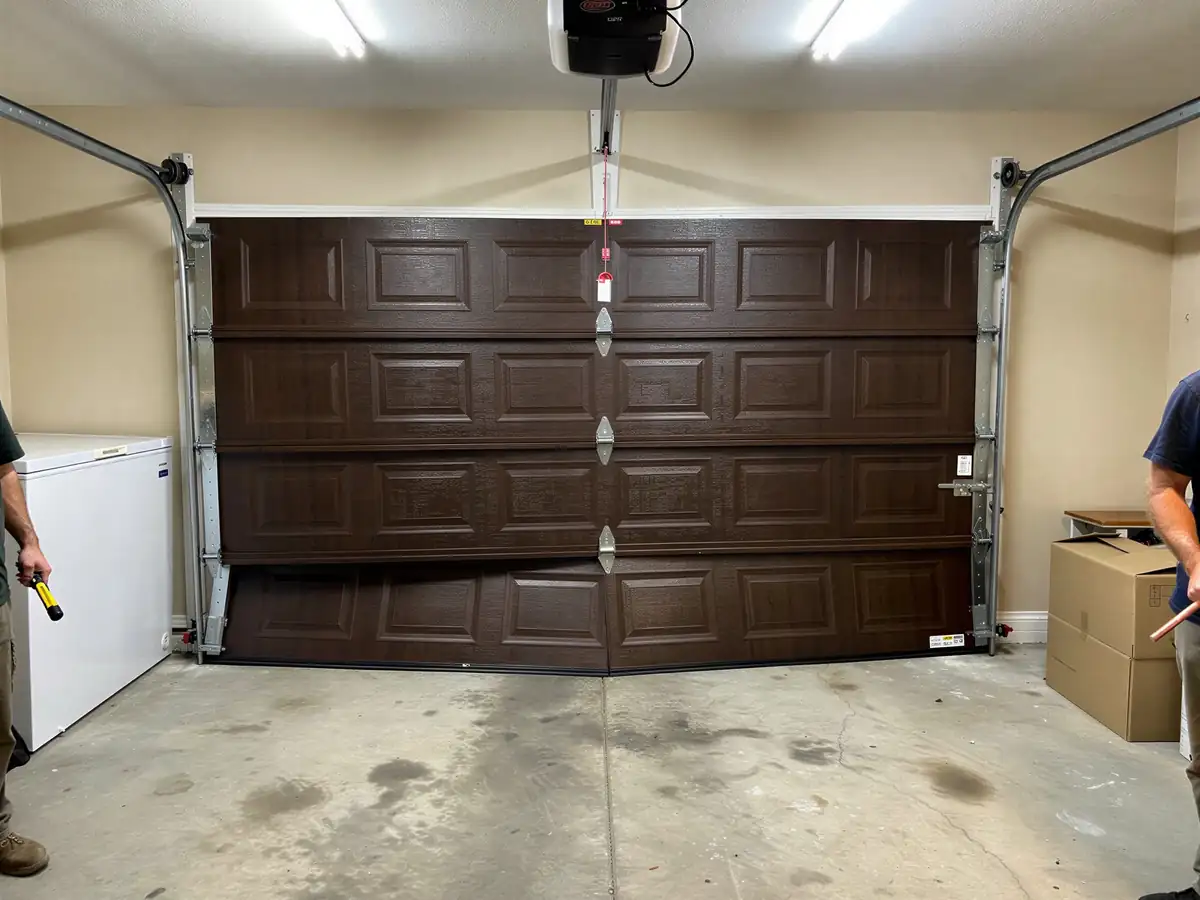
The fault here is almost always the same: steel rollers that have worn an oval groove into themselves, so the door rattles going up and grinds coming down, sometimes jumping the track on the last foot before it seats. You'll hear it before you see it - a dry, metallic scraping that gets louder in cold weather because the old roller stems have lost their factory lubrication and nobody's topped them off in years.
Yorkshire's housing stock centers on 1985, which puts most garage doors here squarely in the era before nylon rollers became standard. Builders spec'd plain steel rollers on steel track because that's what was cheap and available - they work, but they're loud, they wear fast, and the bearings inside the roller stem seize up rather than being serviceable. If your door is original to the house, there's a good chance you're running 40-year-old hardware that was never meant to be greased, only replaced.
This area sits in a cold-severe climate band, and that matters for rollers specifically: steel contracts in the cold, track gaps tighten, and a roller that's already worn oval will bind harder on a 20-degree morning than it will in July. That's usually when people finally call - not because the door broke, but because it got loud enough, or stiff enough, that they can't ignore it anymore.
Doing It Yourself
Swapping a single roller is within reach for someone comfortable with hand tools, if the door is disconnected from the opener and the springs are left alone. The brackets on most of these original 1985-era doors are riveted rather than bolted, which means you're drilling out a rivet, not just backing out a screw - and if you strip the hole, you're now fabricating a repair instead of doing a straight swap.
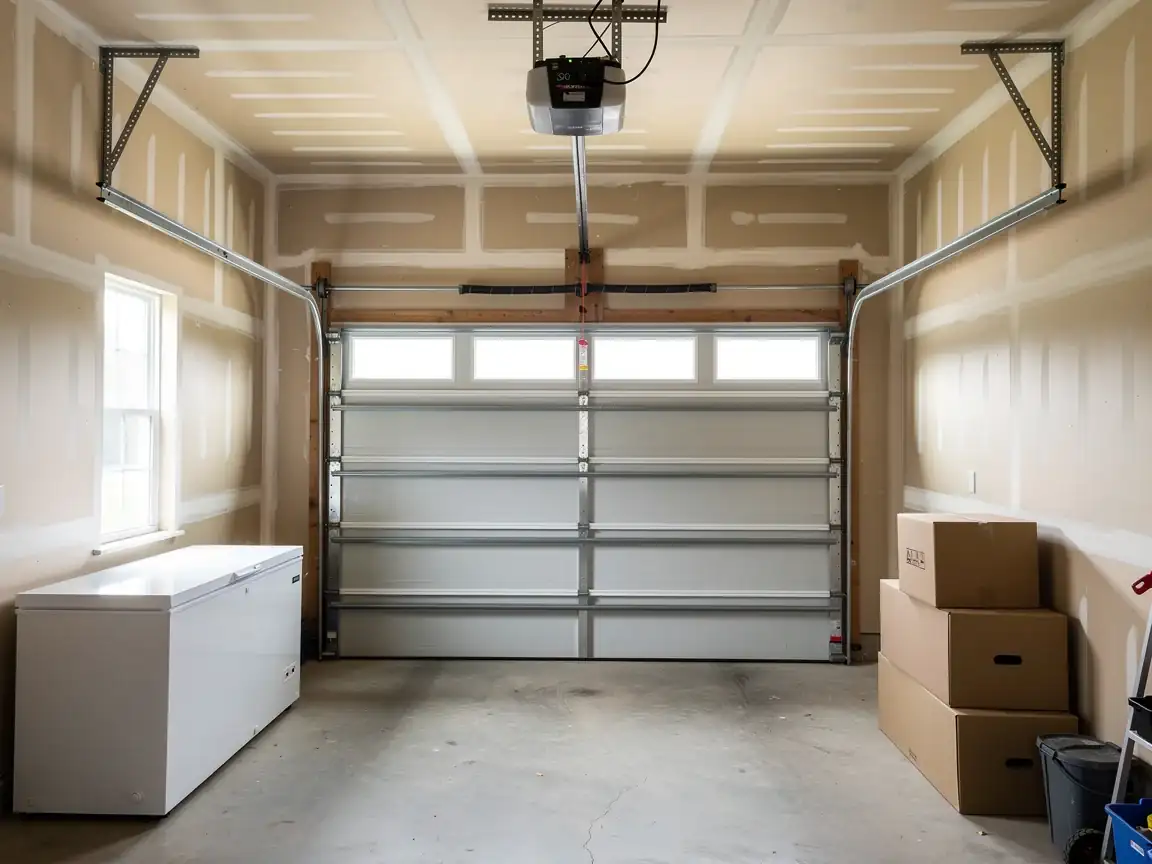
Where this gets dangerous fast is the bottom bracket on either side of the door. Those brackets hold the end of the wound torsion cable under real tension, and loosening the wrong fastener there can snap a bracket free hard enough to break fingers or worse. If the roller you're replacing is one of the two bottom rollers, that's not a project to learn on.
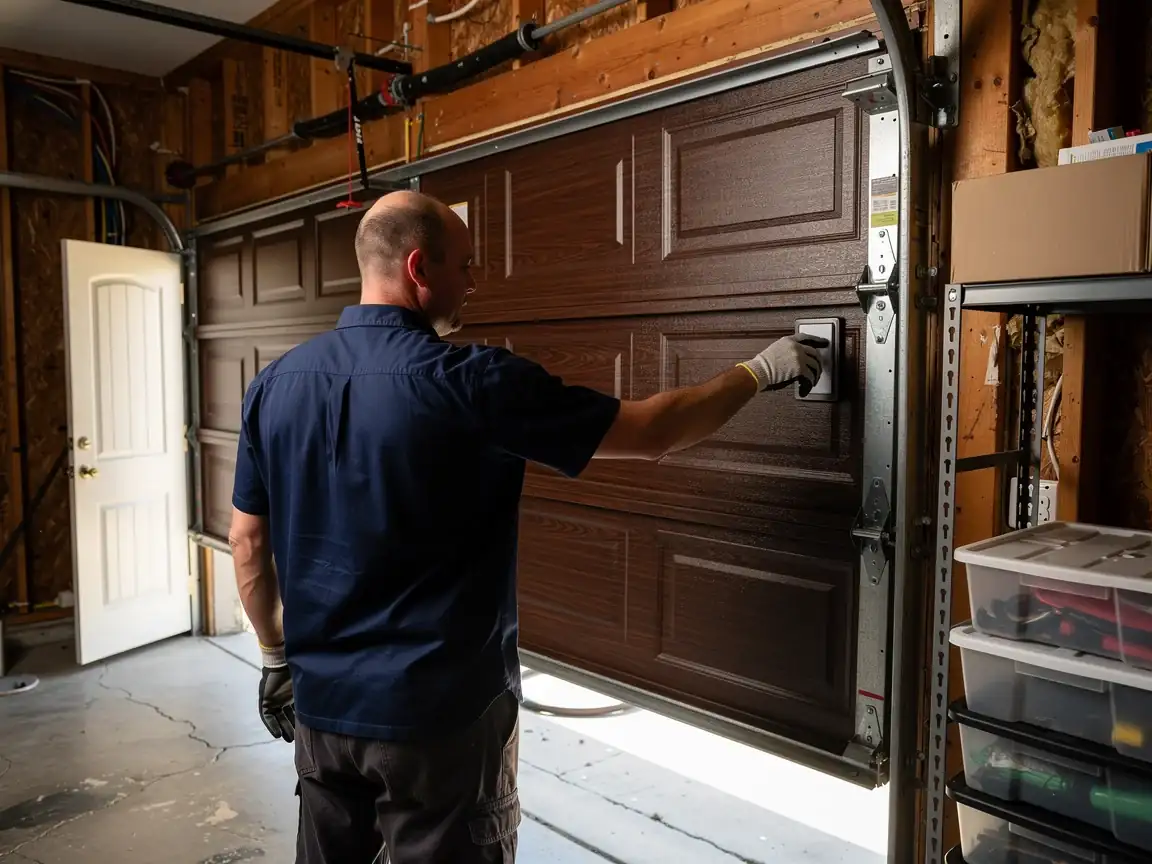
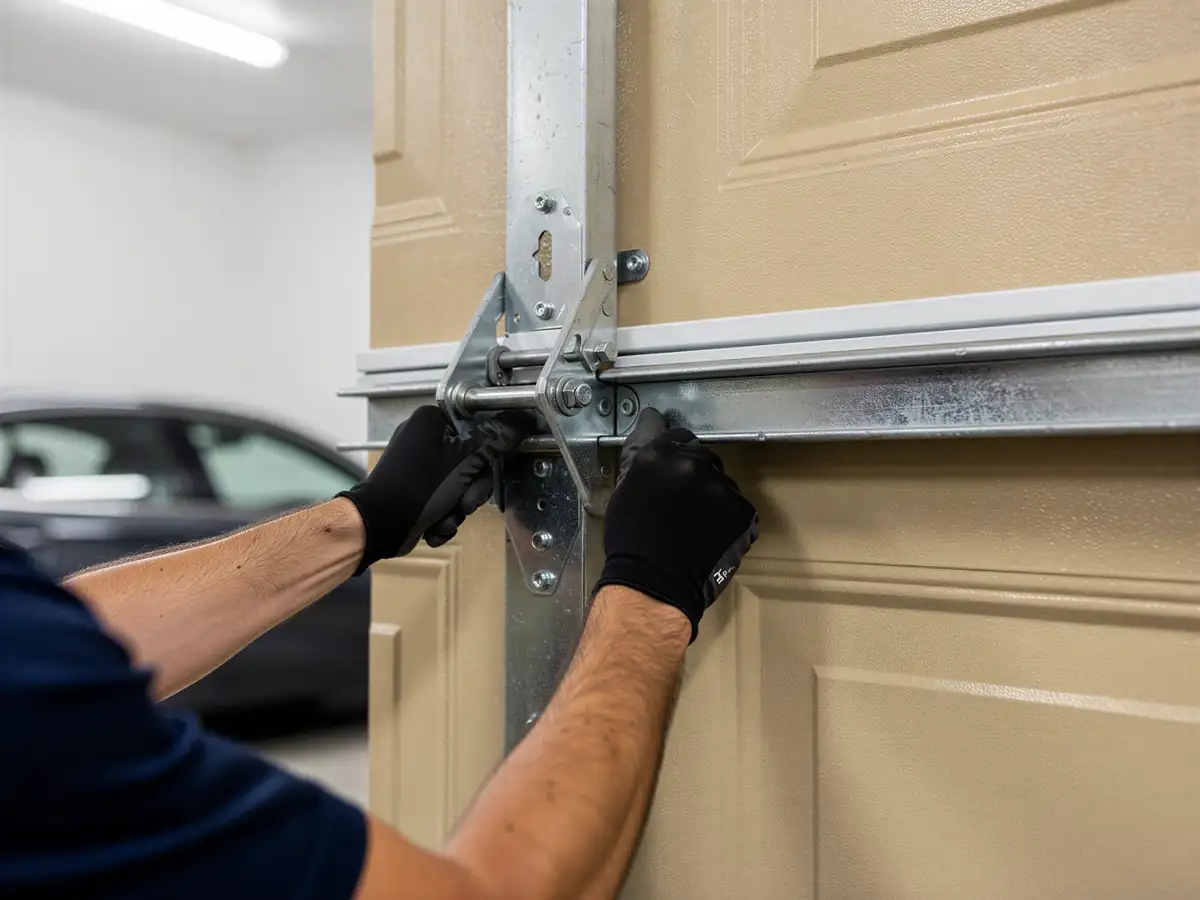
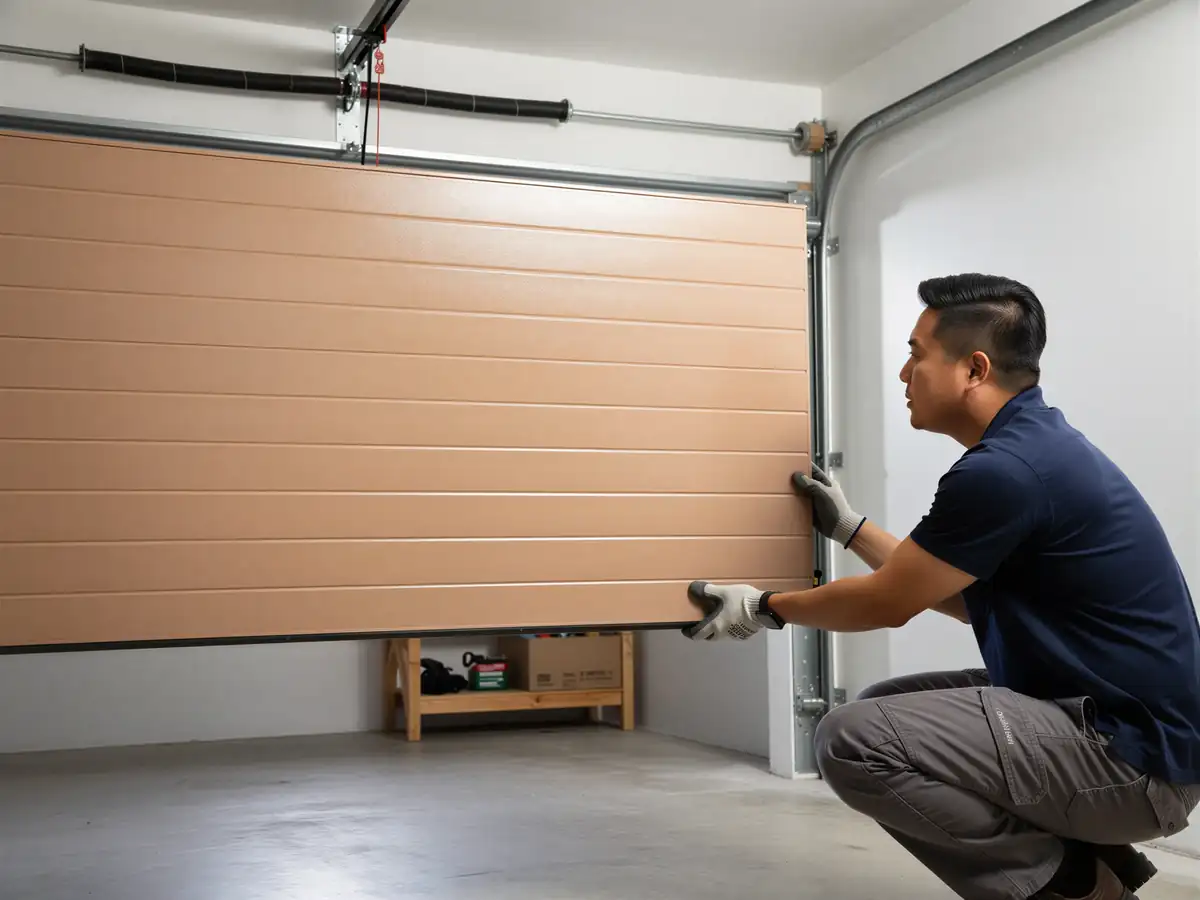
Top and middle rollers on a disconnected, manually-raised door are a reasonable DIY job: pull the hinge pin, slide the old roller and stem out, slide the new nylon one in, reseat the pin. Do all of them at once if you're in there, since a 1985-built door running one new roller next to five worn ones just moves the noise instead of fixing it. If you're not sure which bracket you're looking at, that's the line where it's worth a call instead of a guess.
How We Fix It
We replace the full roller set with sealed nylon rollers rather than patching in one or two
Because on a door this age the rest of the steel rollers are at the same wear point even if they're not making noise yet. Nylon rollers run quieter and hold up better through repeated freeze-thaw cycles than the original steel hardware these houses came with.
We check the track alignment at the same time
On a door that's been running worn, oval rollers for years, the track itself can rack slightly out of plumb from the uneven side-load - swapping rollers into a track that's already bent just wears the new rollers unevenly too. If the track needs reseating or minor adjustment, we do that as part of the job rather than send you a door that's quiet for a month and loud again by spring.
We're coming from Gainesville, about 10 miles out
So we schedule the visit rather than drop by on a whim - bring us the roller count or let us look at it on arrival and we'll confirm what the door actually needs before we start.
- 10 miles
The Cost of This Job
We don't have a fixed price to quote here without seeing the door - roller count, bracket condition, and whether the track needs correcting all move the number. What we can tell you is what drives the cost up versus down: a full set of nylon rollers on a door with straight track and intact brackets is a straightforward job, while riveted original brackets that are worn or bent add labor because they need to be drilled out and replaced, not just reused.
Yorkshire's median household income runs a bit above the wider service area, and most of the roller jobs we see here are on owner-occupied houses where the door has simply never been touched since it was installed - which usually means the whole roller set needs doing at once rather than a single roller. That's worth planning for rather than being surprised by on the day.
We'll give you a real number once we've looked at the door, not a phone estimate built on guesses about hardware we haven't seen.