Doing It Yourself
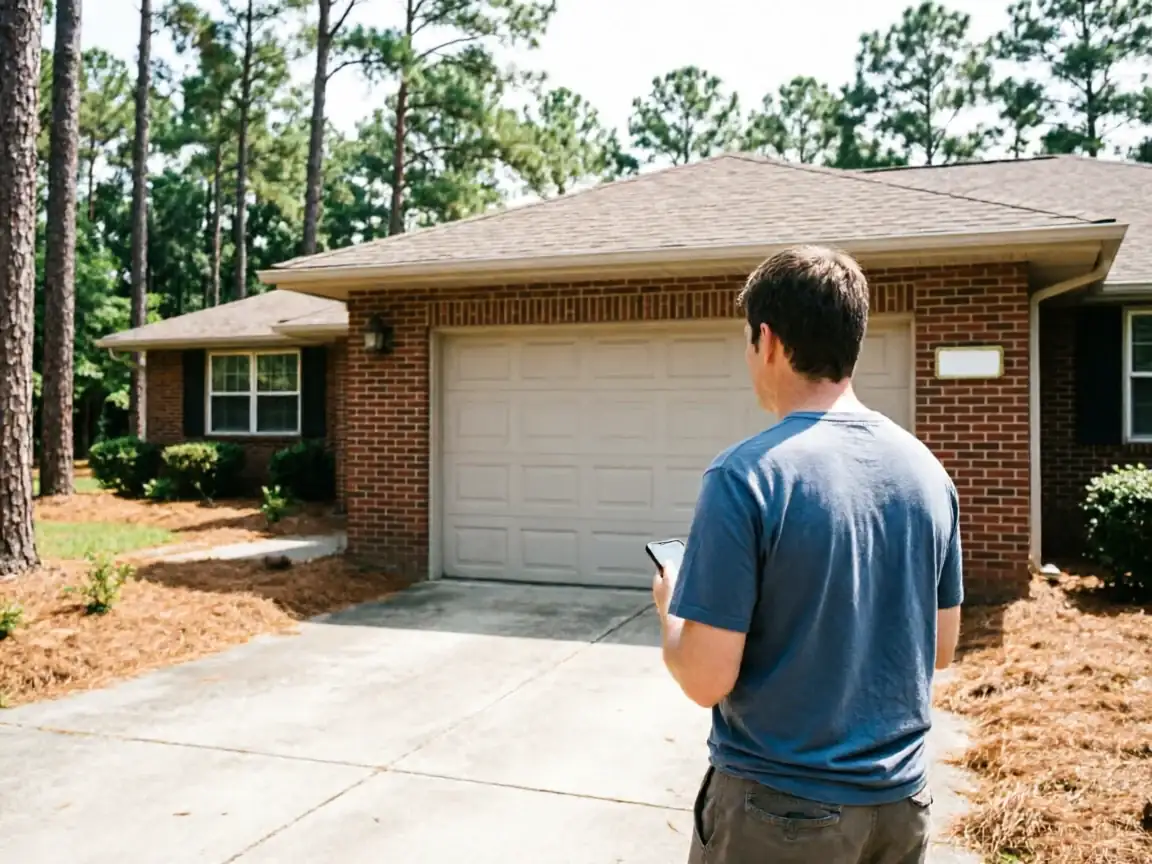
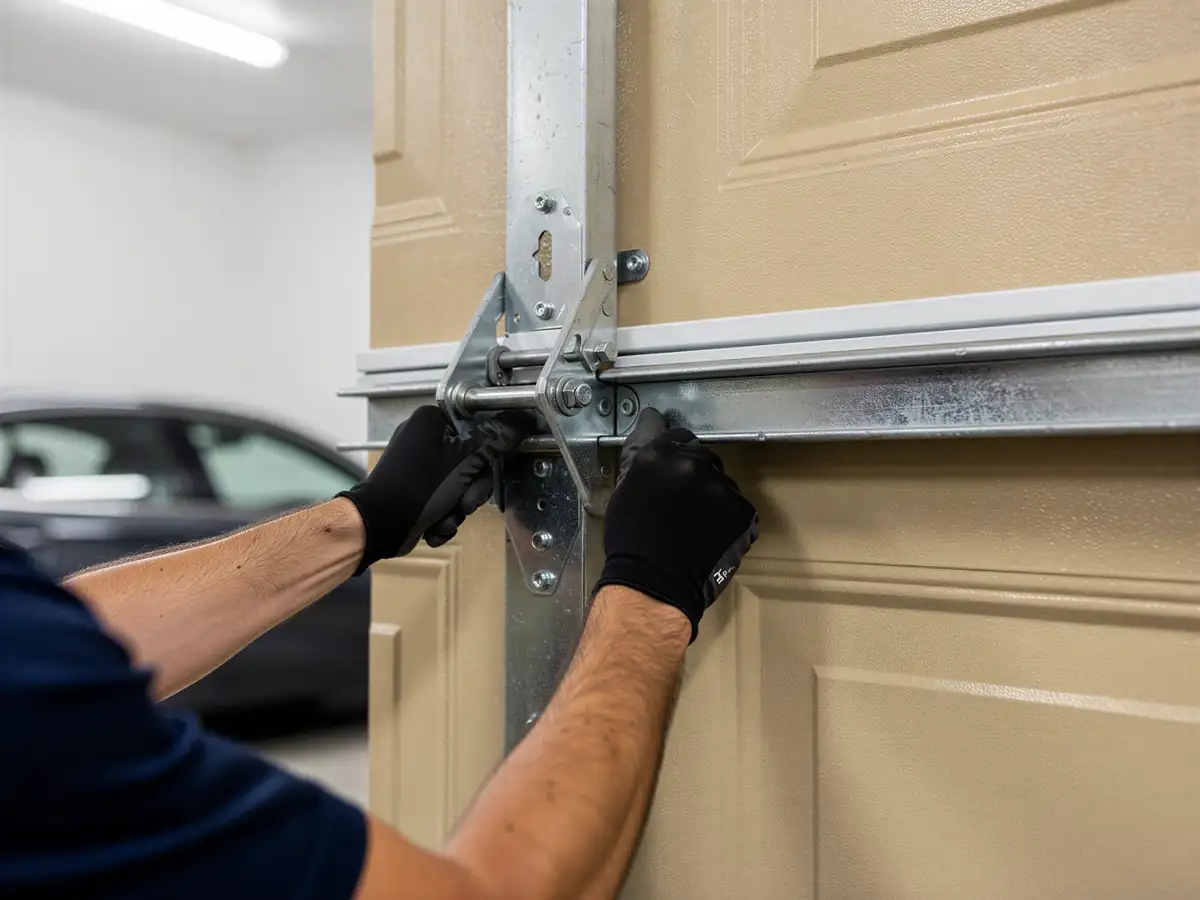
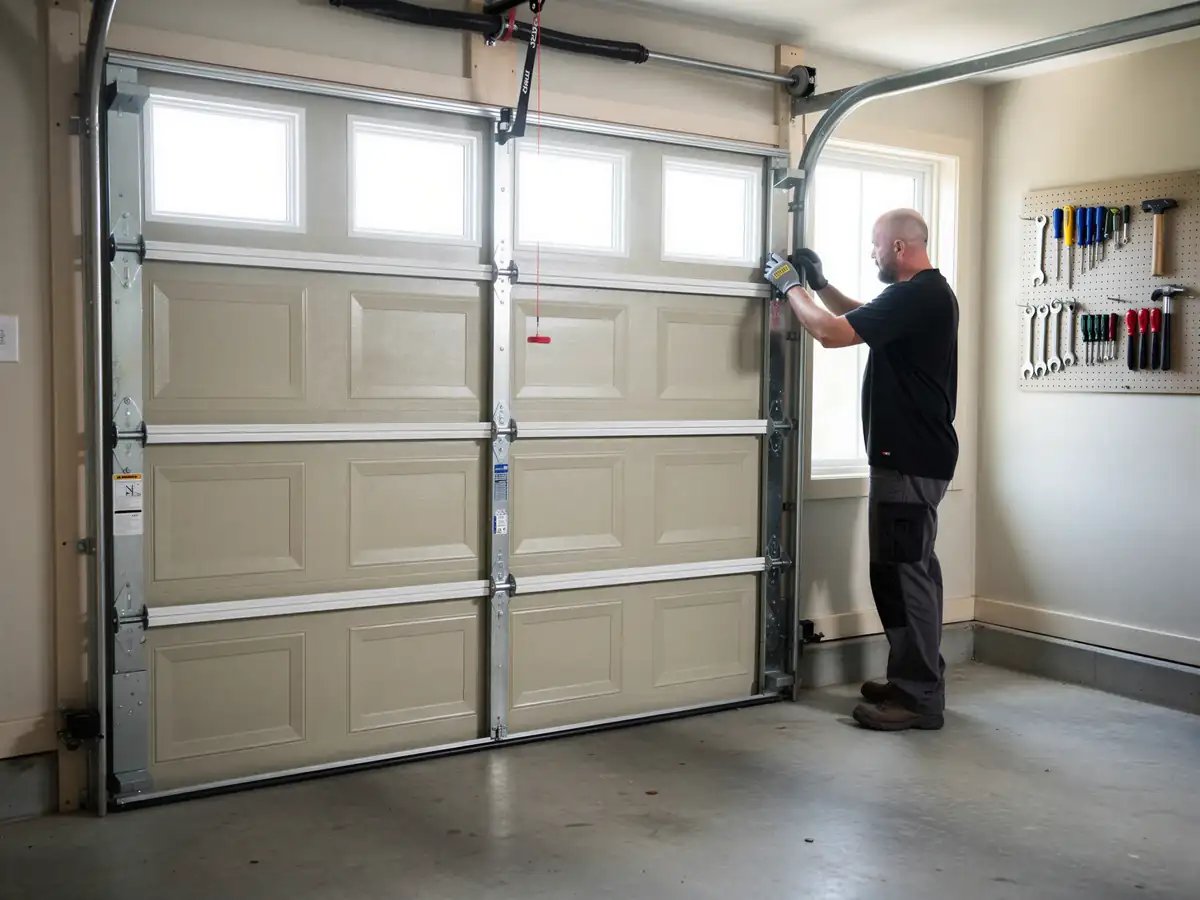
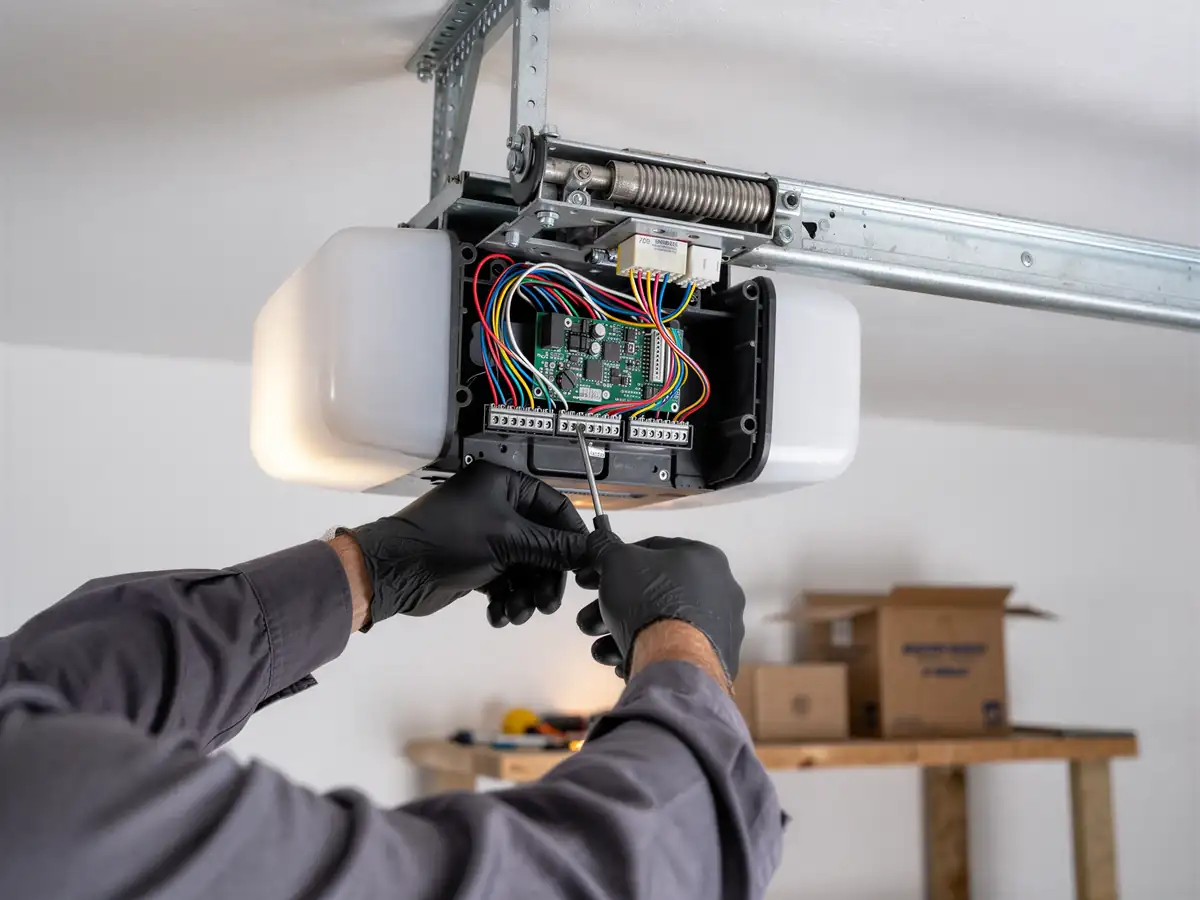
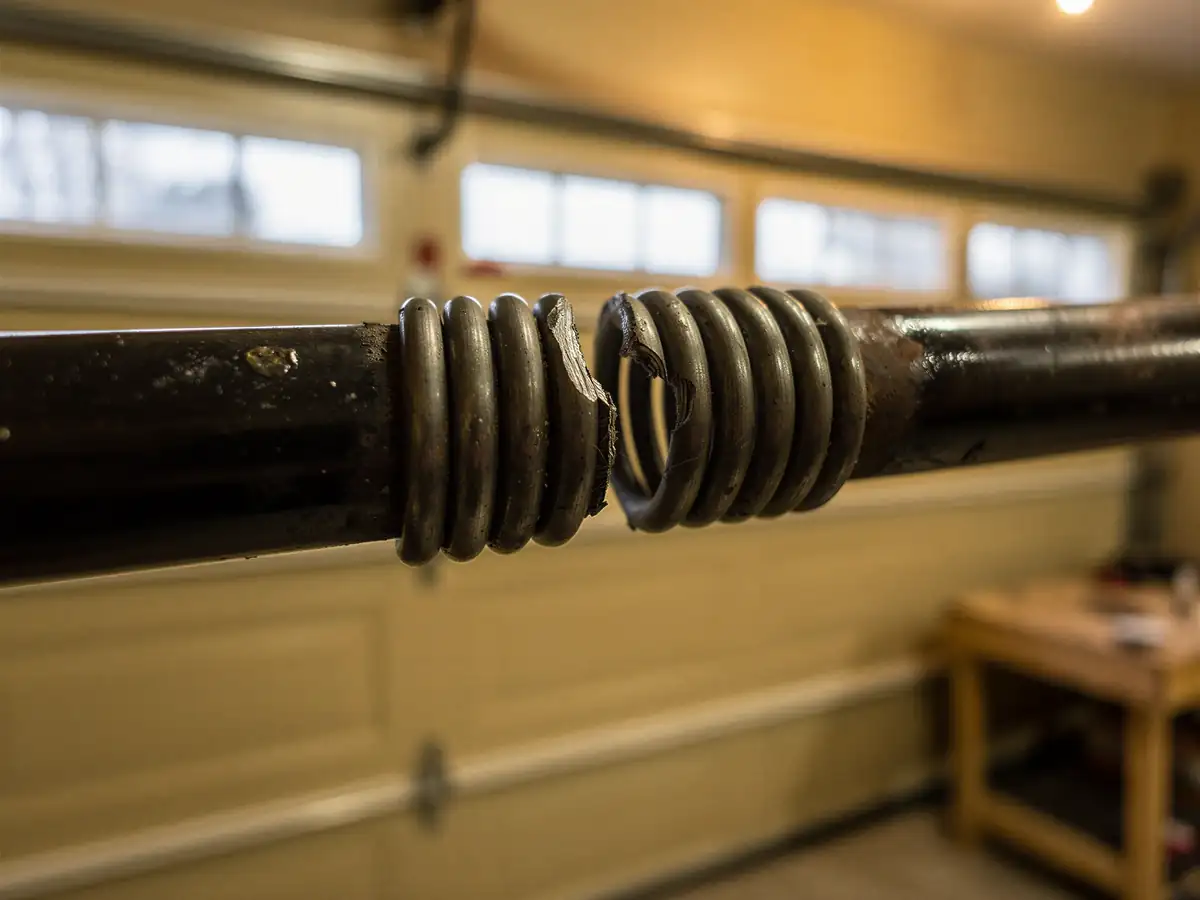
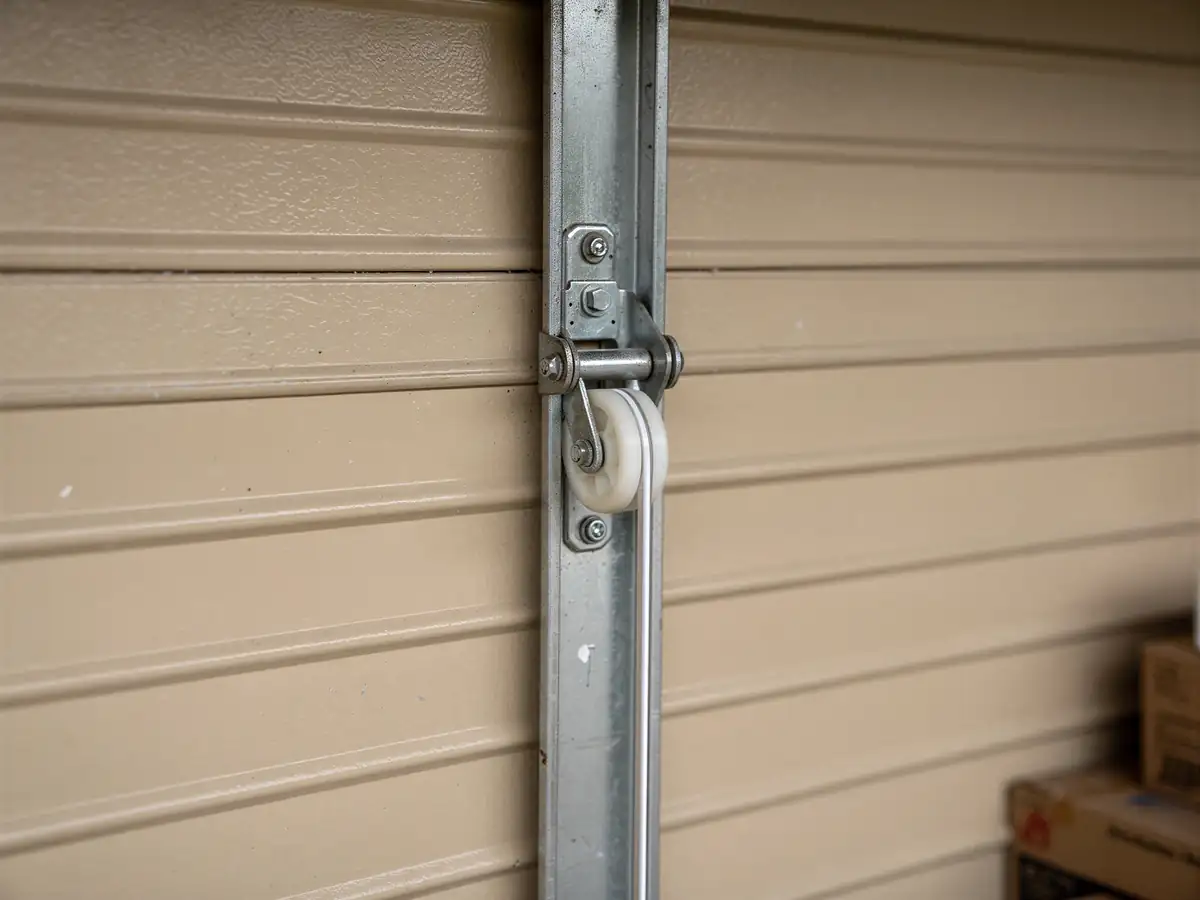
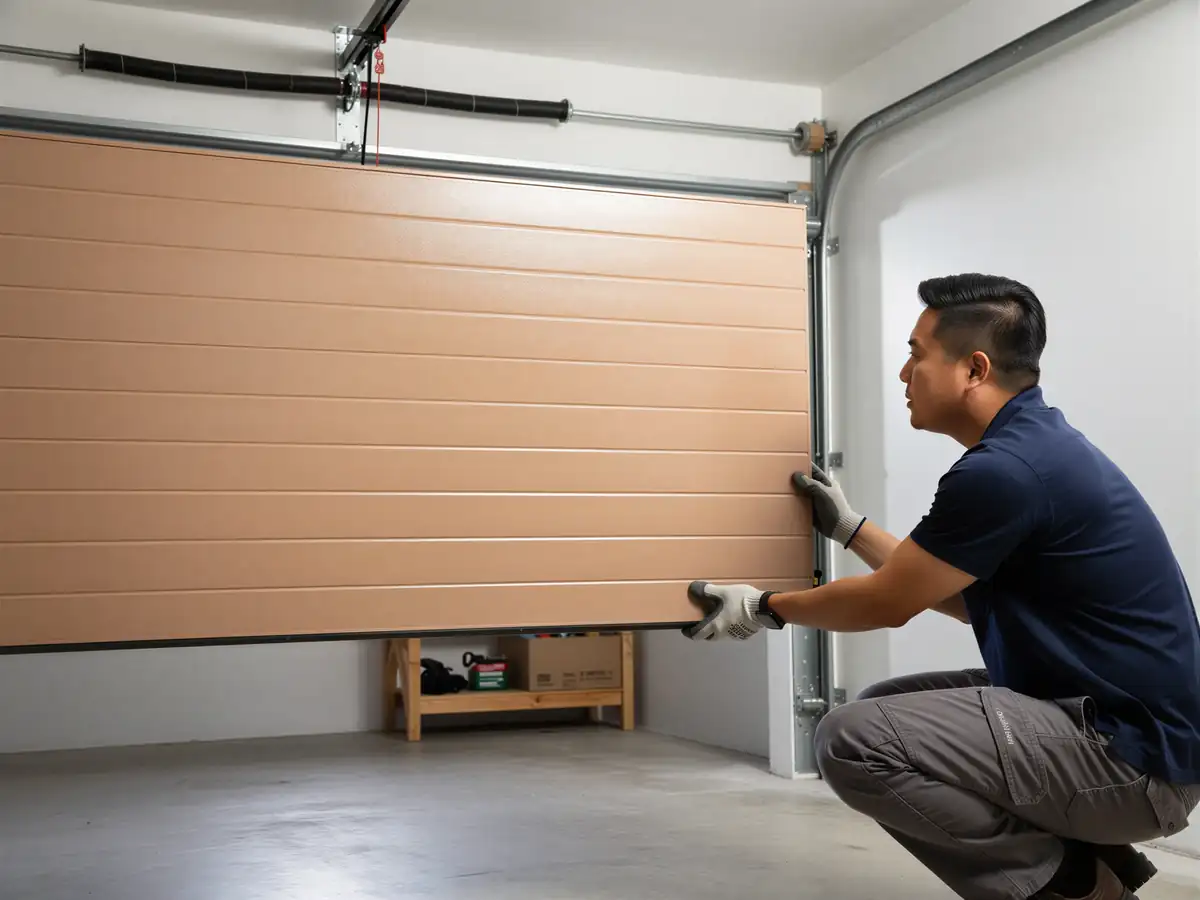
Most houses in Yorkshire went up around 1985, which puts you square in the era of steel sectional doors on extension spring systems - not the torsion setups that came standard a decade or so later. That matters because extension springs are the ones homeowners get hurt messing with. They're mounted along the horizontal track, under tension, with no drum to contain the wind-up the way a torsion spring has. If a cable frays or a spring looks stretched past its coils, that's not a tighten-this-bolt job. Lubricating hinges, checking the weatherstrip at the bottom panel, and tightening loose roller brackets - those you can do safely with the door closed and the opener unplugged. Anything involving the springs themselves, the cables, or the track alignment on a door this age, leave alone. The hardware from this period wasn't built with the safety cable retrofits you see on newer doors, so a spring failure here can let a cable whip loose. We'd rather get a call than have you find that out mid-repair.
How We Fix It
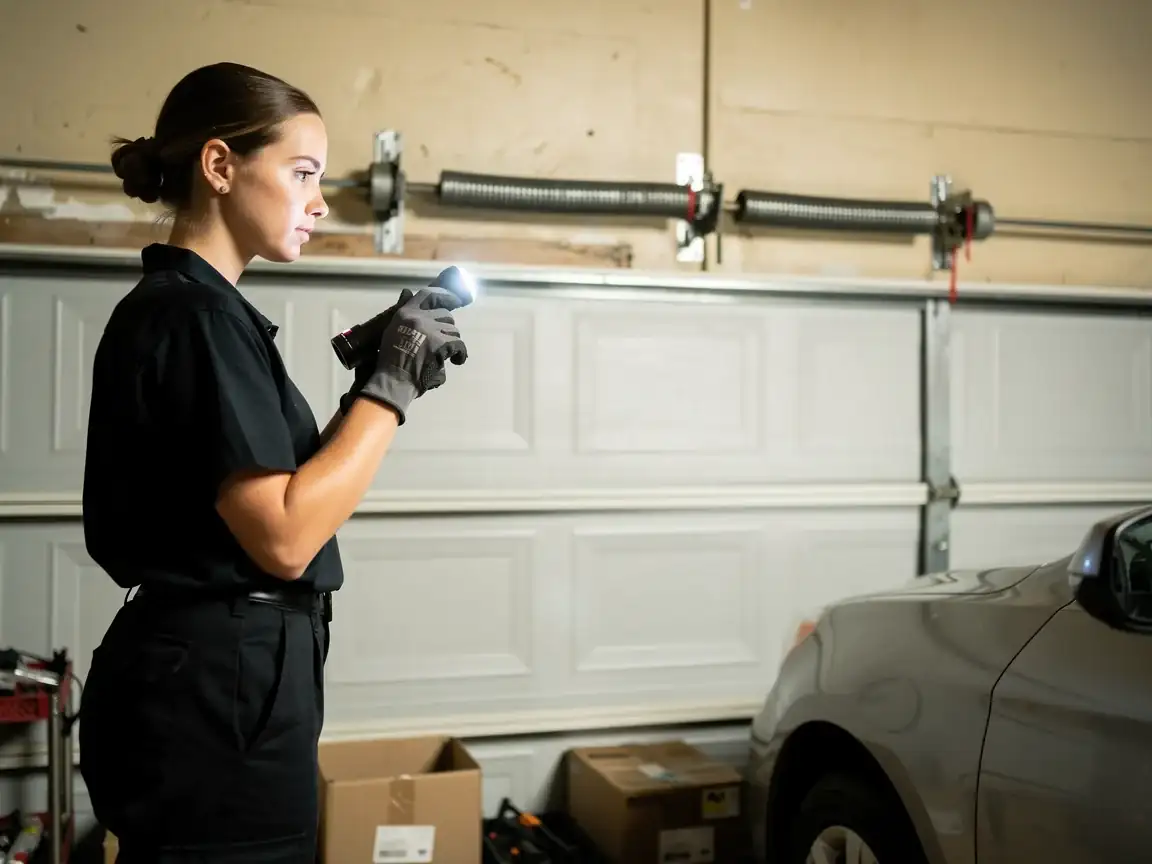
We come out from Gainesville, about 10 miles up the road, so there's no local branch or drop-in - it's a scheduled truck visit, same as the rest of the service area. On a 1985-era door the usual call is an extension spring replacement, a cable swap, or a roller track that's bent from age rather than impact. We check both springs even if only one has let go, because they wear at close to the same rate and a mismatched pair just means a second failure a few months out. Openers from this build era are often past their useful life entirely, and a lot of the time replacing the opener costs less than hunting parts for a chain-drive unit nobody stocks anymore. We'll tell you straight if a repair isn't worth it against a new door or opener - we don't run up a bill patching hardware that's going to fail again next winter.
What You Are Seeing
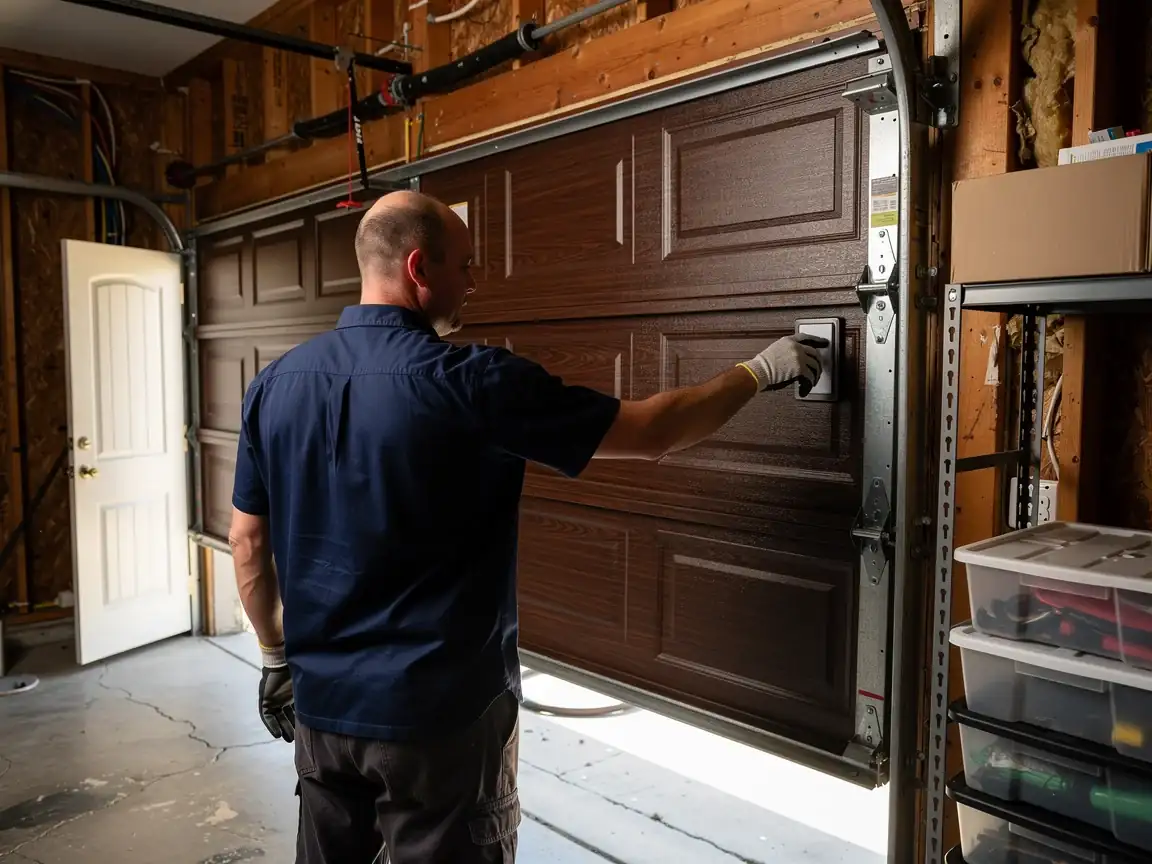
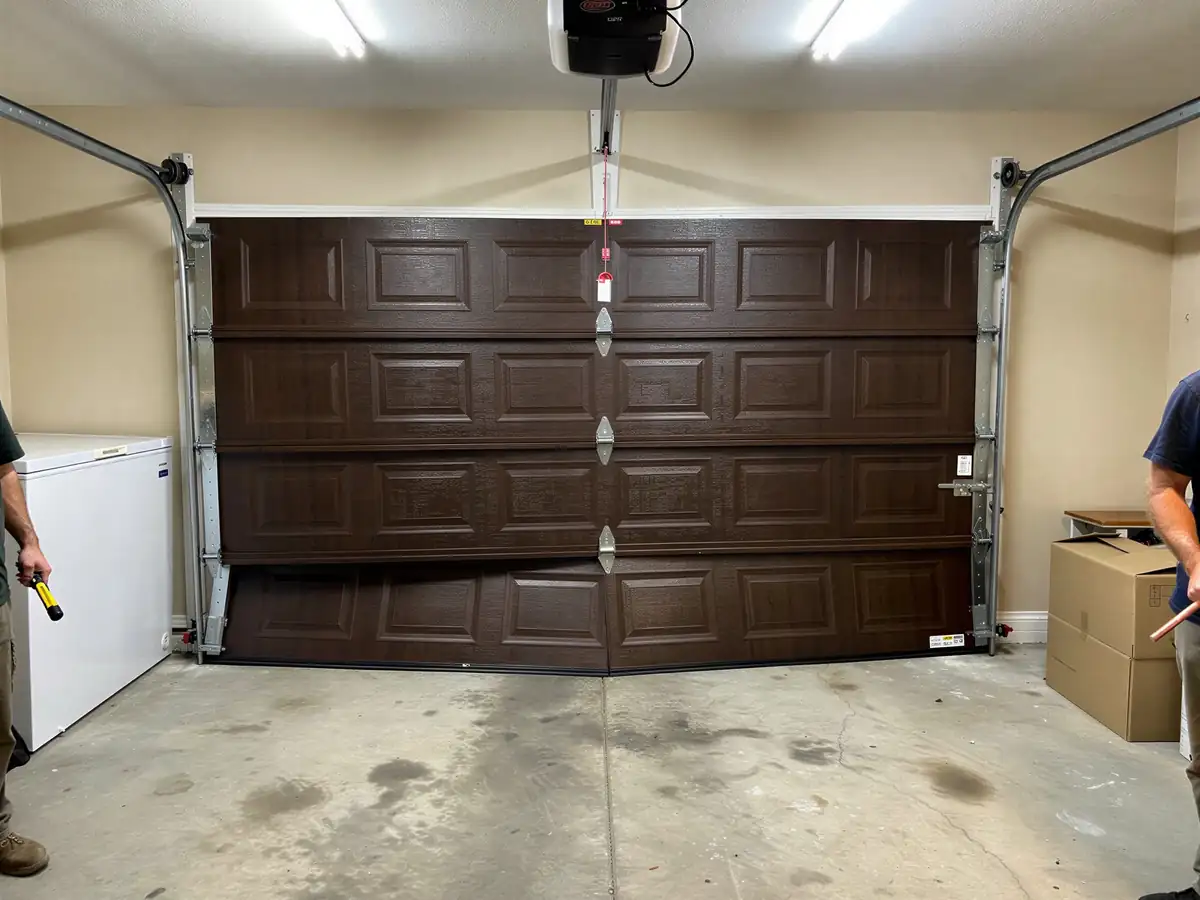
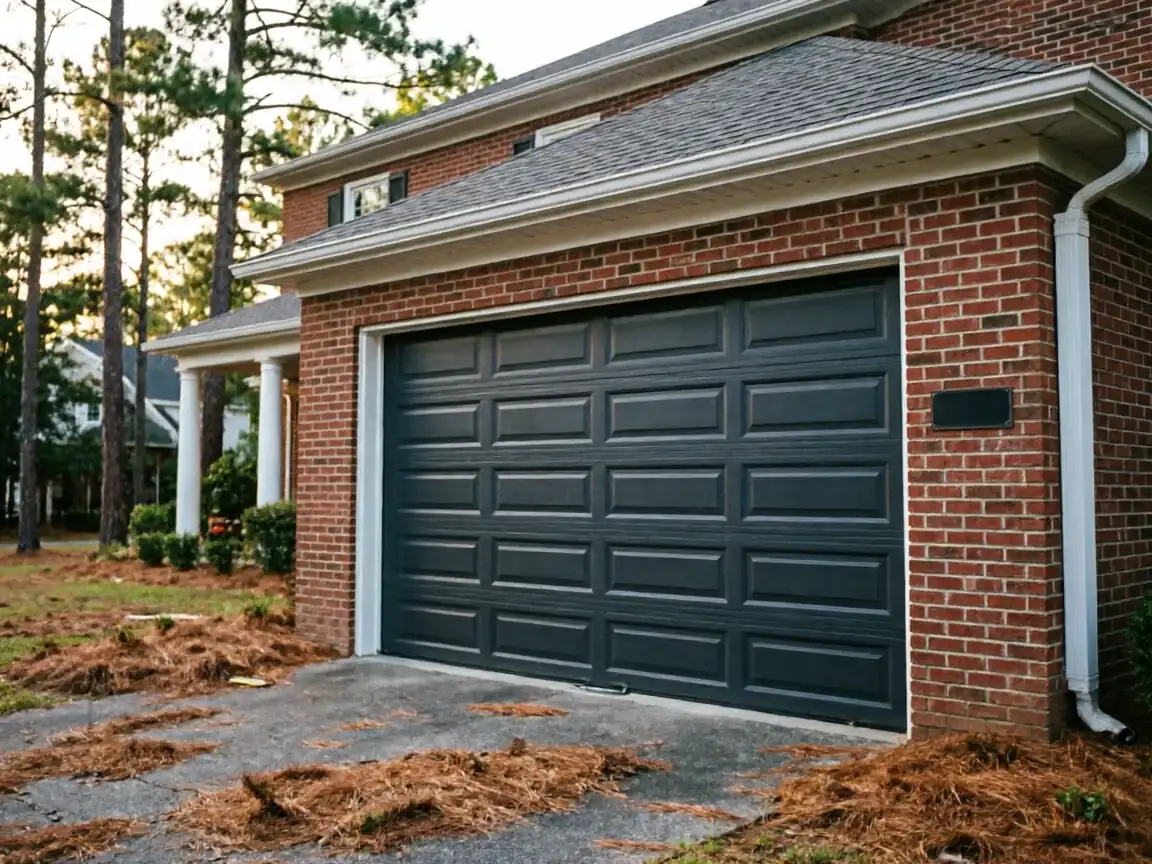
This area sits in a cold-and-severe climate band, and a door built in the mid-1980s wasn't insulated to today's standard - so the symptoms we hear about most are stiff springs on the first hard-freeze morning, a track that's pulled slightly out of alignment from decades of seasonal contraction, and weatherstripping that's cracked and let drafts in along the bottom panel. If your door groans or hesitates specifically on cold mornings and runs fine by afternoon, that's the steel contracting against old hardware tolerances, not a failing opener. If it's uneven lifting - one side rising faster than the other - that's usually a spring that's lost tension on one side while the other holds, which is common once a door crosses the 30-year mark.