Doing It Yourself
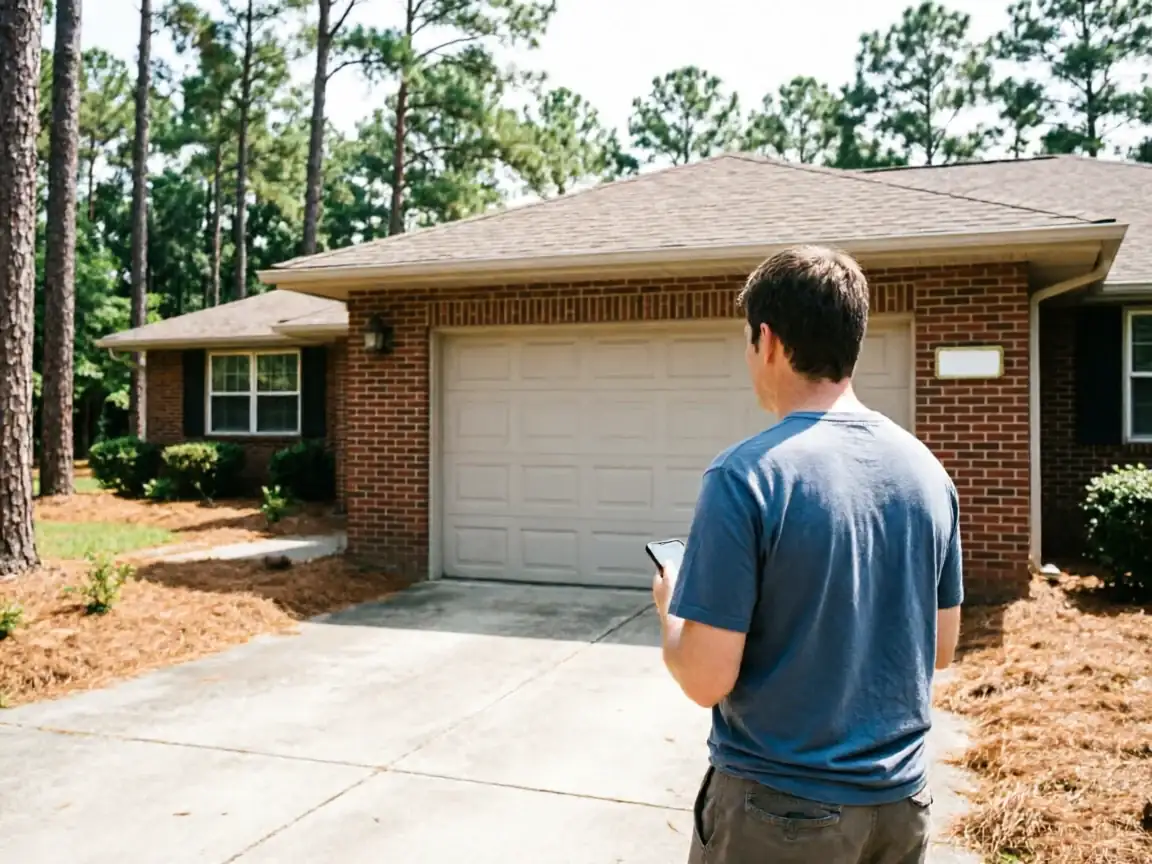
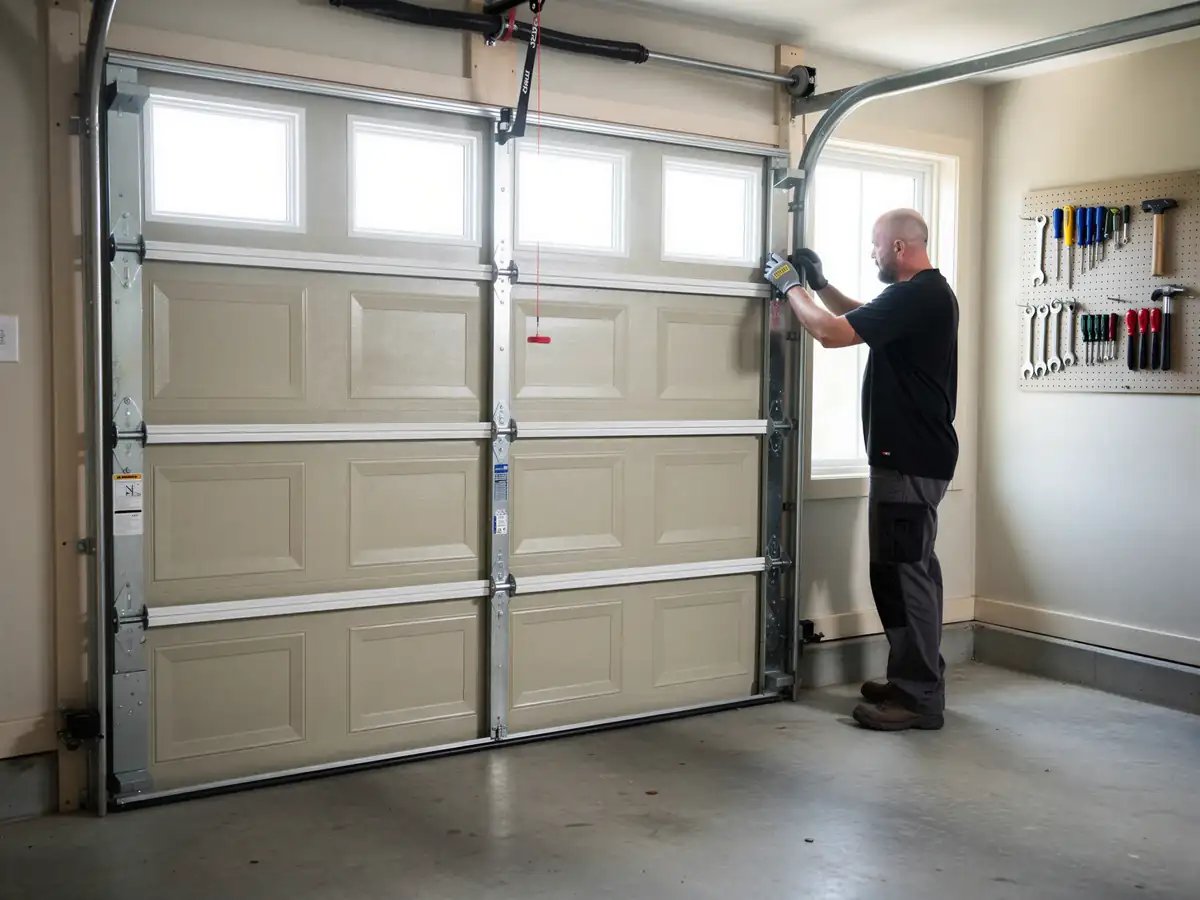
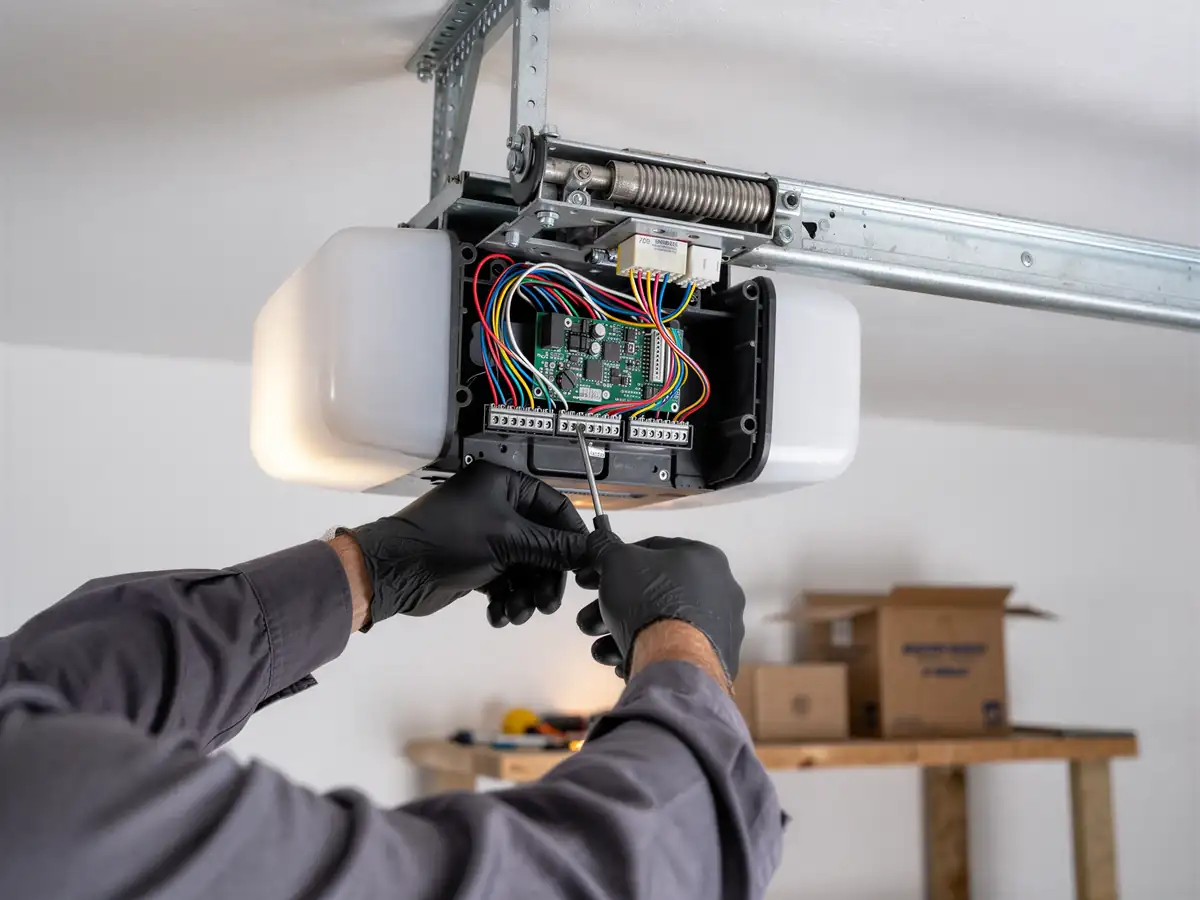
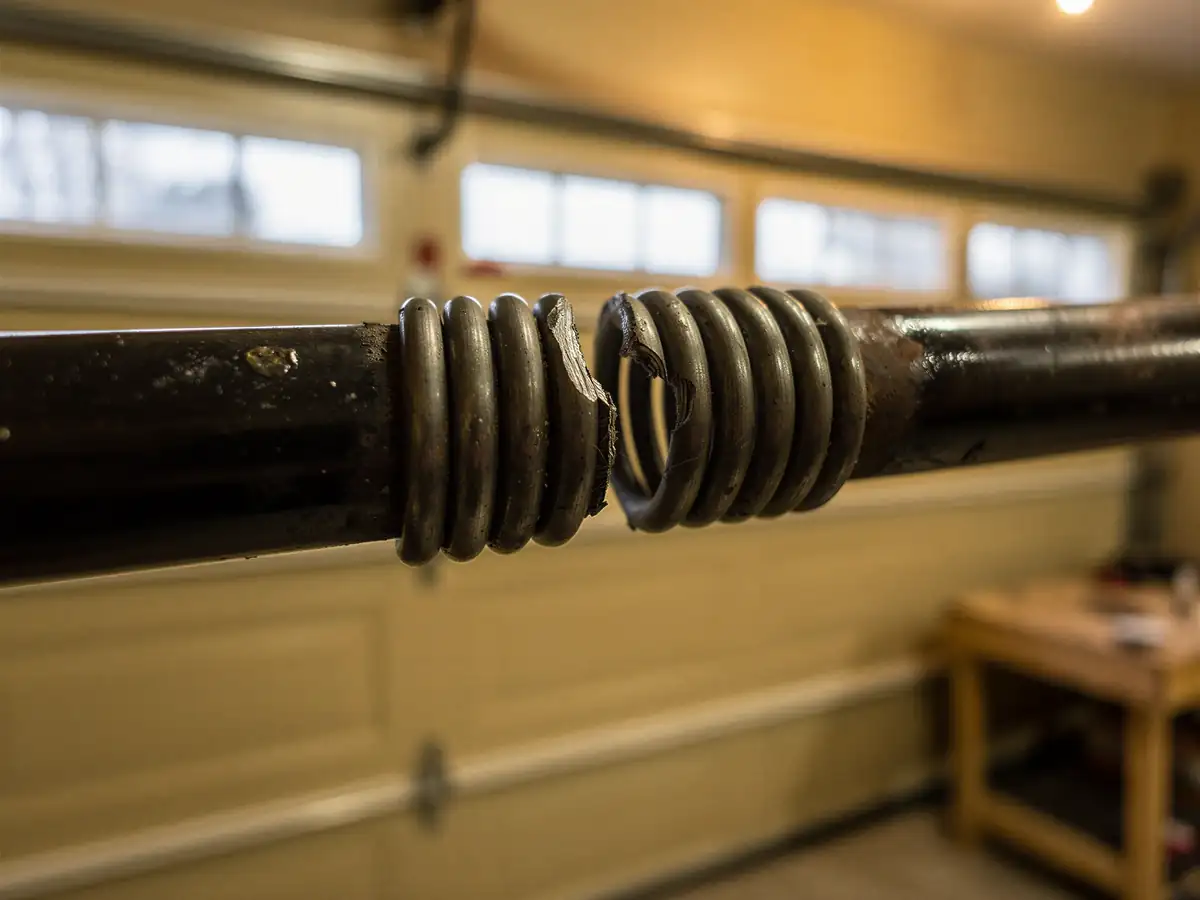
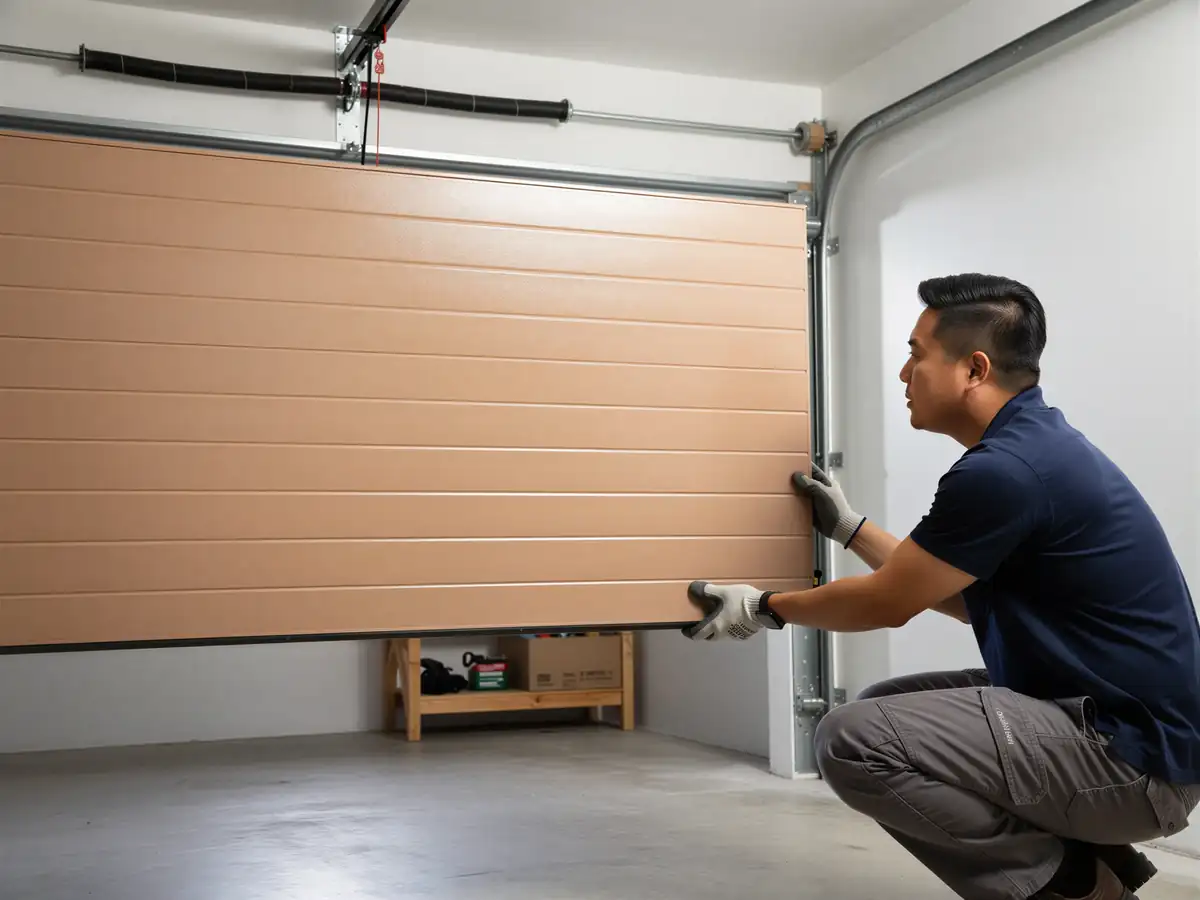
A door that's jumped its track looks like a job you can muscle back into place, and sometimes you can - if it slipped an inch at the bottom roller and the door is still square in the opening. What you can't safely do is force a door back onto bent track while the springs are still loaded, or when a cable has come off the drum. With median household income here at $107,283, we get it - the instinct is to save the service call. But most Yorkshire houses date to around 1985, which puts a lot of doors on steel track that's over 30 years old and already fatigued at the bend. Pulling on a door that's off-track on old track can snap a roller stem or pull the track clean off the jamb, and then you're paying for track and a door panel instead of a service call. If the door came off on one side only and the opener still has slack in the chain, stop, disconnect the opener, and don't run it again until someone's looked at the rollers and the track brackets. That's the one line we'd draw for DIY here: separate the opener from the door before you touch anything else.
How We Fix It
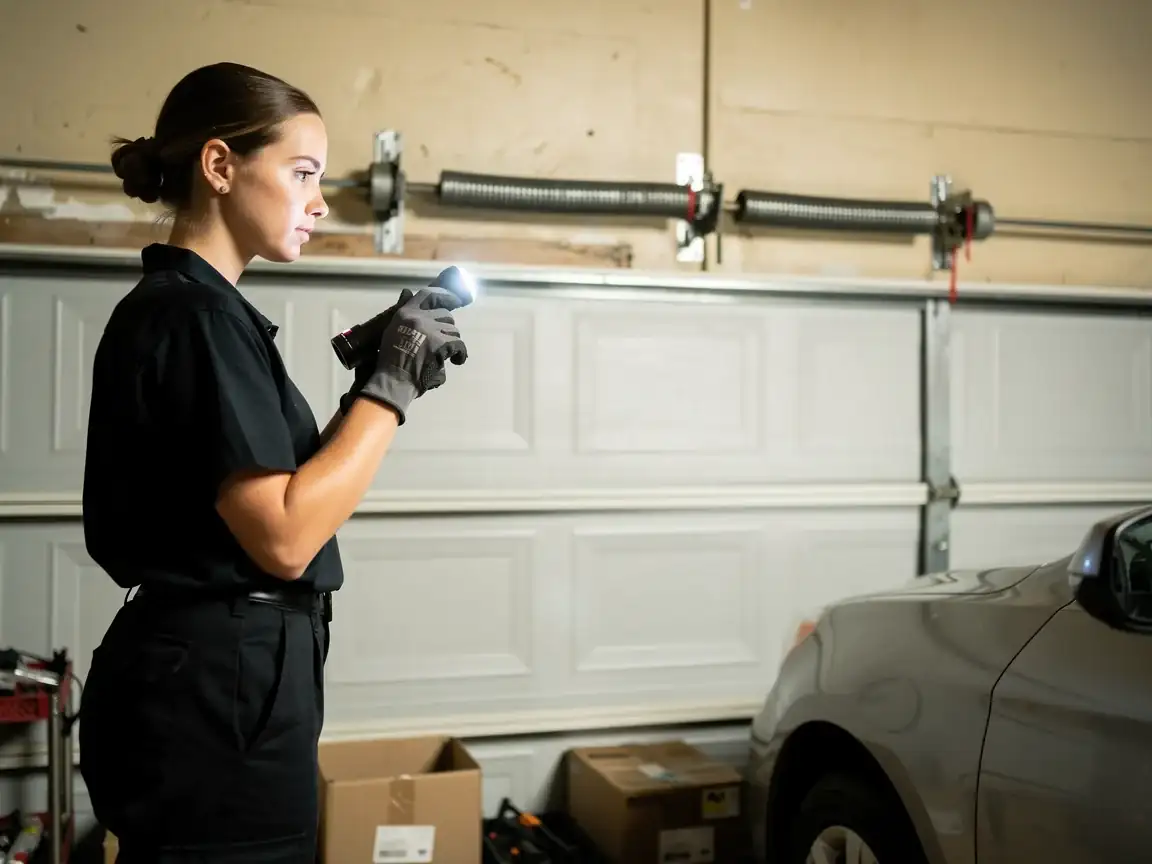
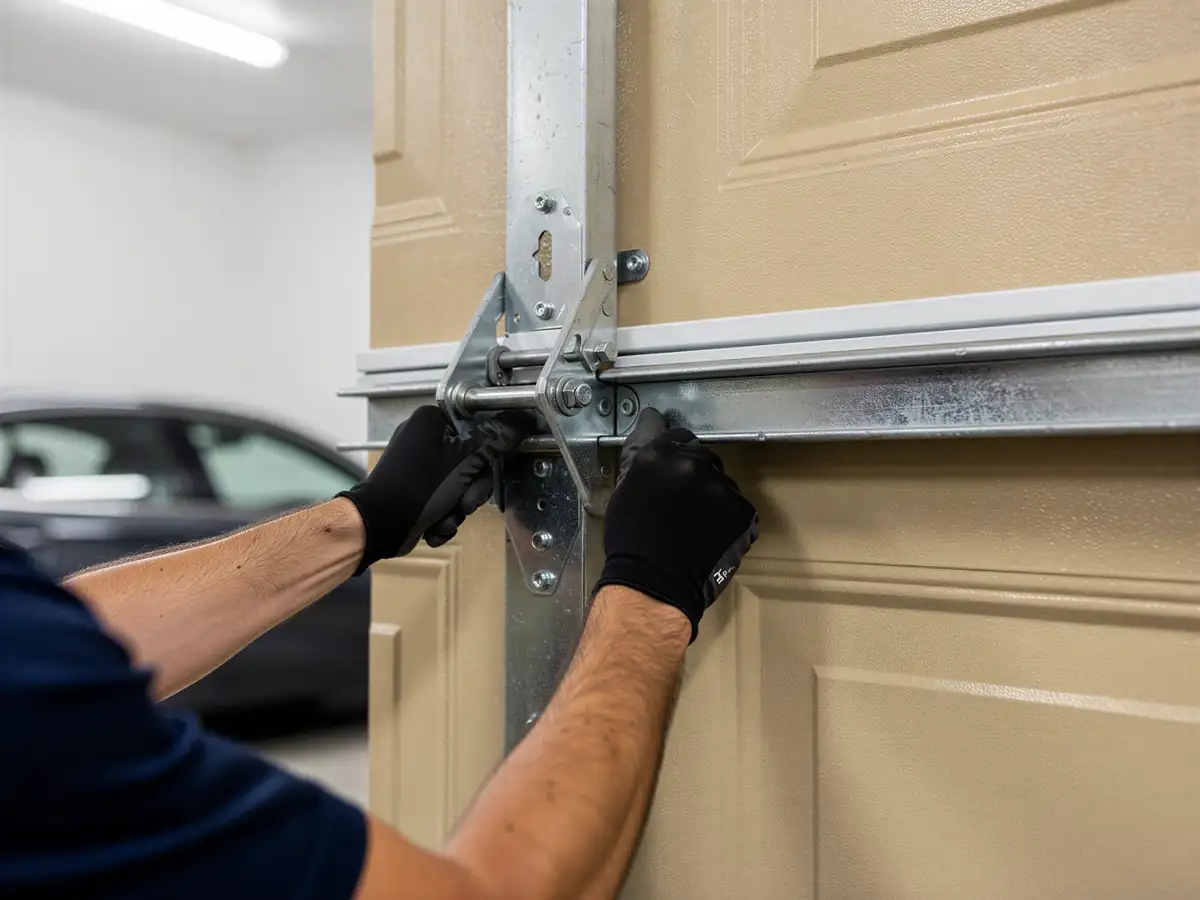
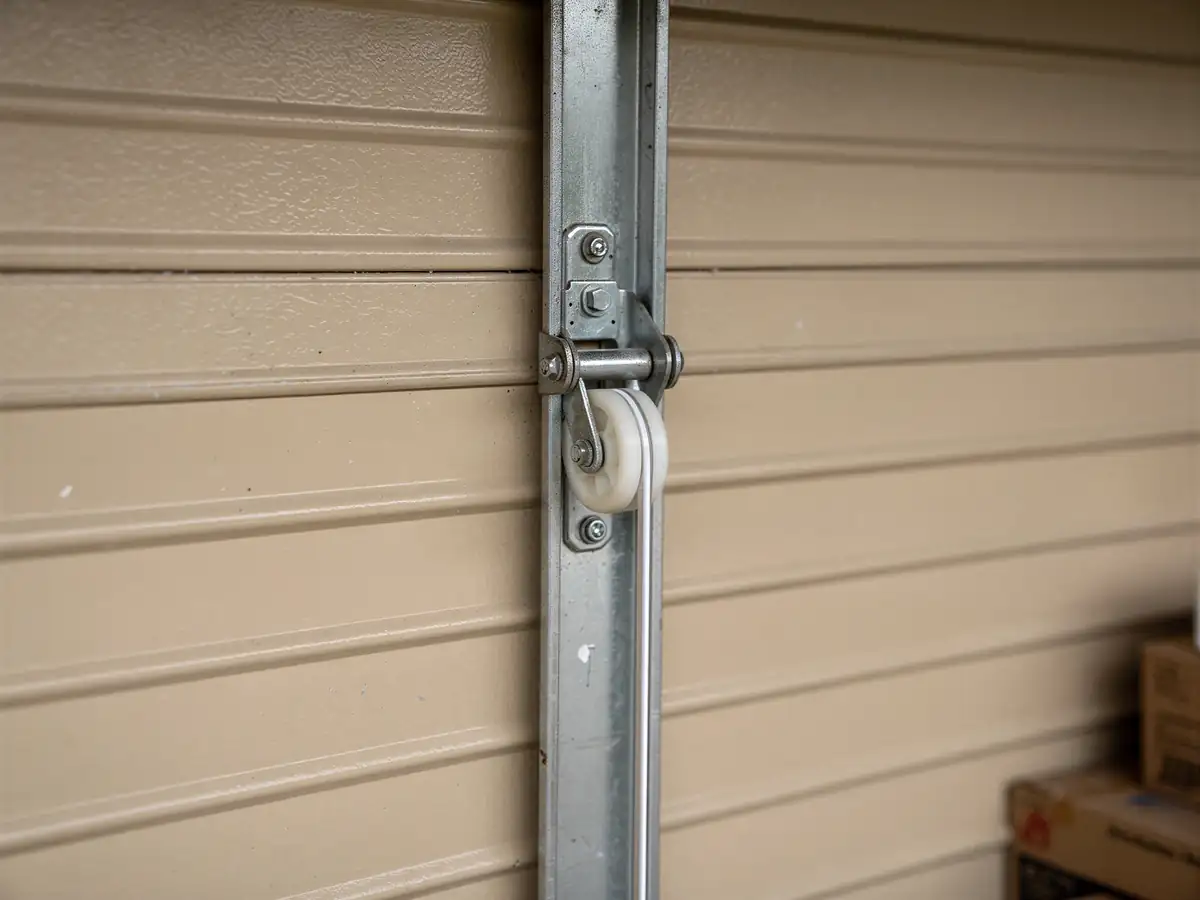
We drive out the 10 miles from Gainesville with the parts that fit doors from Yorkshire's build era, since most of this area's housing went up through the 1980s and 90s and the roller and track hardware from that run is a known quantity for us. On site, we check the track brackets against the jamb first - cold-climate framing here shifts a little over the decades, and a bracket pulled even a quarter inch out of plumb will walk a roller off the track every time the door cycles. We re-set the track, replace any roller that's worn flat-sided instead of round, and check cable tension on both sides before we let the door run under power again. If the track itself is bent rather than just knocked loose, we replace that section rather than hammer it straight - hammered track comes off again within a season, almost always on the coldest week of winter when the steel's least forgiving.
What You Are Seeing
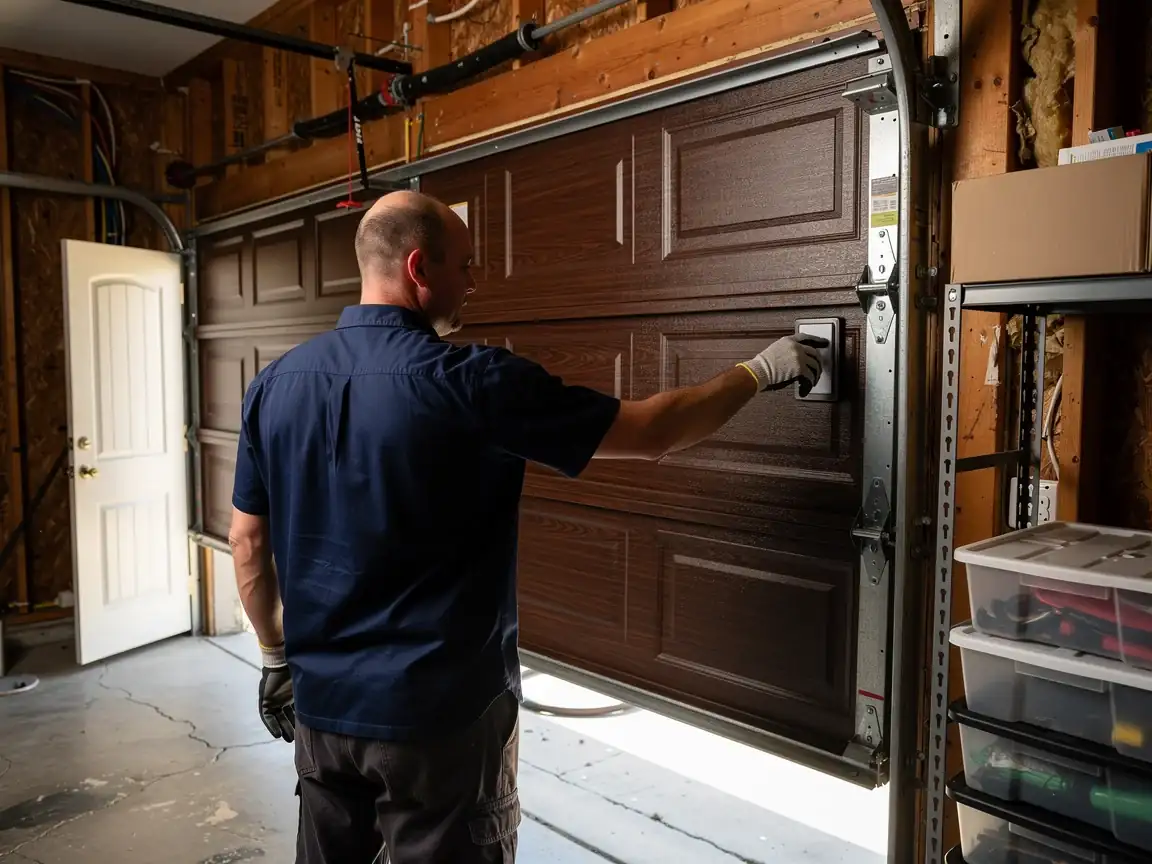
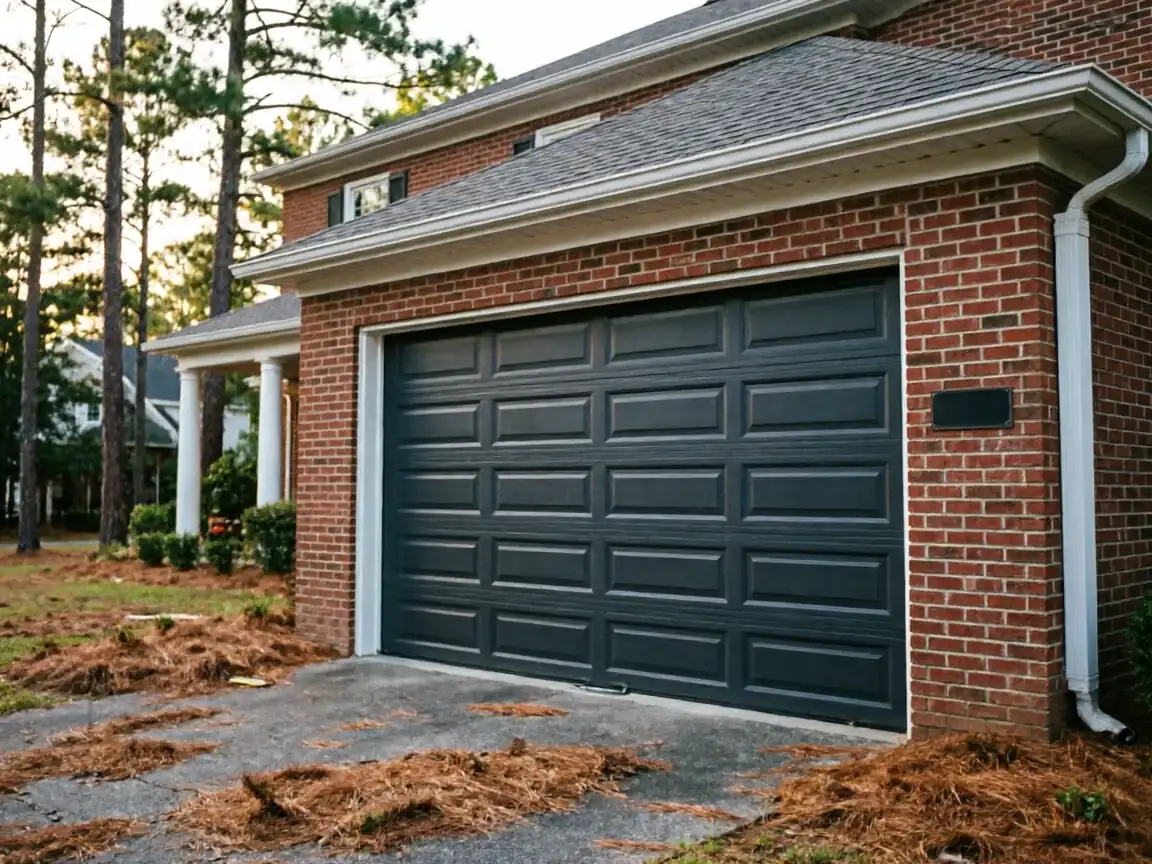
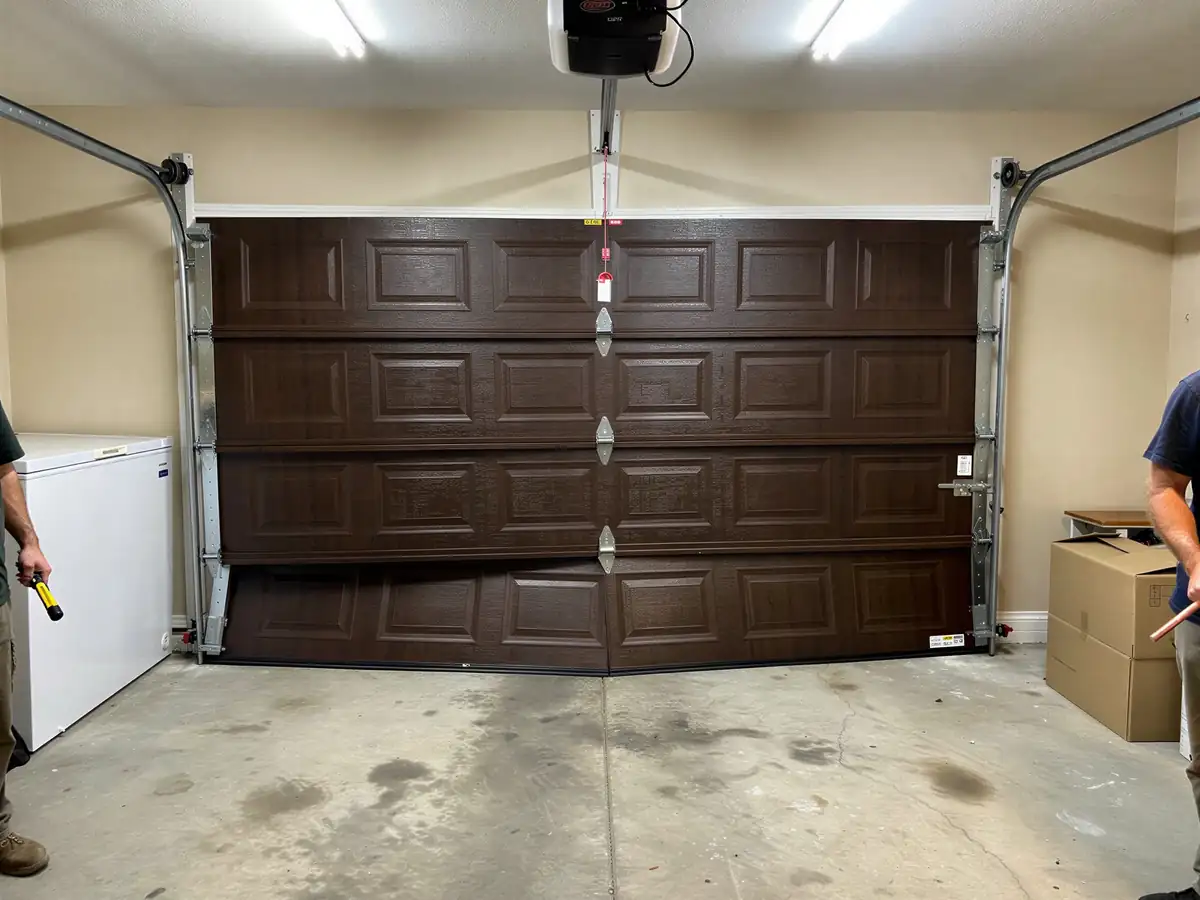
Off-track almost always shows up one of two ways: the door hangs crooked in the opening with a visible gap at one bottom corner, or it stops partway up and the opener strains against something that isn't moving. On houses from Yorkshire's 1985 median build year, the usual cause is a roller that's worn down after three decades of cold-weather cycling - the steel track handles severe cold fine, but a nylon roller that's gone brittle will crack and let the door drift sideways until it jumps the rail. Less common but worse: a cable that's frayed and slipped off the drum, which can drop that side of the door suddenly. If you hear a bang before the door goes crooked, that's cable, not roller, and it's not a wait-and-see repair.