Doing It Yourself
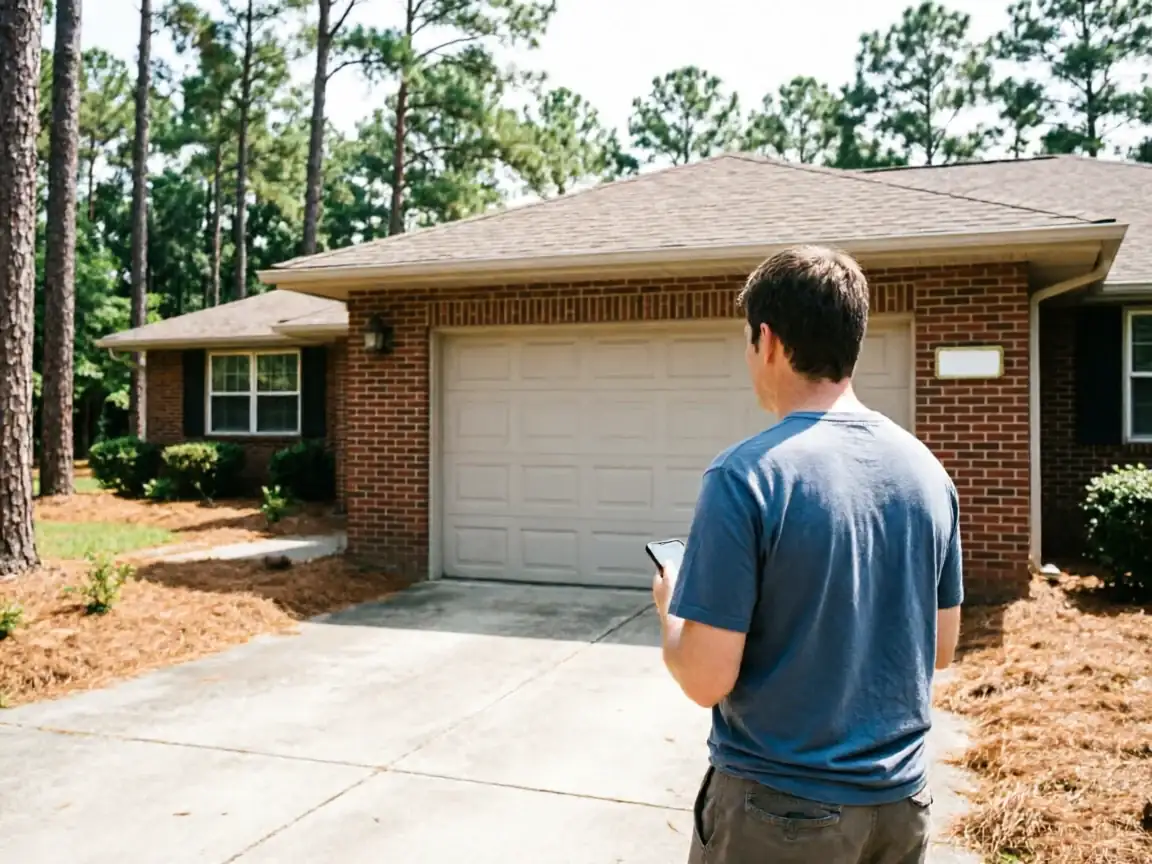
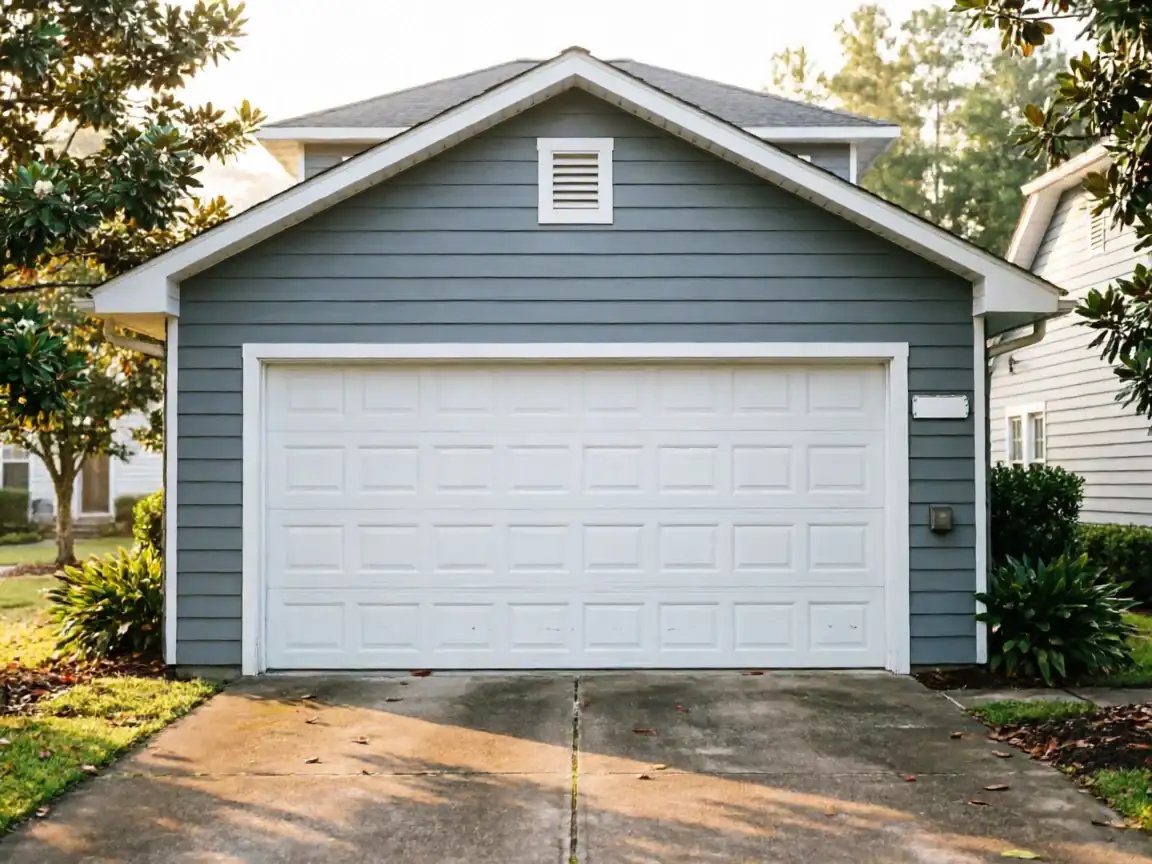
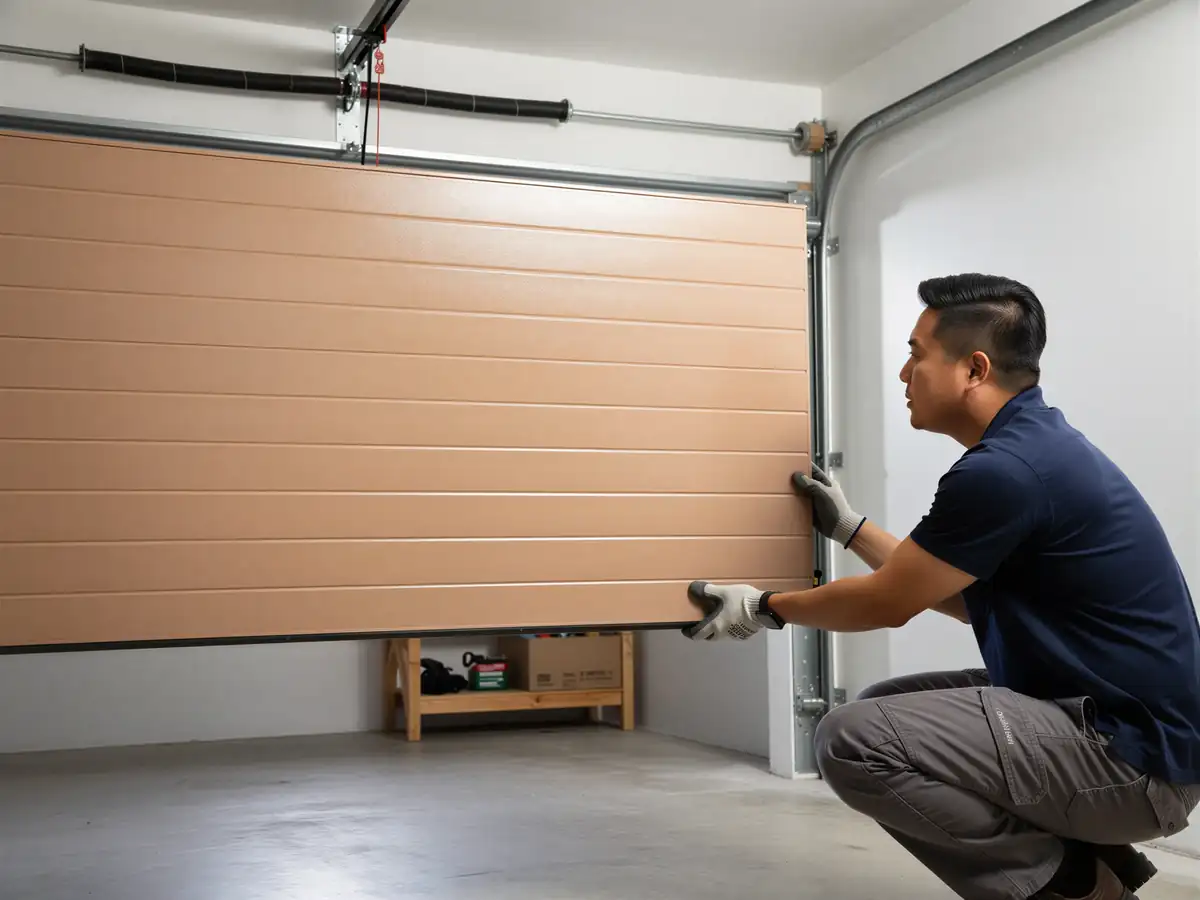
Most garage doors in Yorkshire went up during the mid-1980s building wave, which means steel sectional doors on either extension springs or an early-style torsion setup, not the wood swing-up doors you'd find on older stock elsewhere in the region. These are typically 16x7 doors for two-car garages or 9x7 for singles, with thin single-layer steel skins and little to no foam insulation behind them - common for that era before insulated doors became standard.
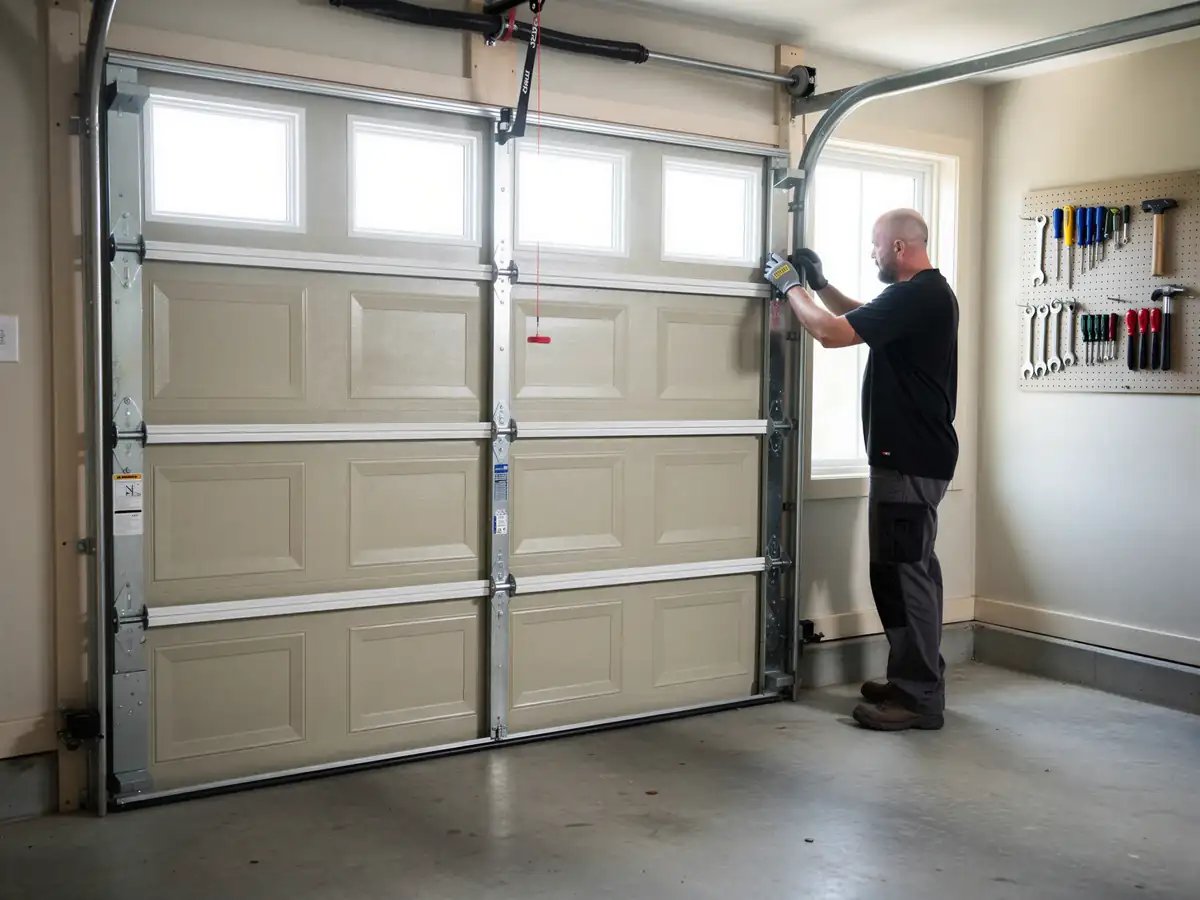
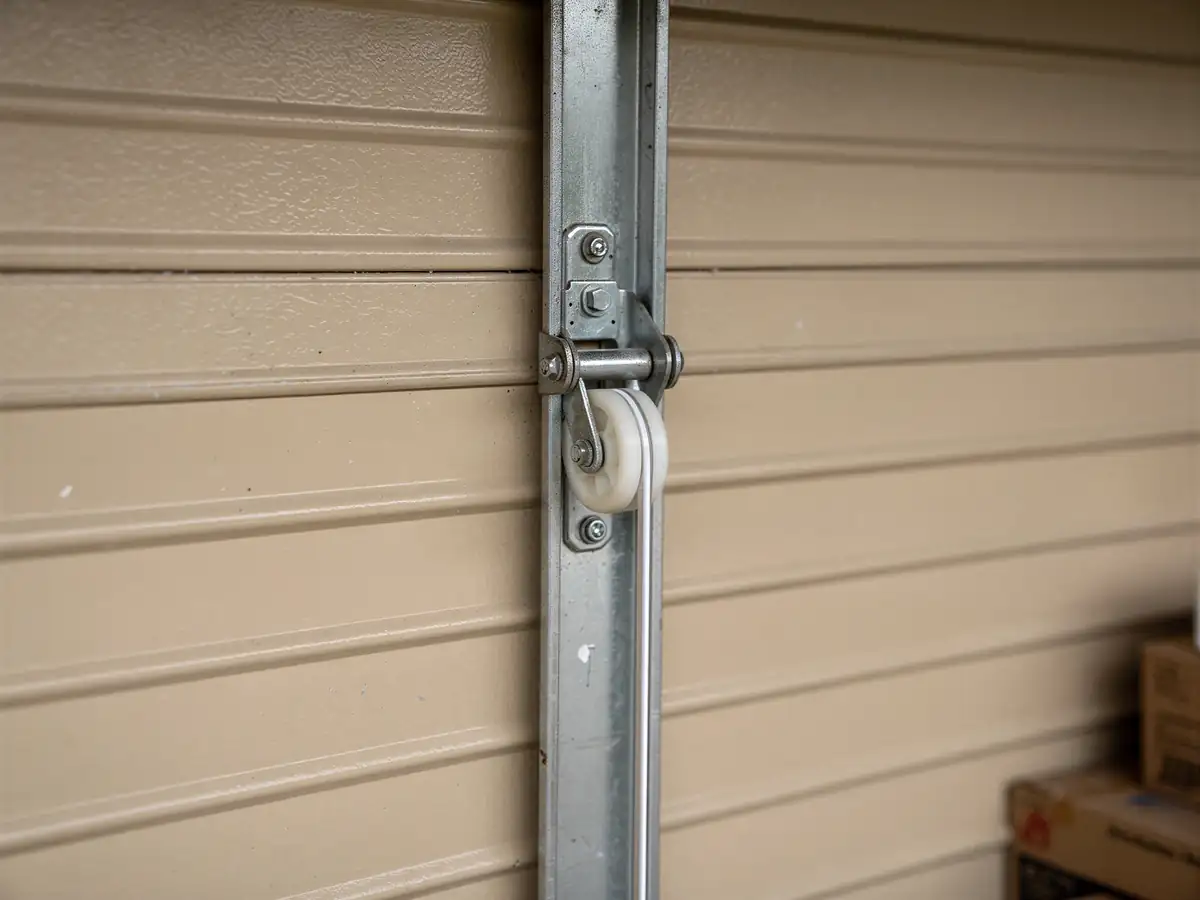
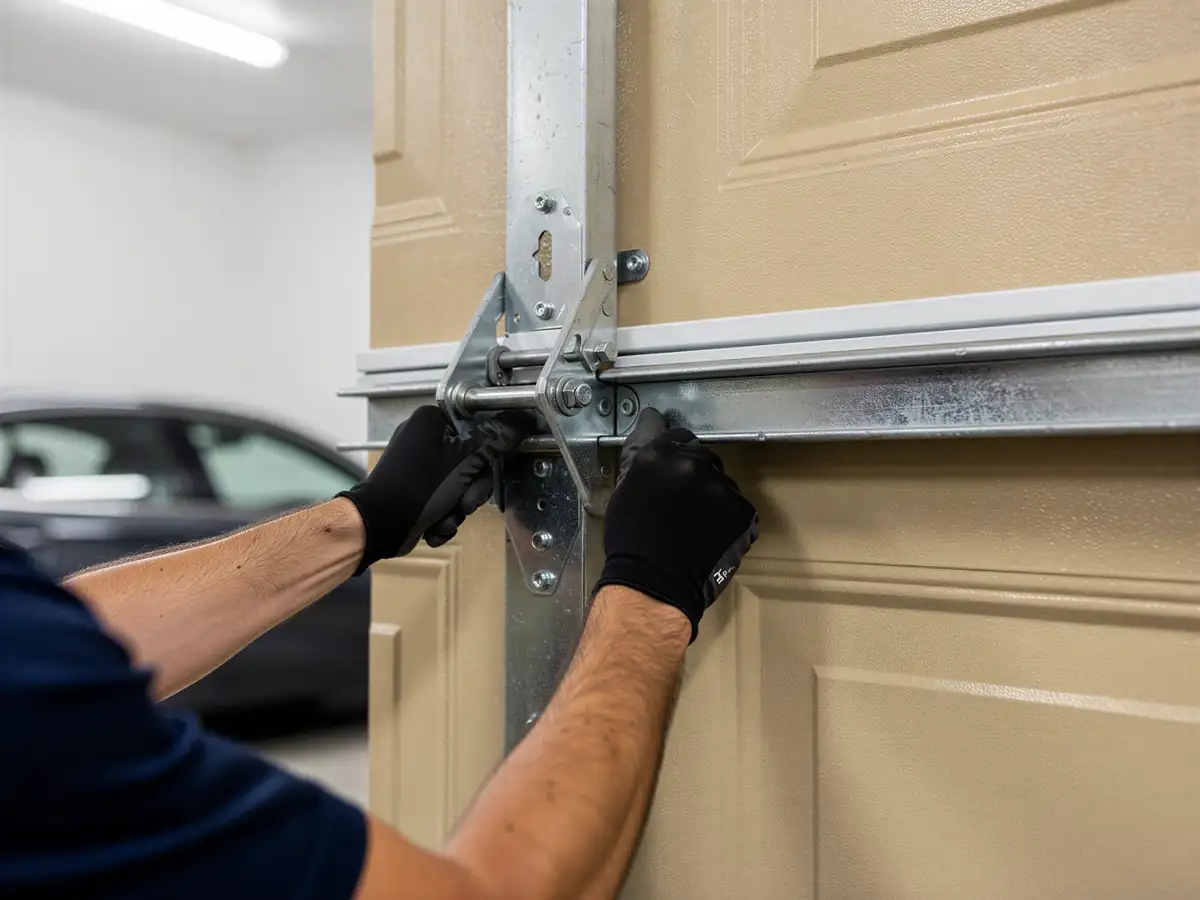
If a cable has jumped the drum or a roller has worn through its bracket, you can sometimes get the door moving by hand after disconnecting the opener, but we don't recommend it on a door this old. The galvanized coating on 1980s-era hardware is usually past its useful life, and a spring under tension on worn brackets is not a DIY repair - it's how people lose fingers or worse.
What you can safely check yourself: the weatherstrip at the bottom panel, which on doors this age has usually hardened and cracked from decades of winter exposure, and the photo-eye sensors near the floor, which collect dust and road salt and cause doors to reverse for no obvious reason. Clean the sensor lenses with a dry cloth before you call anyone out. That alone fixes a surprising number of "the door won't close" calls.
How We Fix It
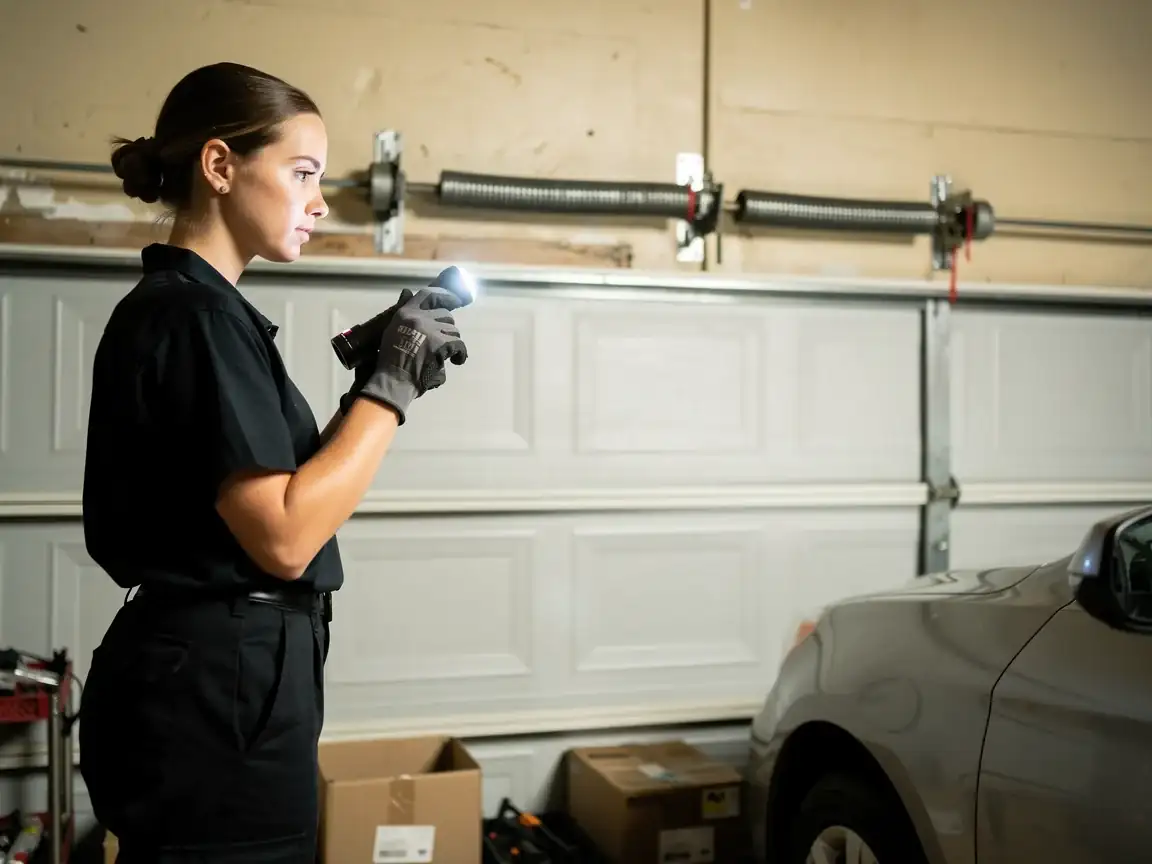
We come out from our Gainesville shop, about 10 miles from Yorkshire, so we build the trip into the job rather than treating it as a side stop. On arrival we check the obvious things first: spring tension, cable wear at the drum, and whether the track is still square to the frame, since houses from the 1985 building run often have minor foundation settling by now that pulls tracks out of alignment over the decades.
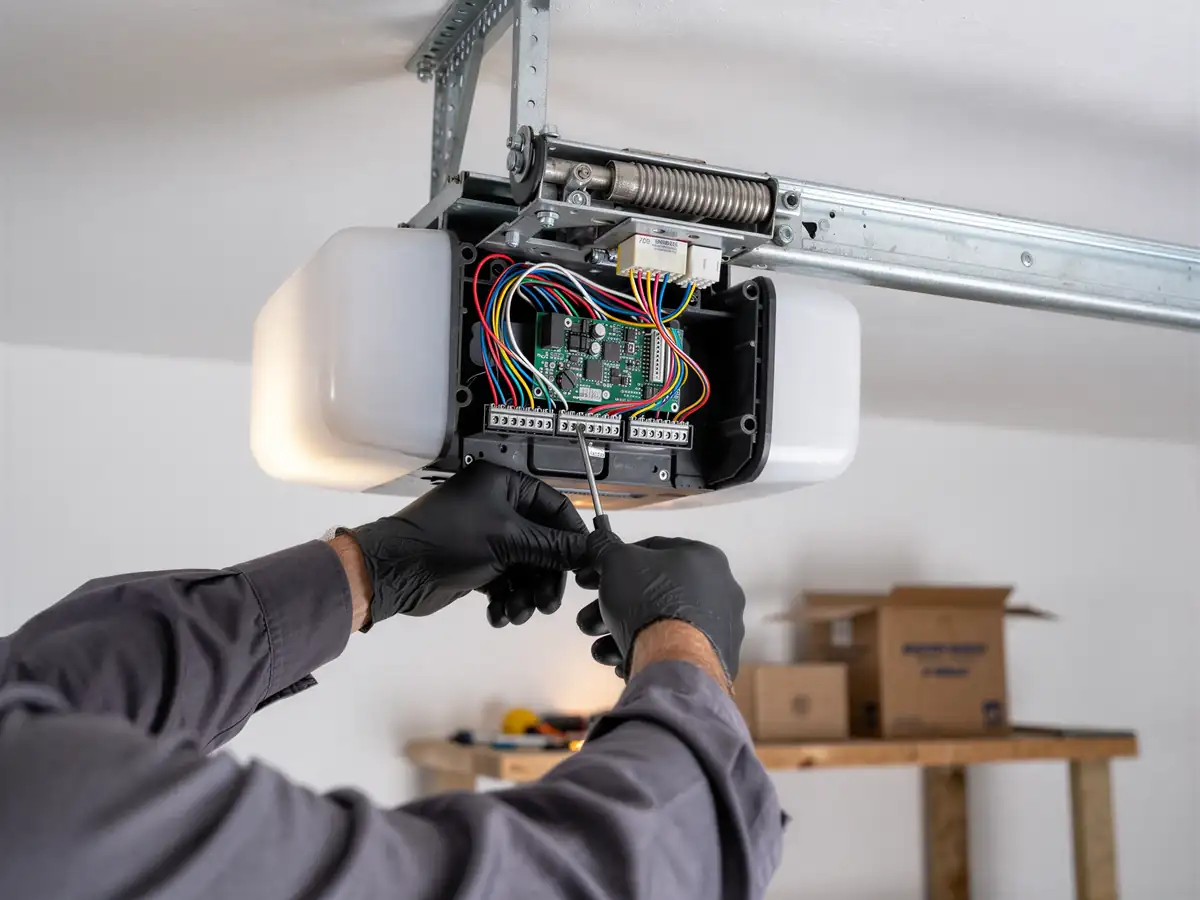
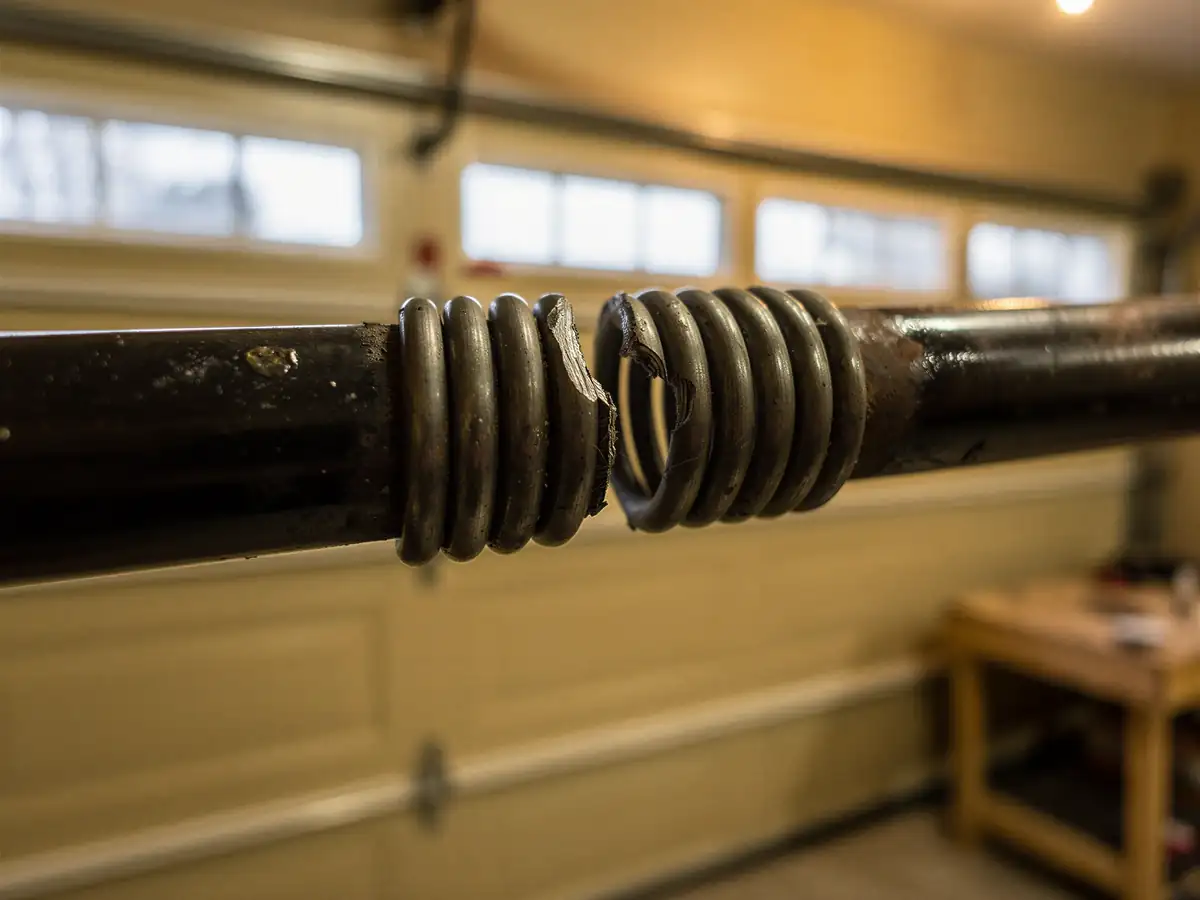
For broken torsion springs, we size the replacement to the actual door weight rather than swapping in whatever's closest, since builder-grade doors from that period vary more in panel thickness than people expect. If the opener itself is original to the house, we'll tell you straight - a chain-drive unit from the 1980s or 90s is well past any reasonable service life, and we're not going to hunt down obsolete parts for a motor that age when a new opener costs less than the labor to keep nursing the old one along.
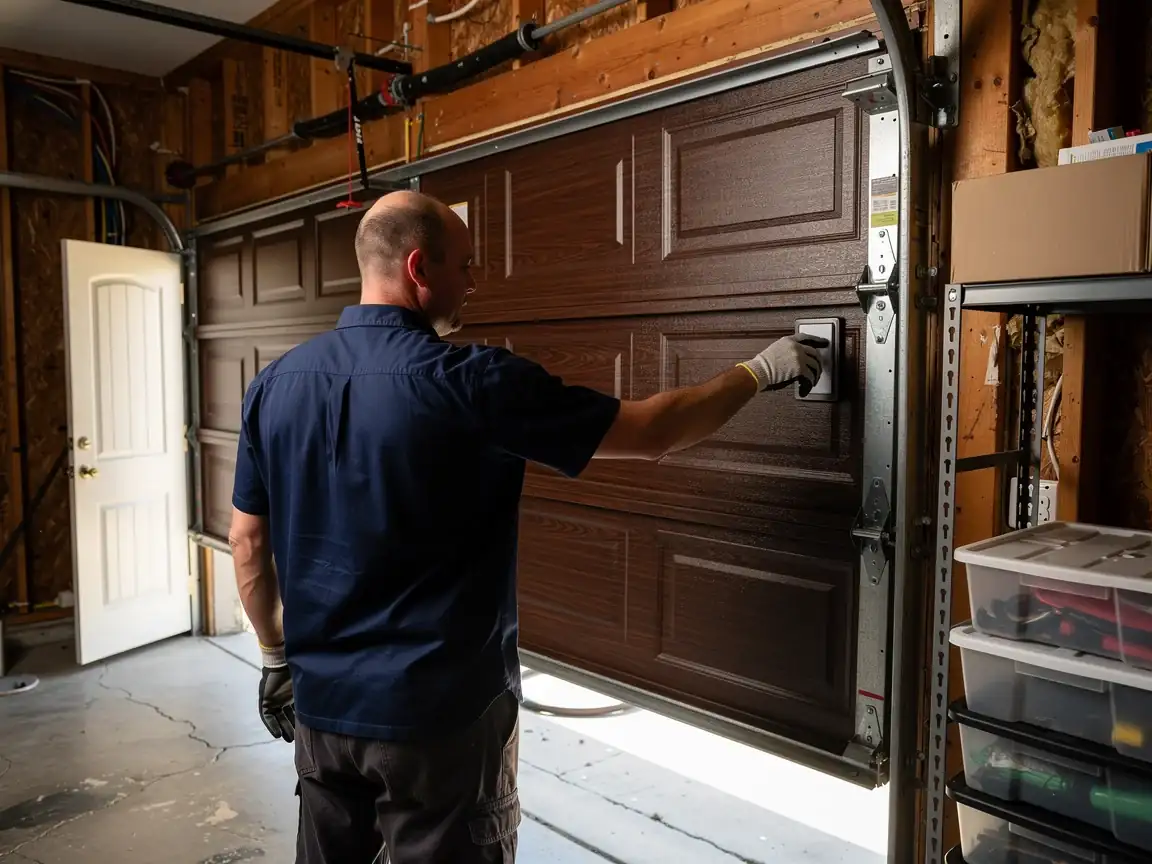
We test full cycle operation before we leave, not just one open-close, because a repair that works once on a cold driveway can bind an hour later once the garage warms up or the cold sets back in overnight.
The Cost of This Job
Yorkshire sits in a service area with a median household income of $107,283
Which tends to mean homeowners here replace rather than patch once a repair starts stacking up - a new spring plus a new cable plus a bent track adds up fast on a door that's already 35-plus years old. We'll always quote the repair first and let you decide; we don't push replacement on a door that still has life in it.
- $107,283 median household income
Where cost gets unpredictable is hardware matching
A lot of the sectional doors from the 1985-era run used drum and track dimensions that aren't a universal fit with today's stock parts, so a repair that should take forty minutes sometimes takes longer because we're adapting a modern spring to an older track system. We tell you that up front rather than after the clock's running.
We don't carry every obsolete panel style on the truck
And if your door needs a specific discontinued panel to match the rest, that can mean a short wait on a special order rather than a same-visit fix. That's the one limitation worth knowing before you call: full-panel replacement to match an original 1980s door isn't always a one-trip job.
What You Are Seeing
Winters in this part of Virginia run cold enough that original rubber seals and plastic rollers from a door's first installation have usually failed by now, which shows up as a door that's noisy, slow, or that drifts off its track by an inch or two at the bottom corner. On a 1980s steel door, that drift is often the clearest sign the roller brackets have finally worn through, not a spring problem at all.
A door that reverses randomly on closing is almost always the safety sensors, not the opener itself - check for a loose mount or a cracked lens before assuming the motor's failing. A door that's suddenly heavy to lift by hand, with the opener straining audibly, points to a spring that's lost tension gradually rather than snapped outright, which is common on original torsion springs that have simply outlasted their rated cycle count by now.
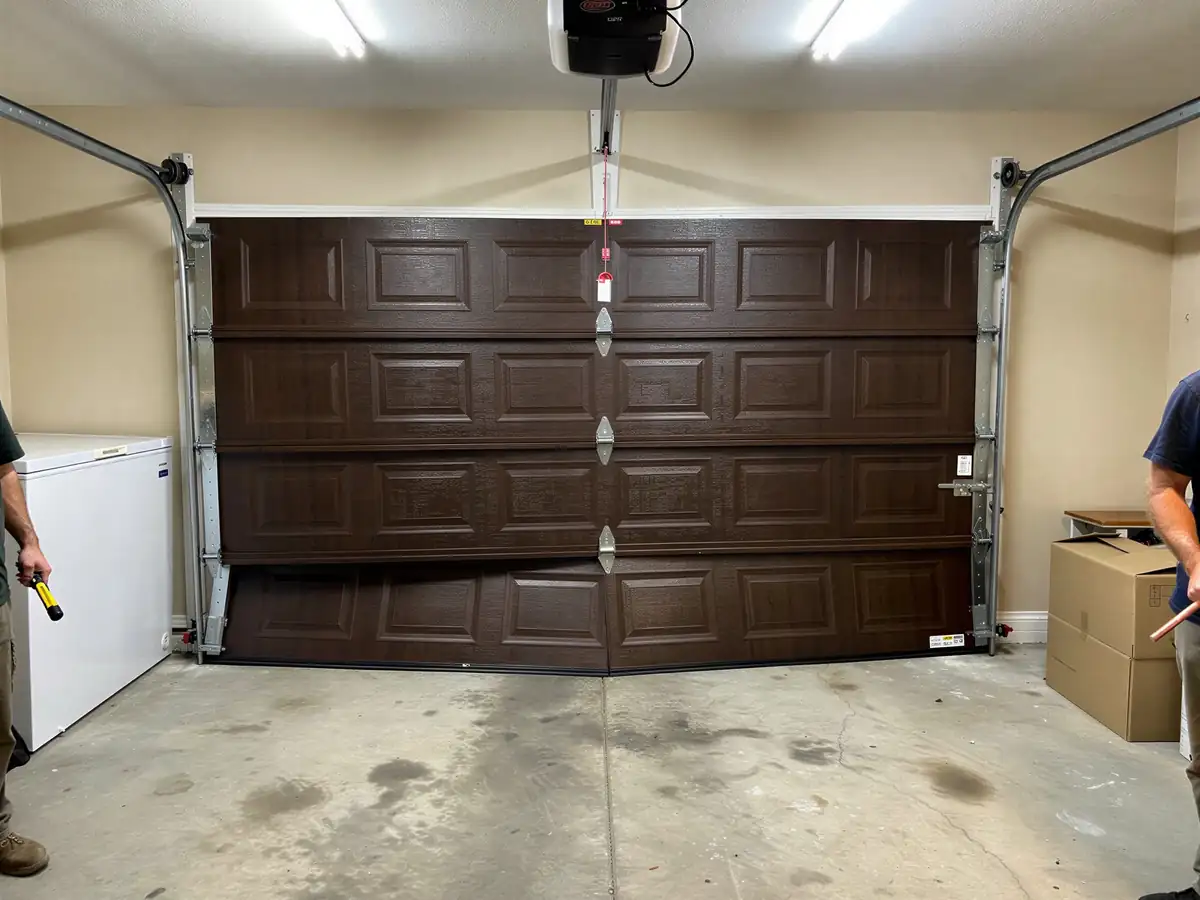
If the whole door sags visibly at one top corner, that's usually a track pulled loose from the frame, sometimes tied to the same minor settling that affects houses built in that mid-80s wave across this area. None of these are emergencies on their own, but ignoring them usually turns a $150 fix into a full door replacement.