The Complications
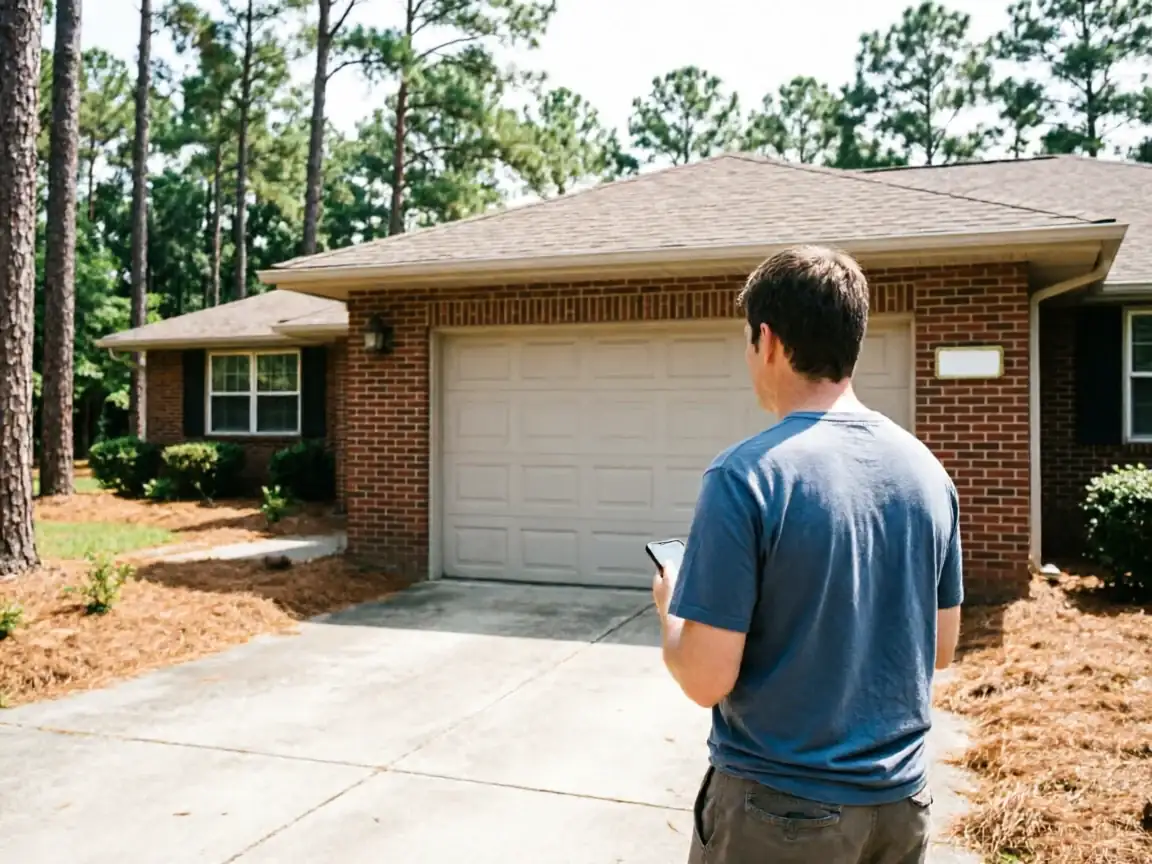
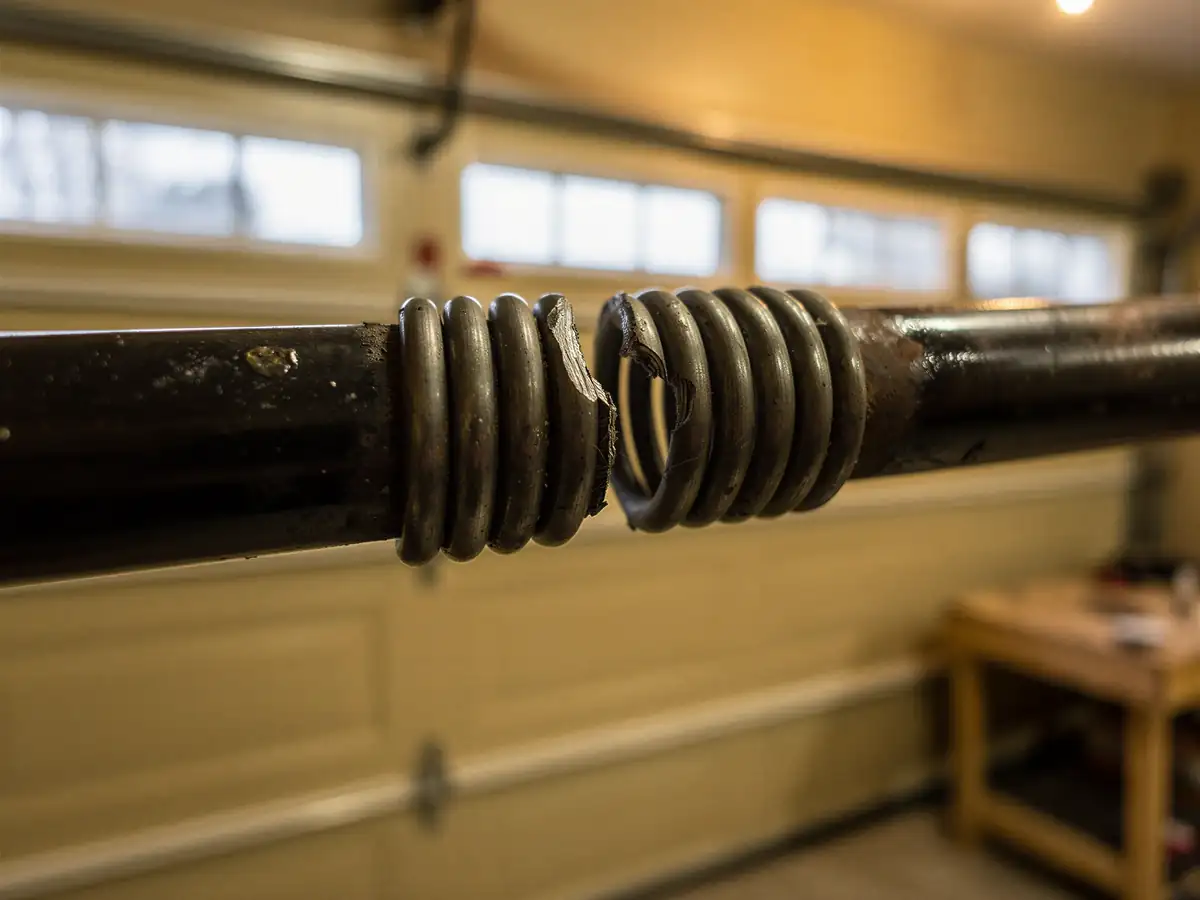
The fault we see most in Warrenton isn't a broken spring out of nowhere - it's a spring that was sized for a door installed when the house went up, and in this part of our coverage area that's typically around 1985. A torsion spring has a rated cycle life, and a 1985 install that's never been touched is well past it. The steel fatigues, the winding cone corrodes, and the failure shows up as a door that won't lift, or worse, one that drops when a cable finally gives.
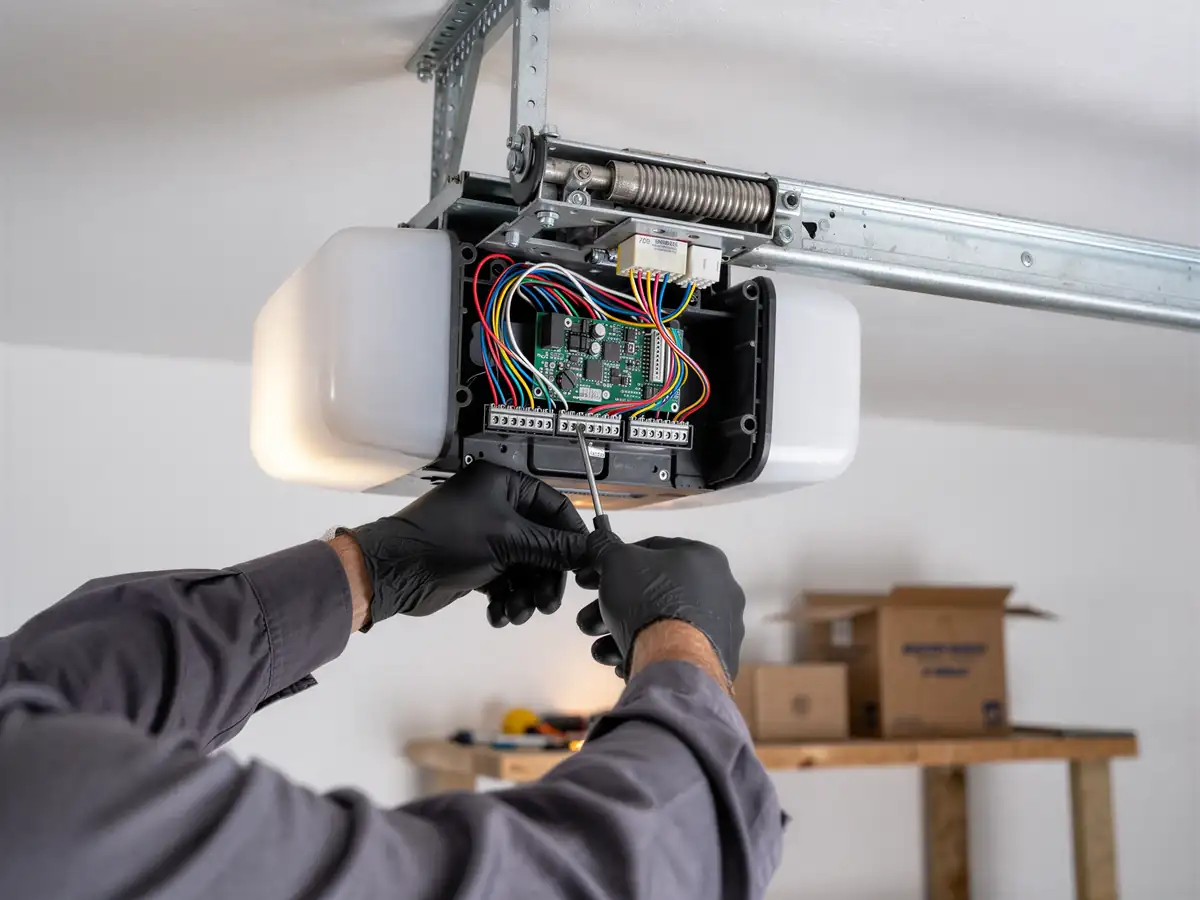
That build year also means a specific generation of opener. Mid-80s houses in this stretch often still run (or were recently retrofitted from) chain-drive units without the photo-eye safety sensors that became standard after 1993. If your opener predates that, the reversing mechanism may not meet current safety expectations even if it still runs - that's a code issue, not a convenience one.
We're a COLD-severe climate region, which changes maintenance math too. Grease that's fine at 50°F turns stiff at 15°F, and stiff lubricant makes an opener motor work harder to pull a door that's already borderline on spring tension. That combination - aging torsion hardware plus cold-season drag - is why late fall is when most Warrenton calls come in, not midsummer.
How to Book
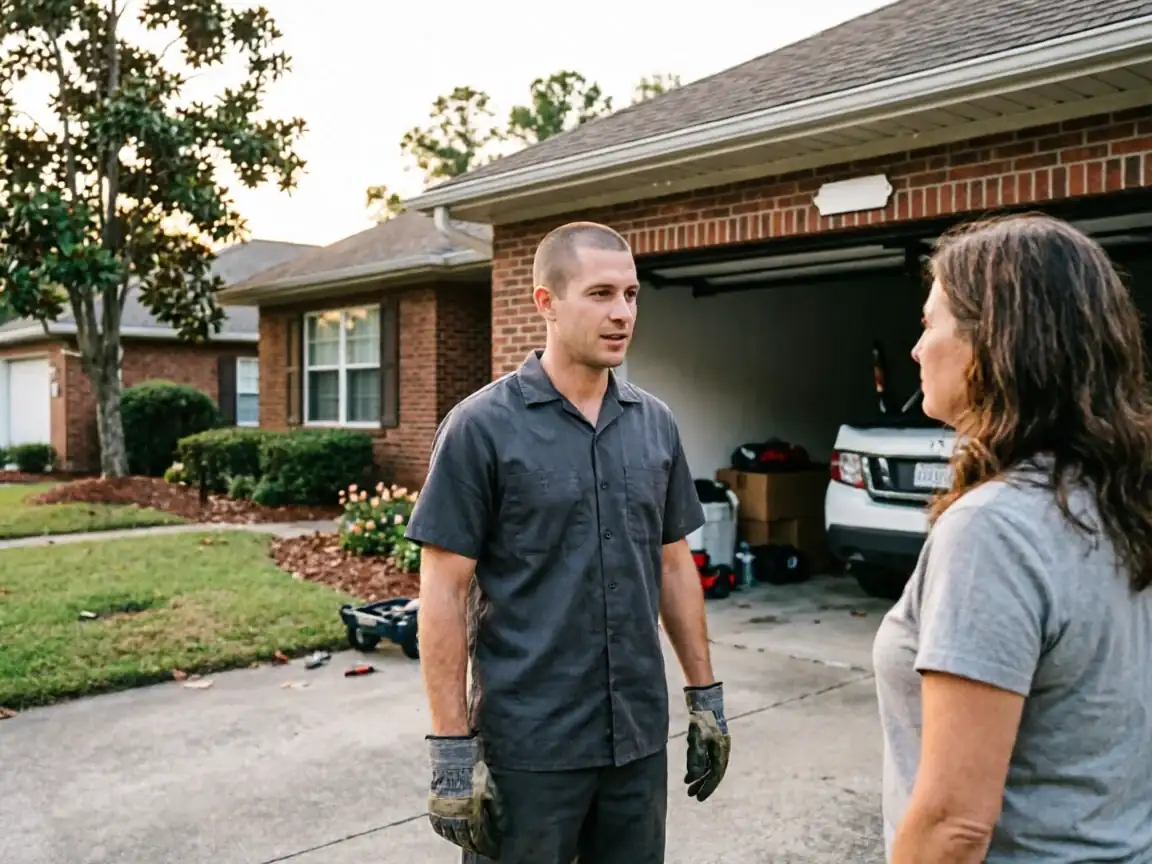
We run out of Gainesville, about 10 miles from Warrenton, so we schedule maintenance visits rather than offering a same-day walk-in counter here. Call ahead, tell us the door's age if you know it (or we can estimate from your house's build year), and we'll bring the parts most likely to be needed for a door from that era rather than a generic kit. You can also check coverage and scheduling notes for Warrenton before you call. If your issue turns out to be bigger than a tune-up - a cracked panel, a bent track - that's a separate repair visit, not something we fold into a maintenance call.
What You Are Seeing
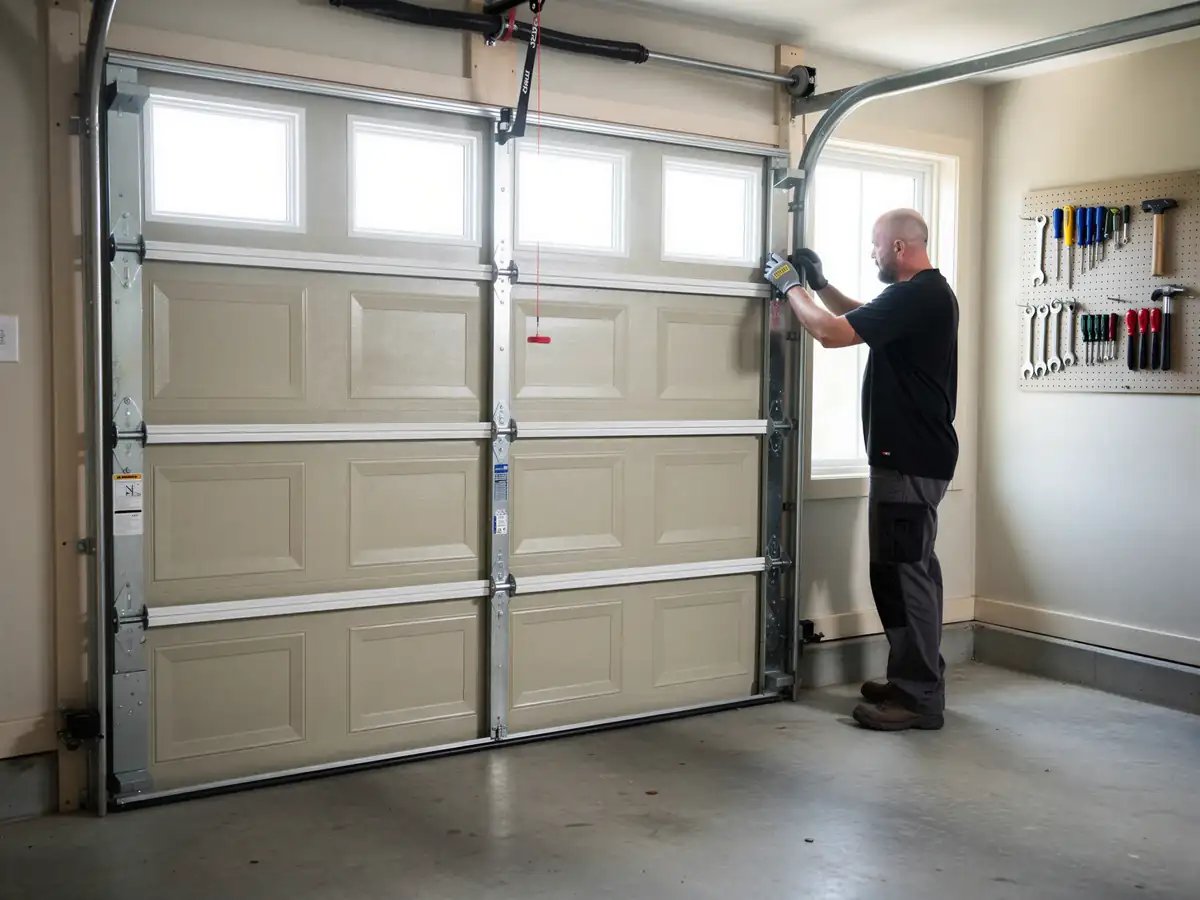
If your door is loud going up but quiet coming down, that's usually worn rollers, not the opener
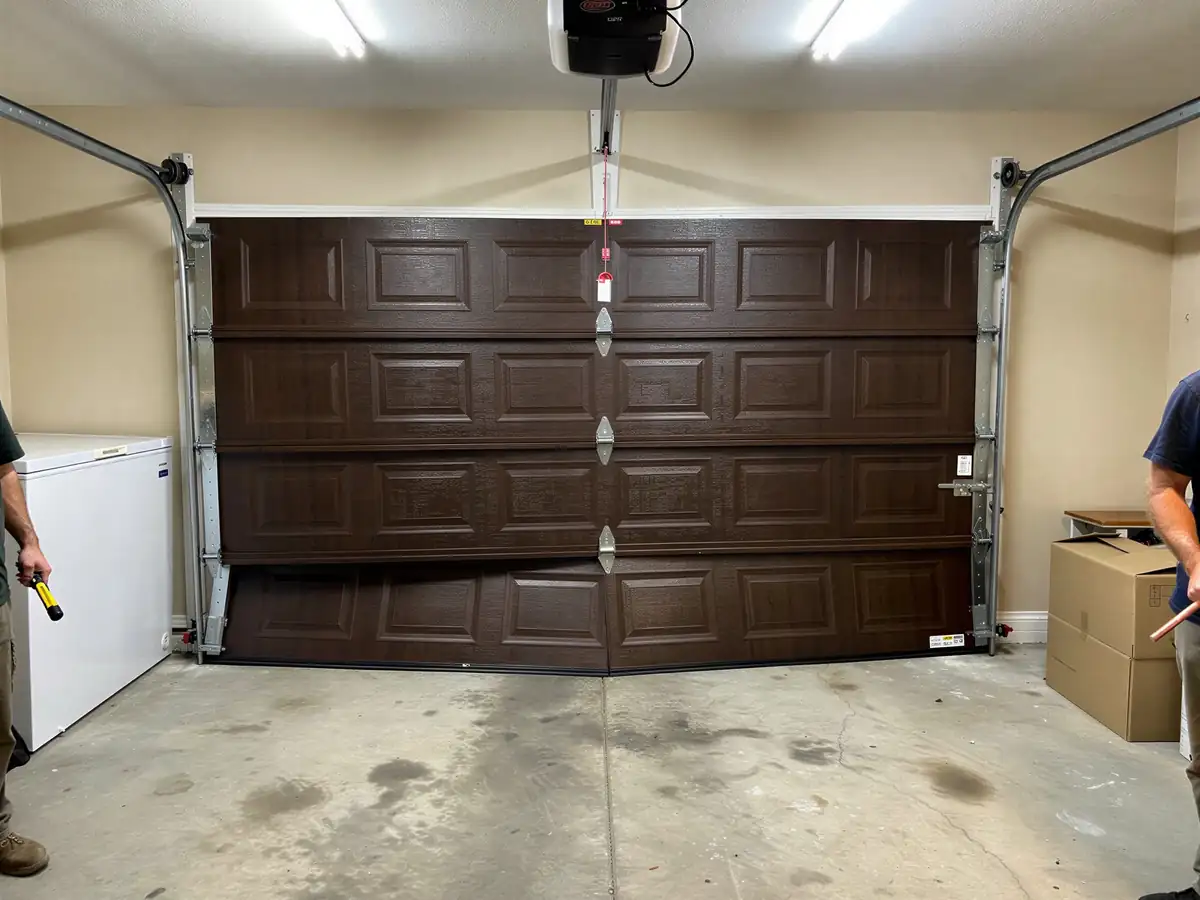
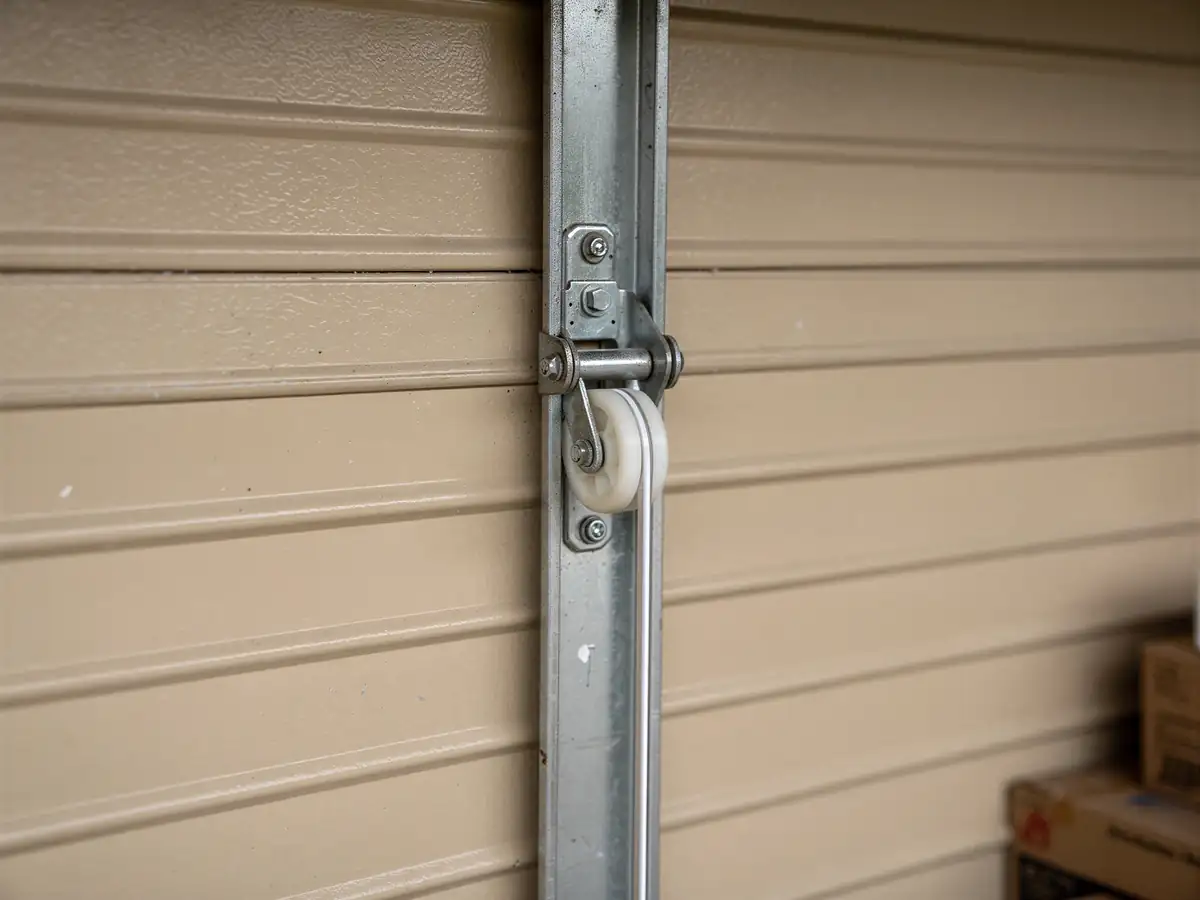
Common on doors that have had the original steel rollers in place since a mid-80s install and never been swapped for nylon. If the door shudders or hesitates a few inches off the floor, that's frequently a spring that's lost tension gradually rather than snapped outright; you'll usually feel the opener straining before you see a visible failure.
A door that reverses randomly on the way down, or won't close at all, points to the photo-eye sensors
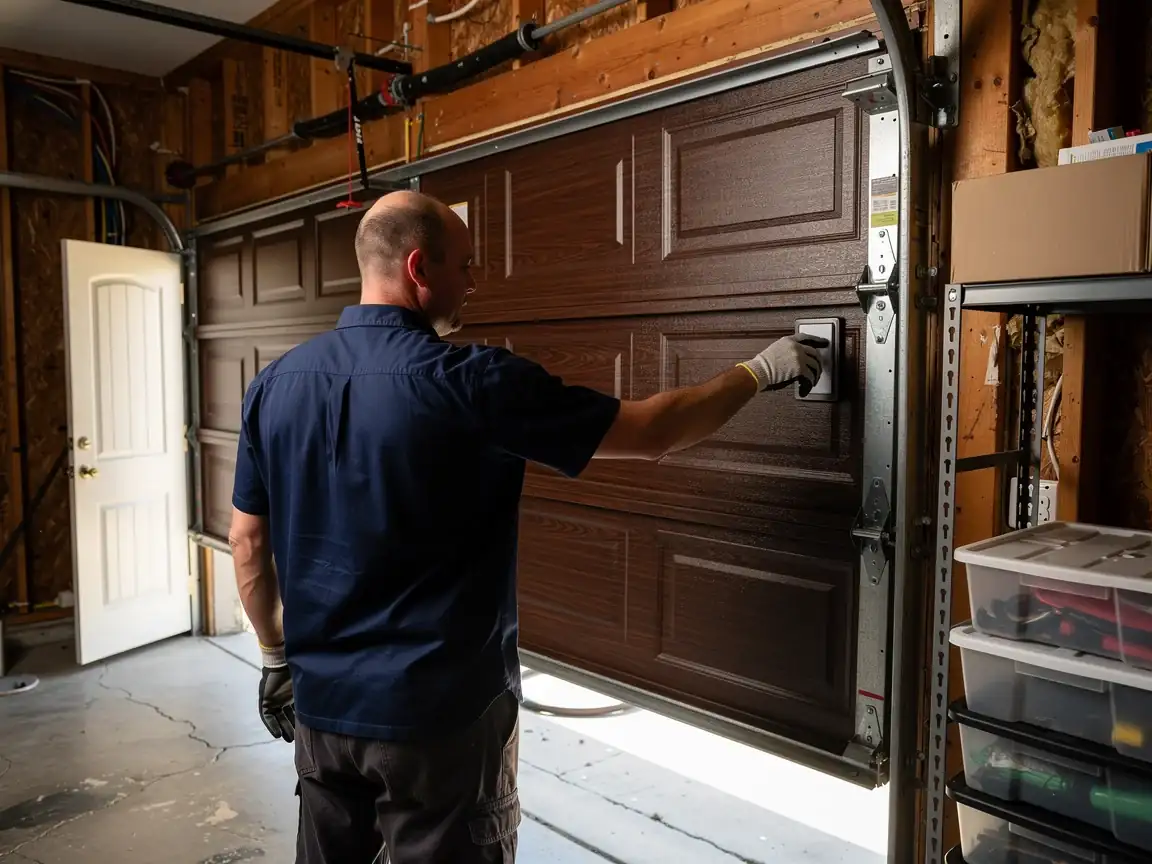
Either knocked out of alignment or, on an older pre-retrofit unit, simply not present. Given the age of housing stock in this area, we check for both the mechanical wear and the safety-sensor generation on every maintenance visit, because one gets fixed with grease and adjustment and the other sometimes means a sensor kit or an opener conversation.
Doing It Yourself
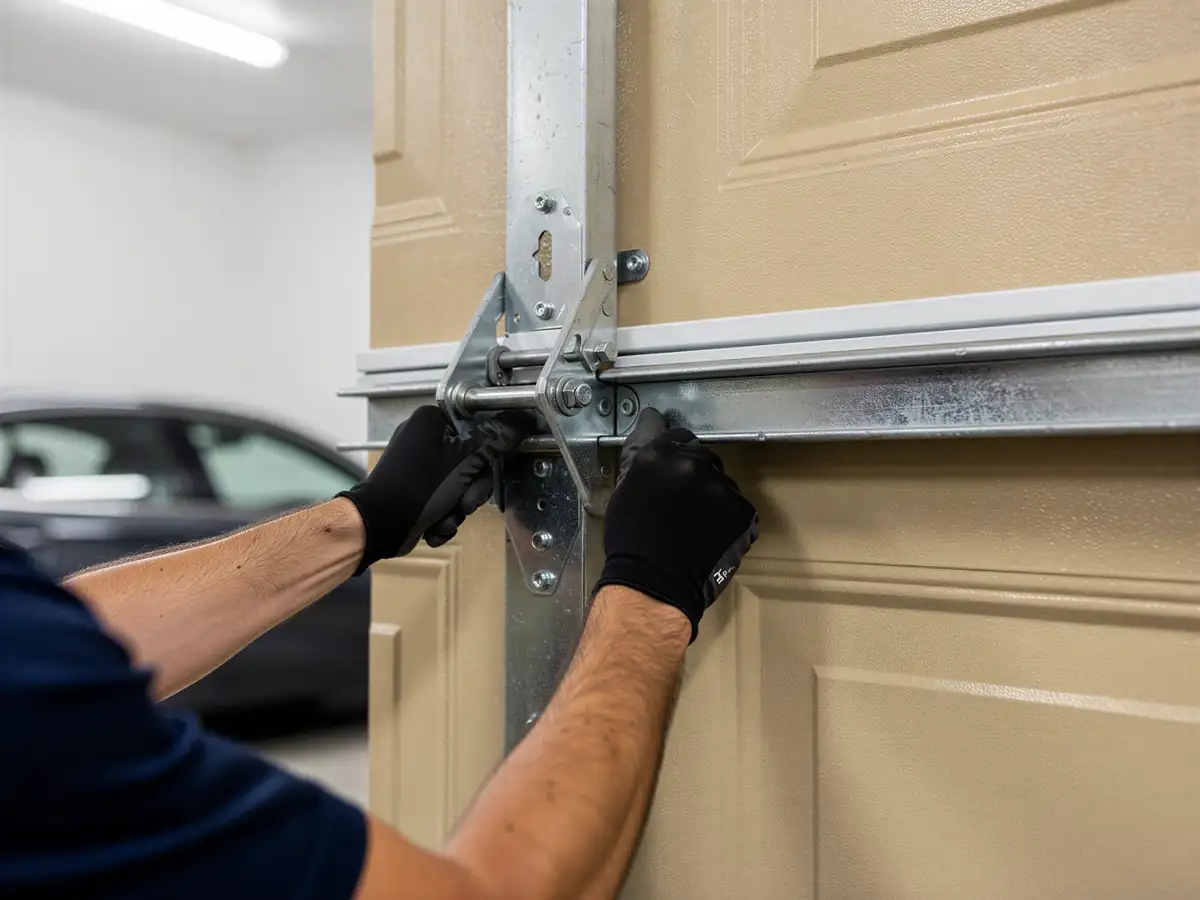
Lubricating hinges, rollers, and the track with a garage-door-specific lubricant (not WD-40, which washes out and attracts grit) is something any owner can do twice a year, and it matters more here given the cold-severe winters we get. Wiping down and testing the photo-eye sensors - a clean lens and a straight-line alignment - is also fair game for a homeowner.
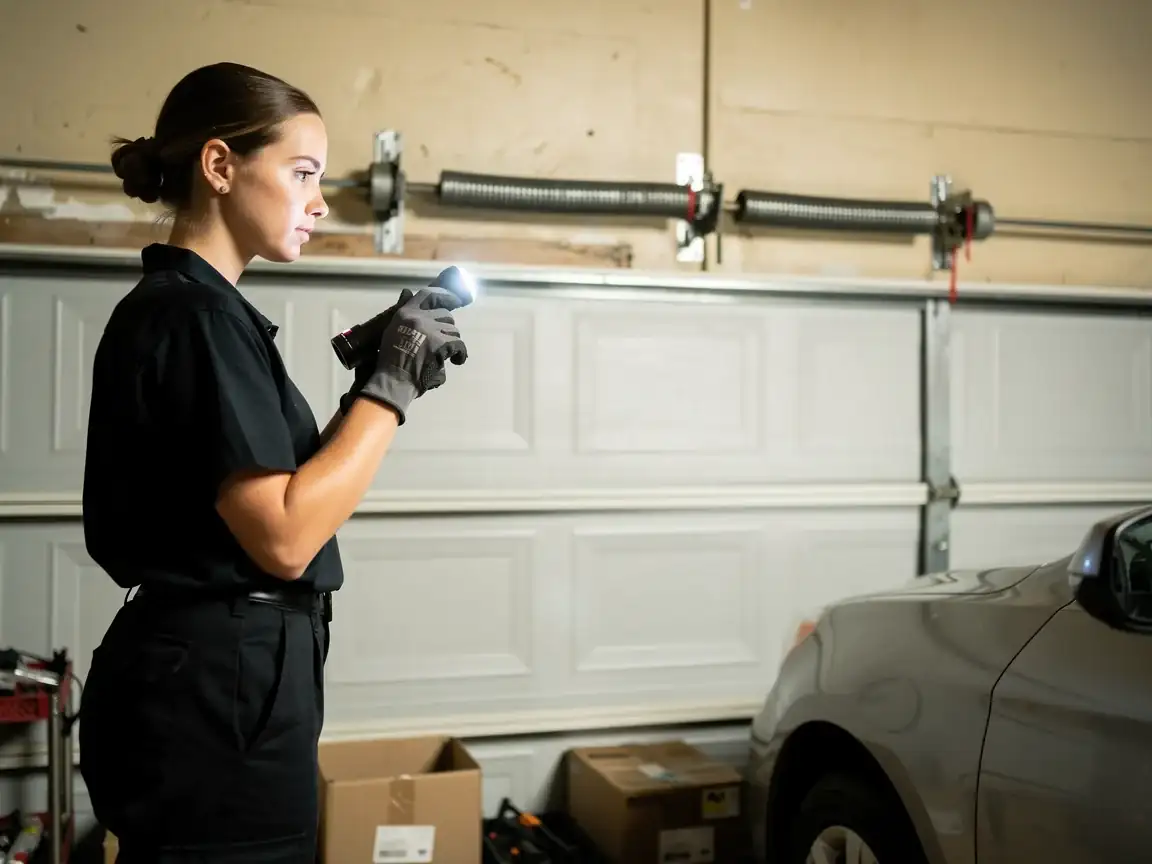
What we don't recommend doing yourself: anything involving the torsion spring or its winding bars. A spring on a residential door carries enough stored tension to cause serious injury, and on a door that's been in place since the mid-80s, you often can't tell how much life is left in it just by looking. That's the one honest limit we'll put in writing - if you're not trained on torsion hardware, leave that part to a call.
Stocked Parts
Because a good share of the housing in this service area dates to the 1980s and 90s, we carry rollers, cables, and standard torsion springs sized for that generation of door on the truck, along with photo-eye sensor kits for retrofitting openers that predate the 1993 safety standard. What we don't keep on hand are parts for doors built well outside that window - a panel for a house from the 1930s era of our broader coverage area, for instance, sometimes has to be special-ordered, and we'll tell you that up front rather than make you wait on a truck that isn't coming. For the general service menu beyond maintenance, see our Gainesville garage door maintenance page.