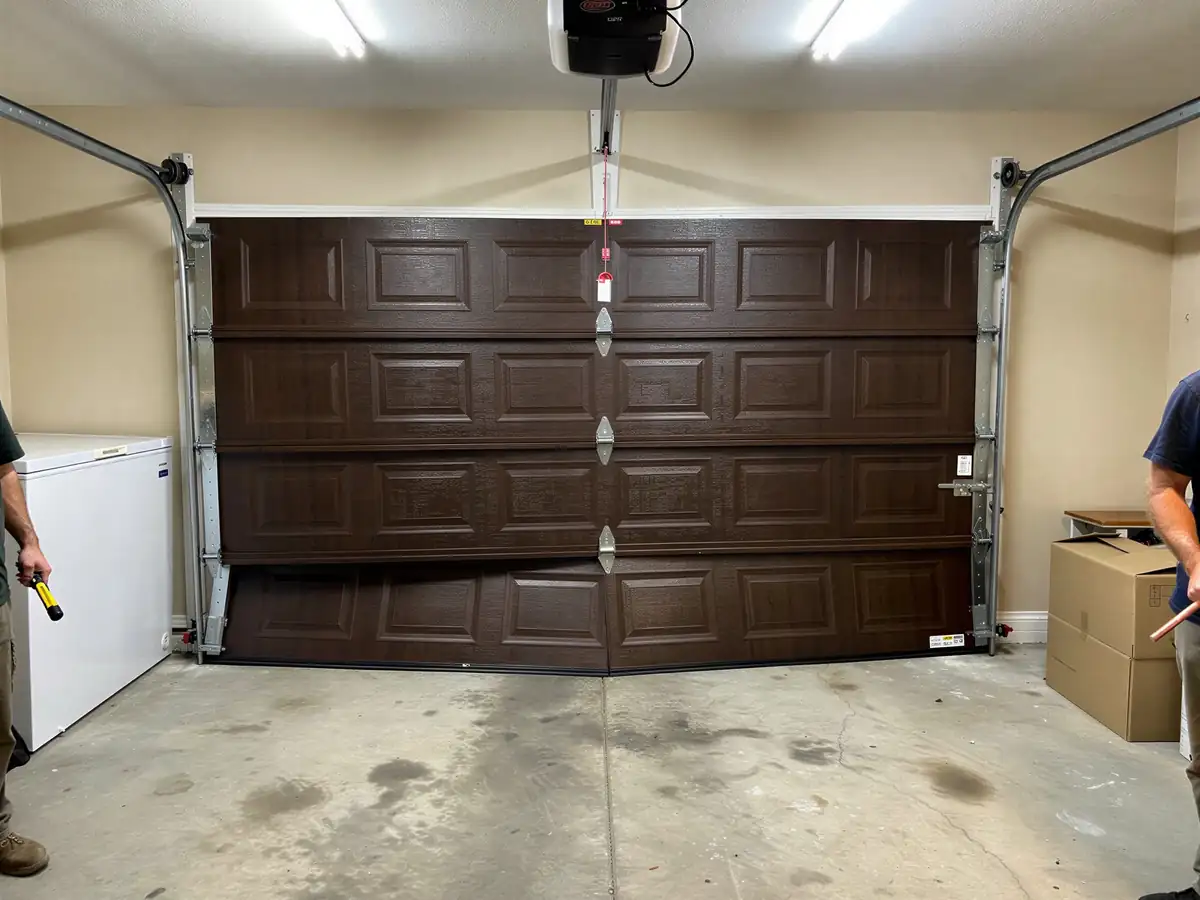
The Complications
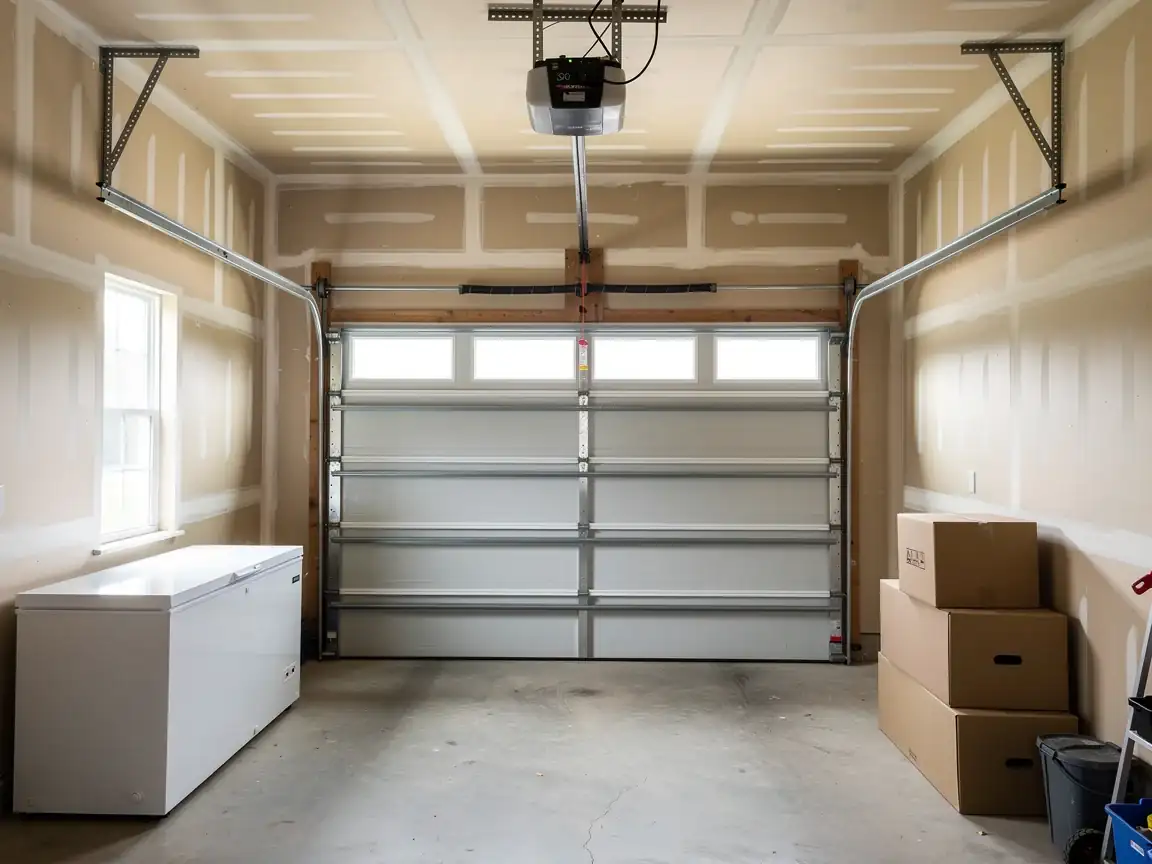
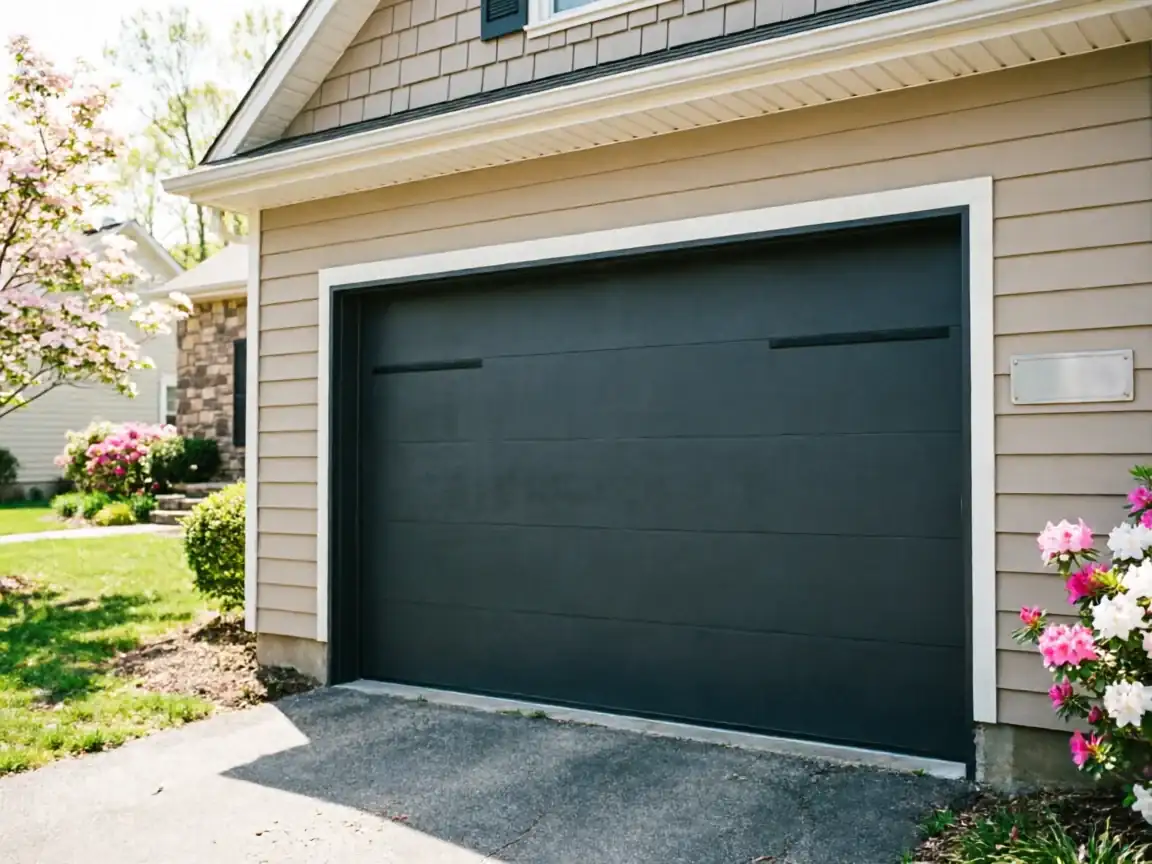
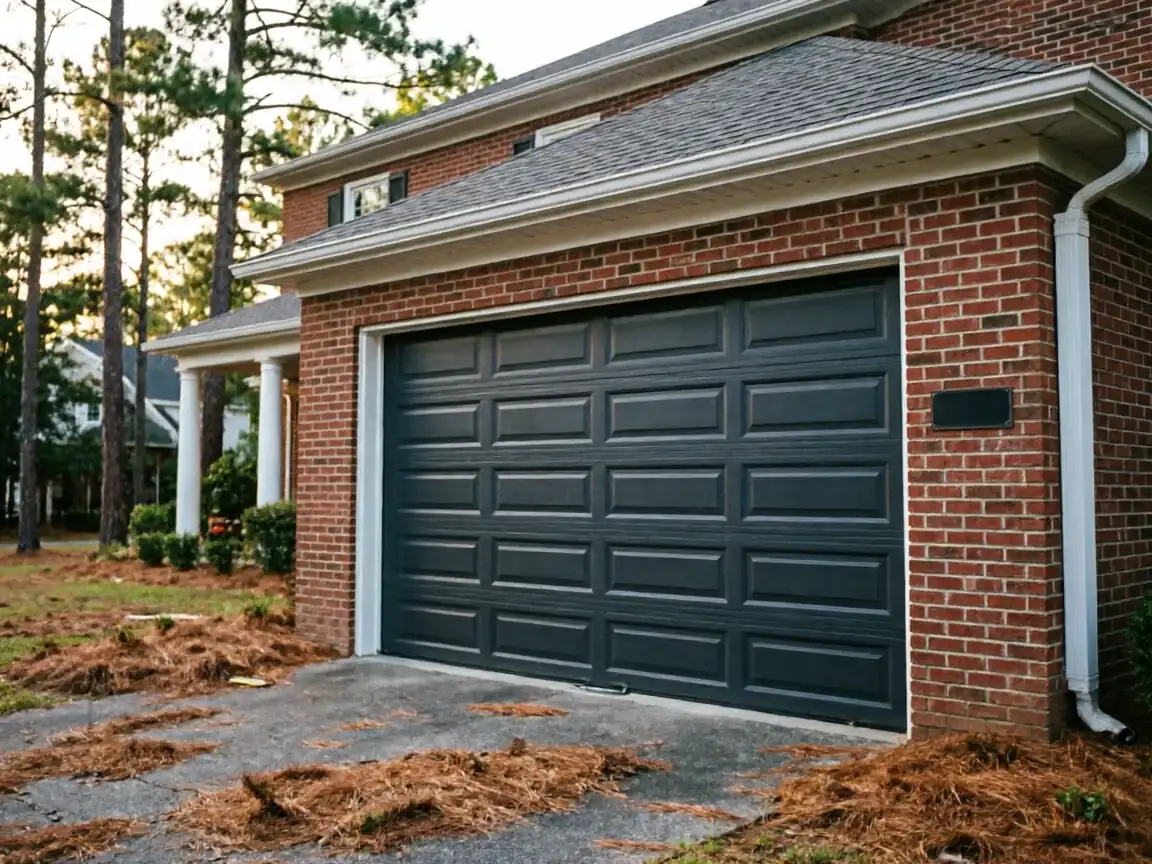
Most of the garage doors around Bull Run went up when the neighborhood was built out in the late 1980s, median year 1988. That's the era of steel sectional doors, usually 16x7 for a two-car opening, hung on galvanized roller tracks with hinges bolted straight to the panel edges. Nothing fancy, nothing custom - just mass-produced steel panels that have now had three decades of hinges working loose and track brackets backing out of the jamb.
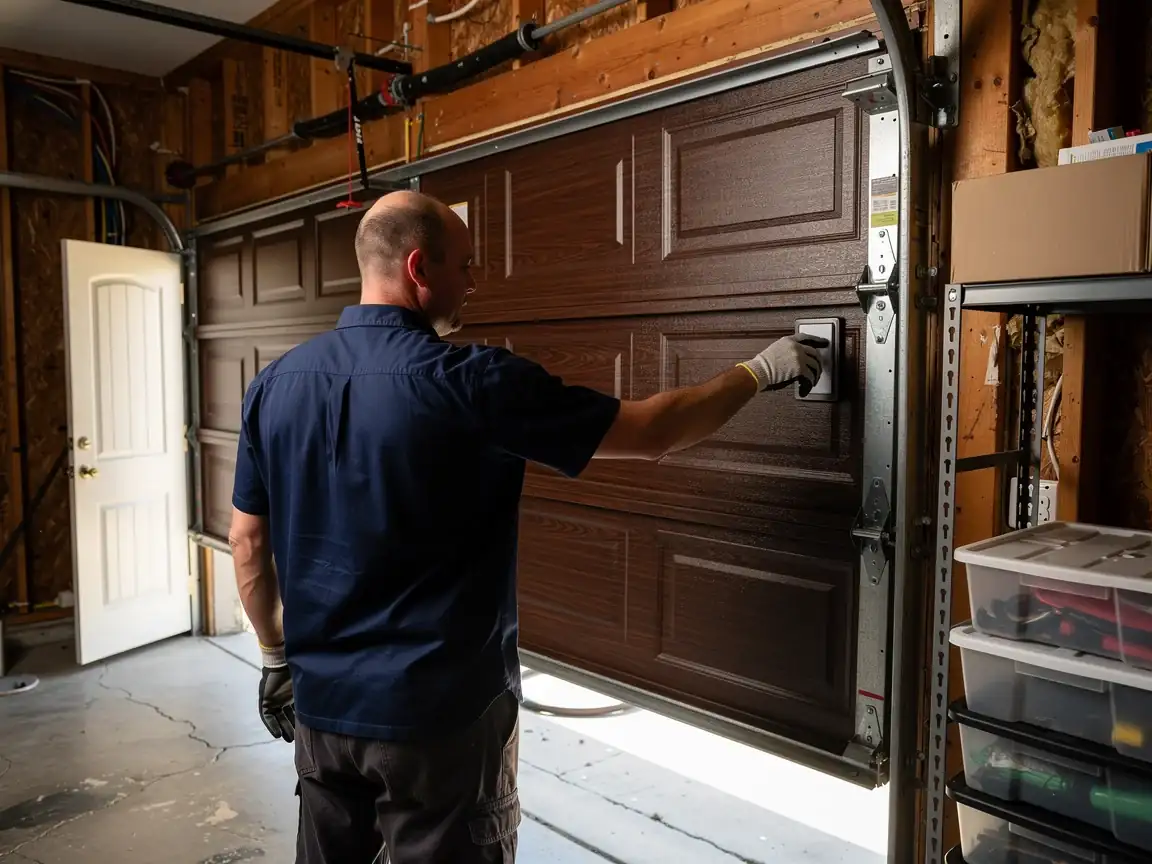
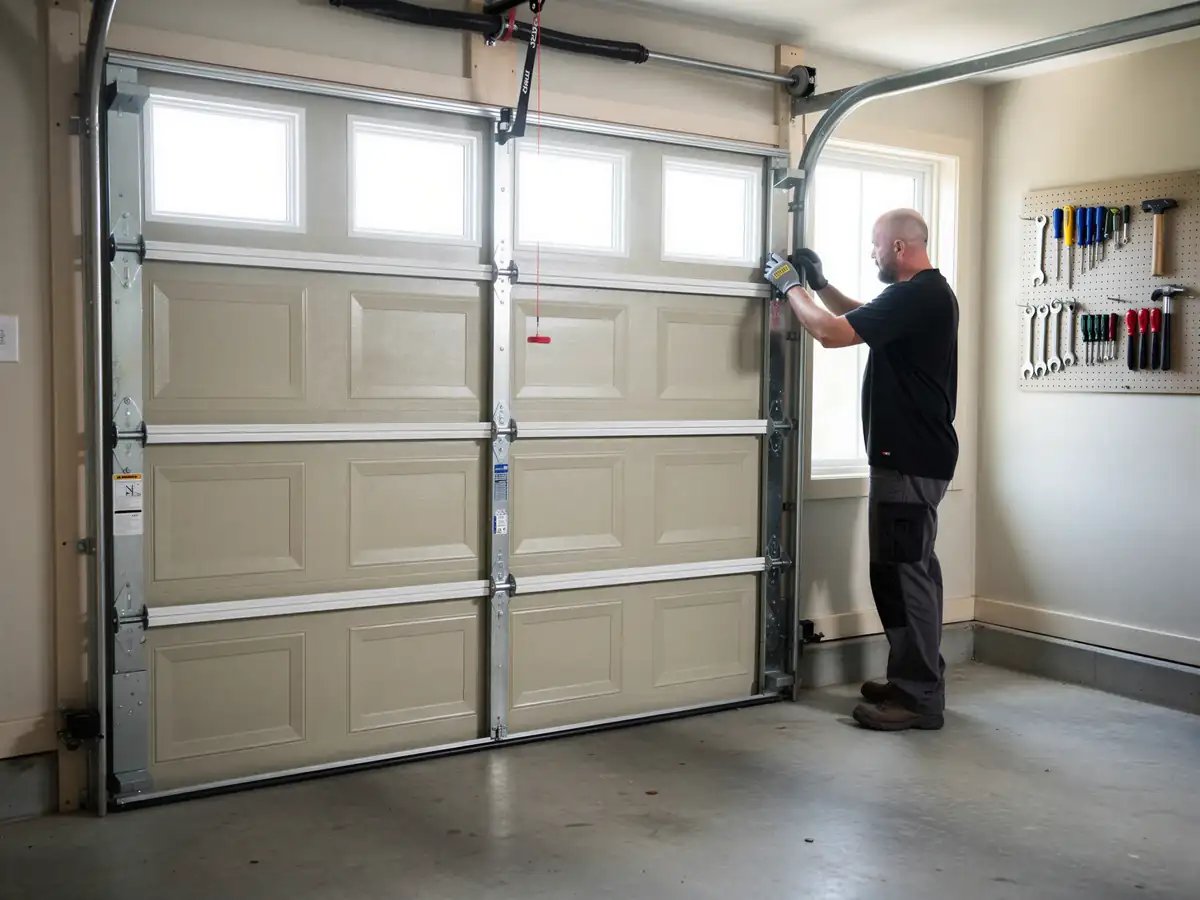
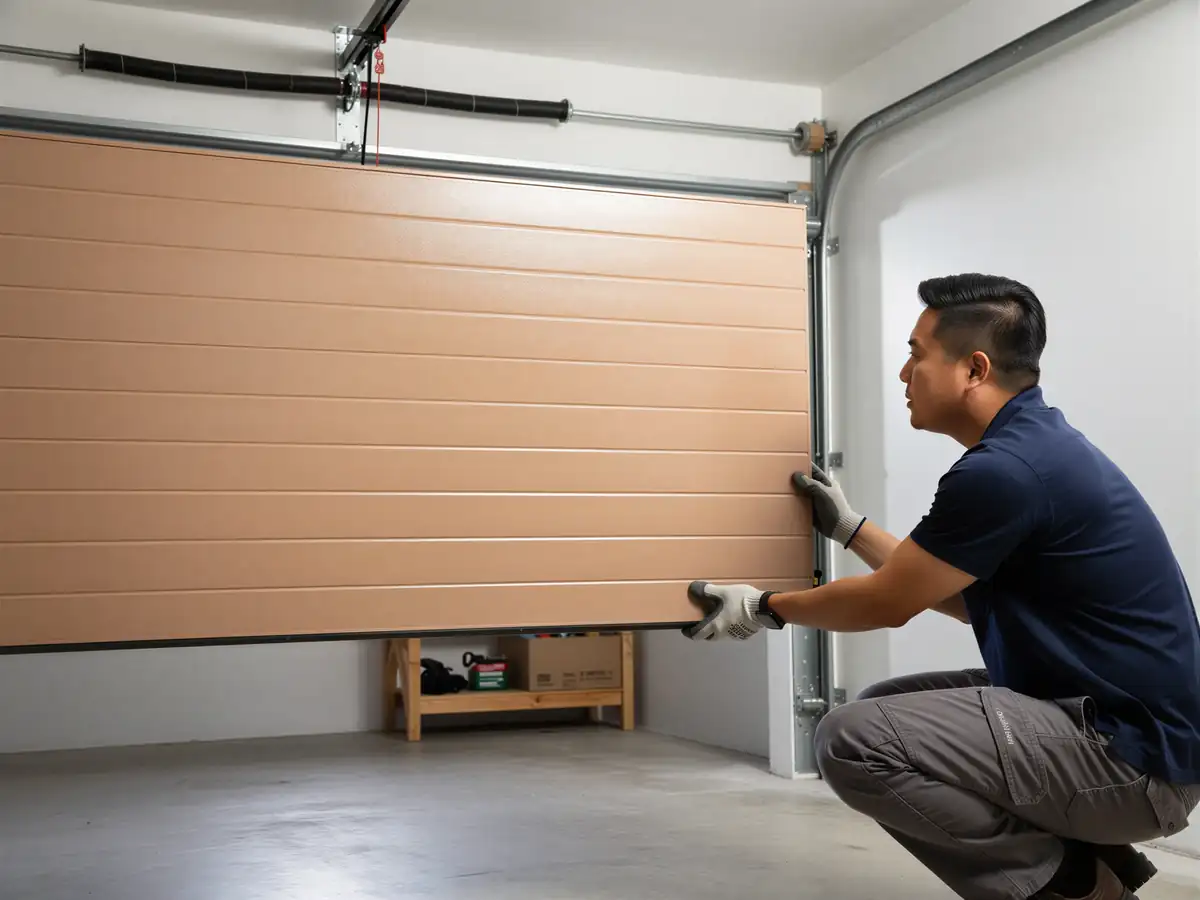
When a door that age comes off track, it's rarely one clean cause. A worn roller finally jumps the rail, or a bent hinge lets the top panel lean a few degrees out of true, or a bracket screw has walked out of softened wood over the years and the track itself has drifted. Add a winter where the service area sits in a cold-severe climate band, and steel contracts enough that a track with even a slight bow will bind a roller that was riding fine all summer. The door looks stuck, or crooked, or it's hanging half out of the frame - all three come from the same family of worn, aging hardware finally giving up at once, not from one dramatic event.
How to Book
We're based in Gainesville, about 9 miles from Bull Run, and we run the truck out for off-track calls rather than keeping a branch in the neighborhood. That means we schedule the trip rather than promising a walk-up response - tell us what you're seeing (door hanging crooked, won't move, cable visibly slack) and we'll get a truck loaded with the right track hardware before it leaves.
Booking through the coverage page gets your address and door details to us ahead of the visit, which matters here: with 2,224 households in Bull Run and most of the housing stock sharing that same late-1980s door era, we'd rather bring the right roller and bracket size the first trip than guess from the road.
Stocked Parts
For doors from this build era we carry the parts that fail most often on steel sectional doors with roller tracks
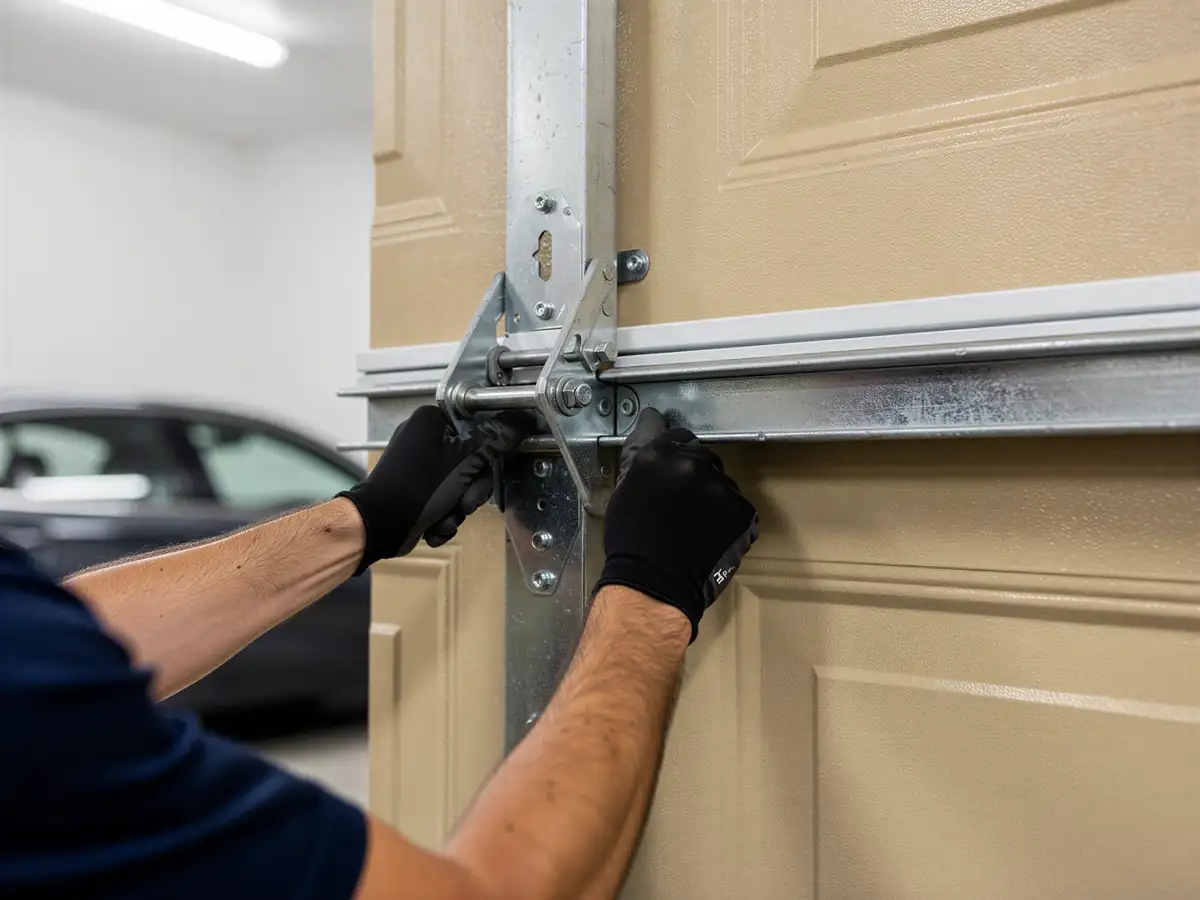
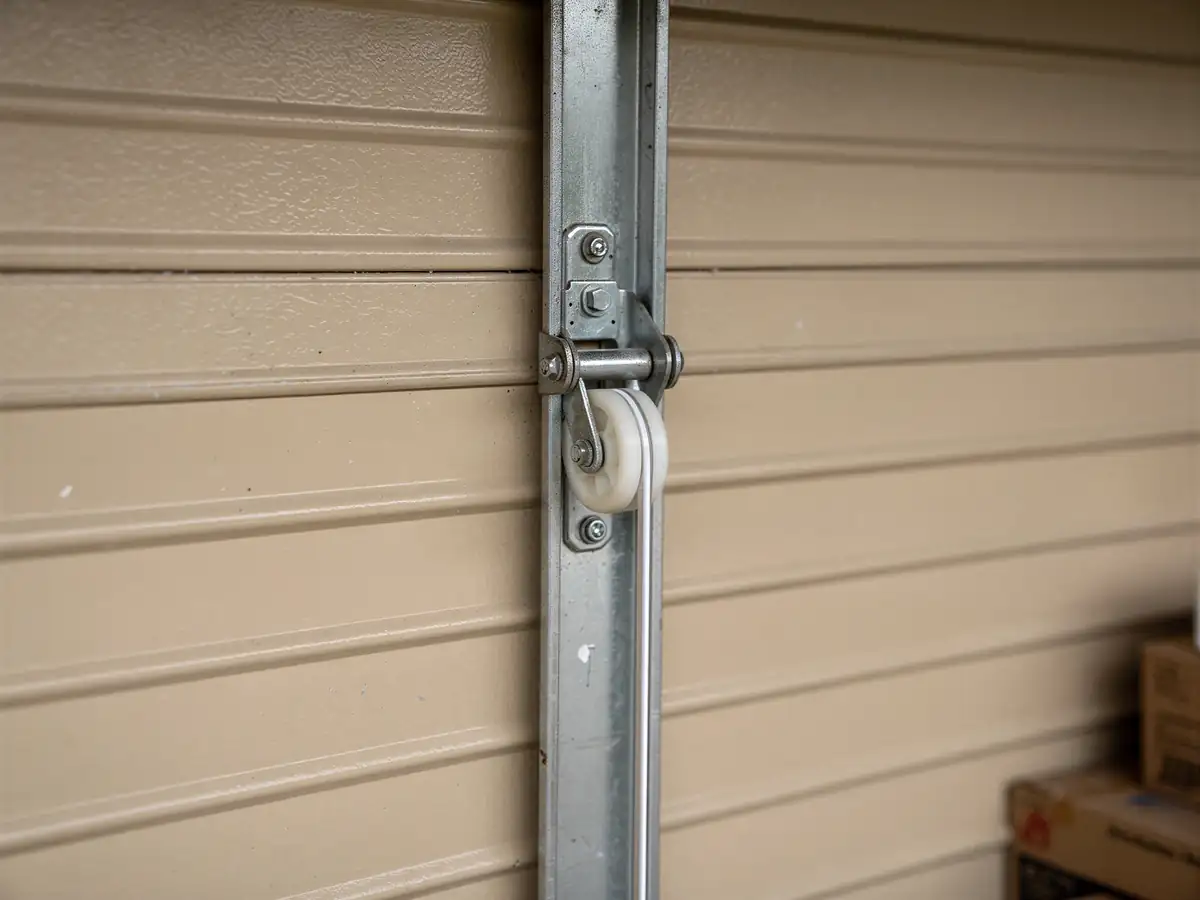
Galvanized track sections in standard 16x7 lengths, nylon and steel rollers, top and intermediate hinges, and the lag screws and jamb brackets that hold track to framing. These cover the bulk of what knocks a late-1980s door off its rail.
What we don't carry on the truck is anything custom-width or a track profile built for an odd-size opening
If your door turns out to be a non-standard width, that part gets special-ordered and the job becomes a two-visit repair instead of one. We'll tell you on site if that's the case rather than after the fact.
What You Are Seeing
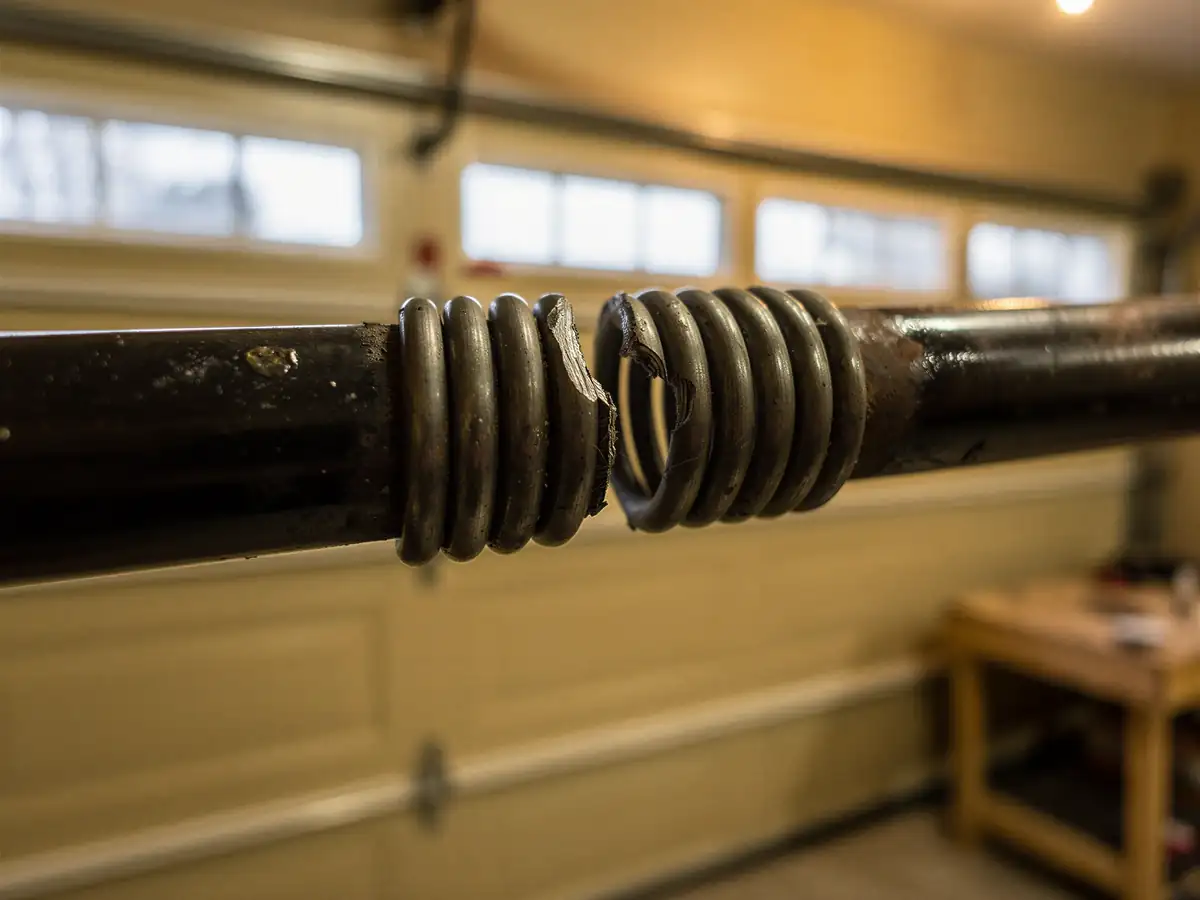
If the door is sitting crooked in the opening, one side has likely come off the track while the other is still riding - that's a bent track or a broken top roller, not a spring problem. If it won't move at all and the cable looks loose on one side, the drum or cable has slipped, which on a door this age usually means the cable itself has started fraying from years of flex. A door that scrapes or binds partway up, especially on a cold morning, often means the steel track has bowed slightly out of plane - exactly the kind of movement a cold-severe climate produces on hardware installed back in the late 1980s and never replaced.
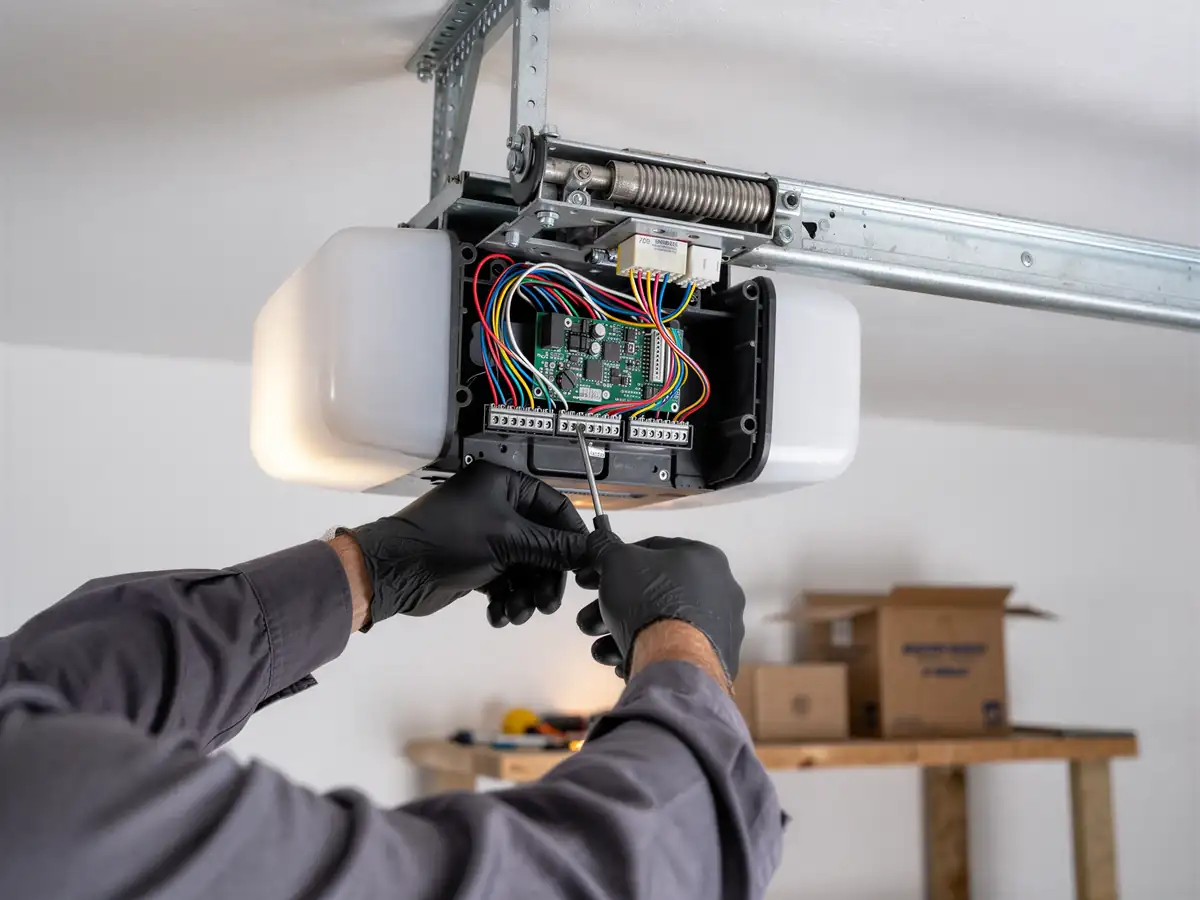
In any of these cases, don't force the opener. Running a motor against a jammed track strips the gears or bends the panel further, turning a $150 bracket fix into a full panel replacement. Disconnect the opener, leave the door where it sits, and call it in.