Why This Fails Locally
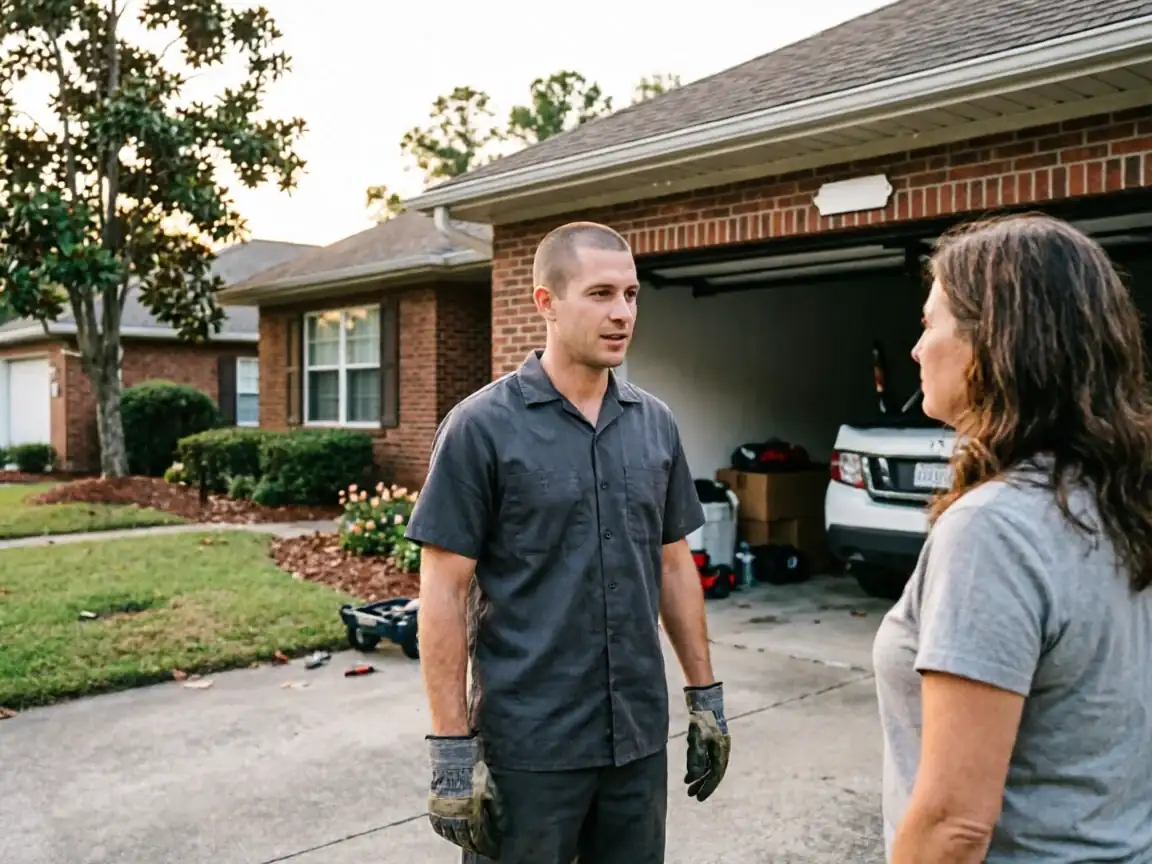
Bealeton sits about 16 miles out from our shop in Gainesville, and that drive shapes how an install here actually runs. We don't schedule a quick in-and-out like we might for a closer street - a new door job means a measurement visit, then an install day, and both have to account for the time on the road. We plan full blocks for Bealeton jobs, not half-hour windows.
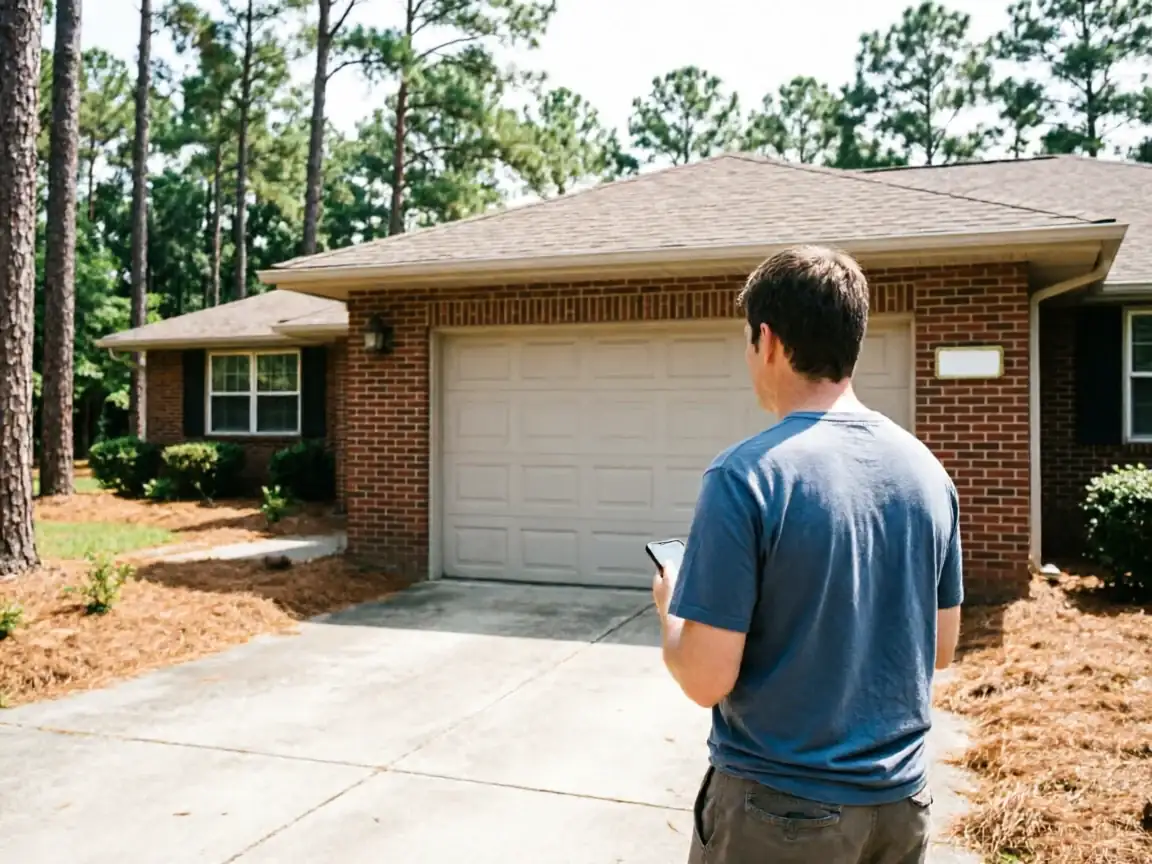
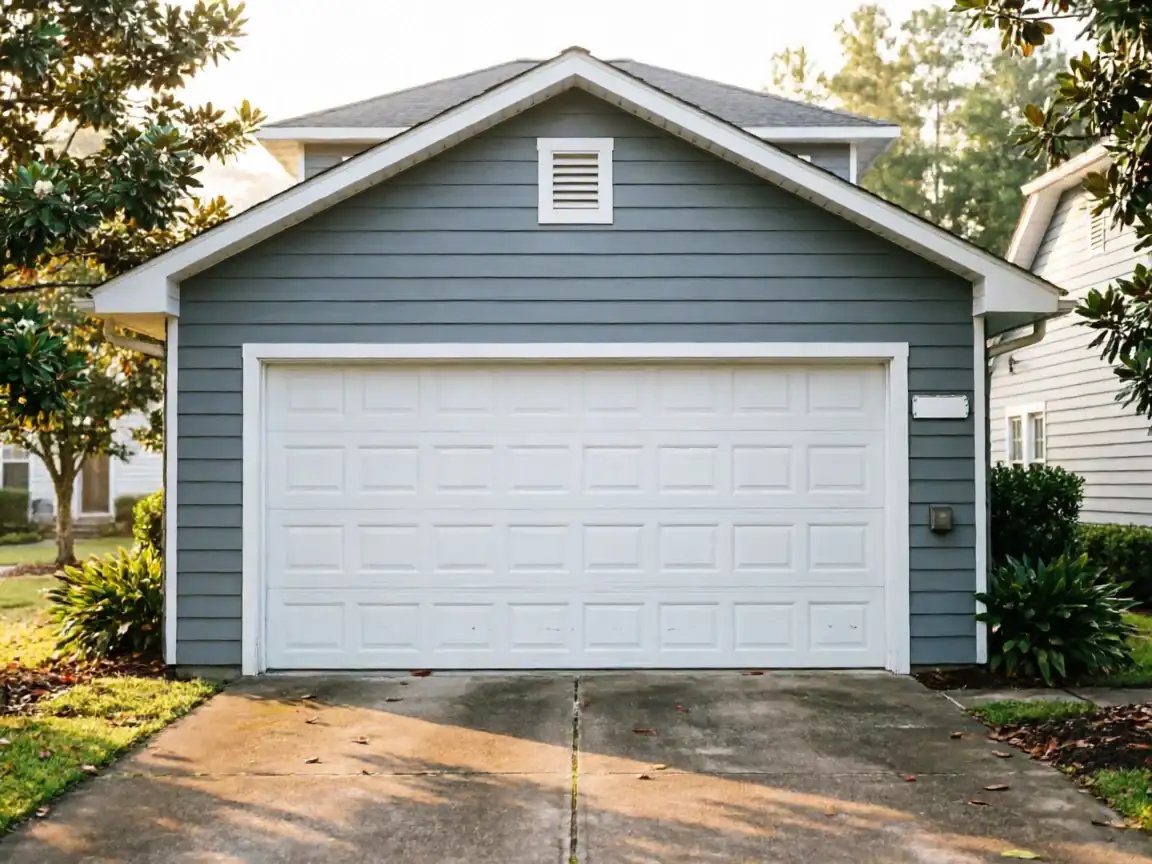
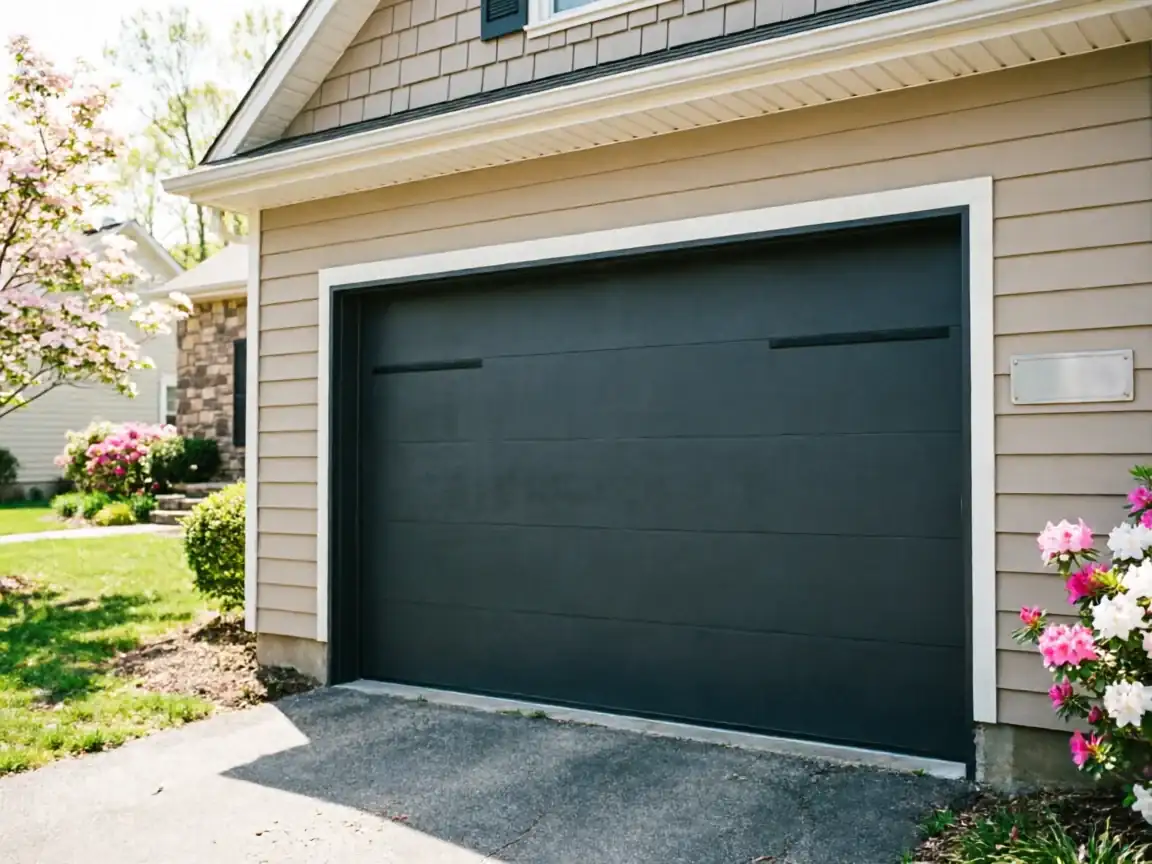
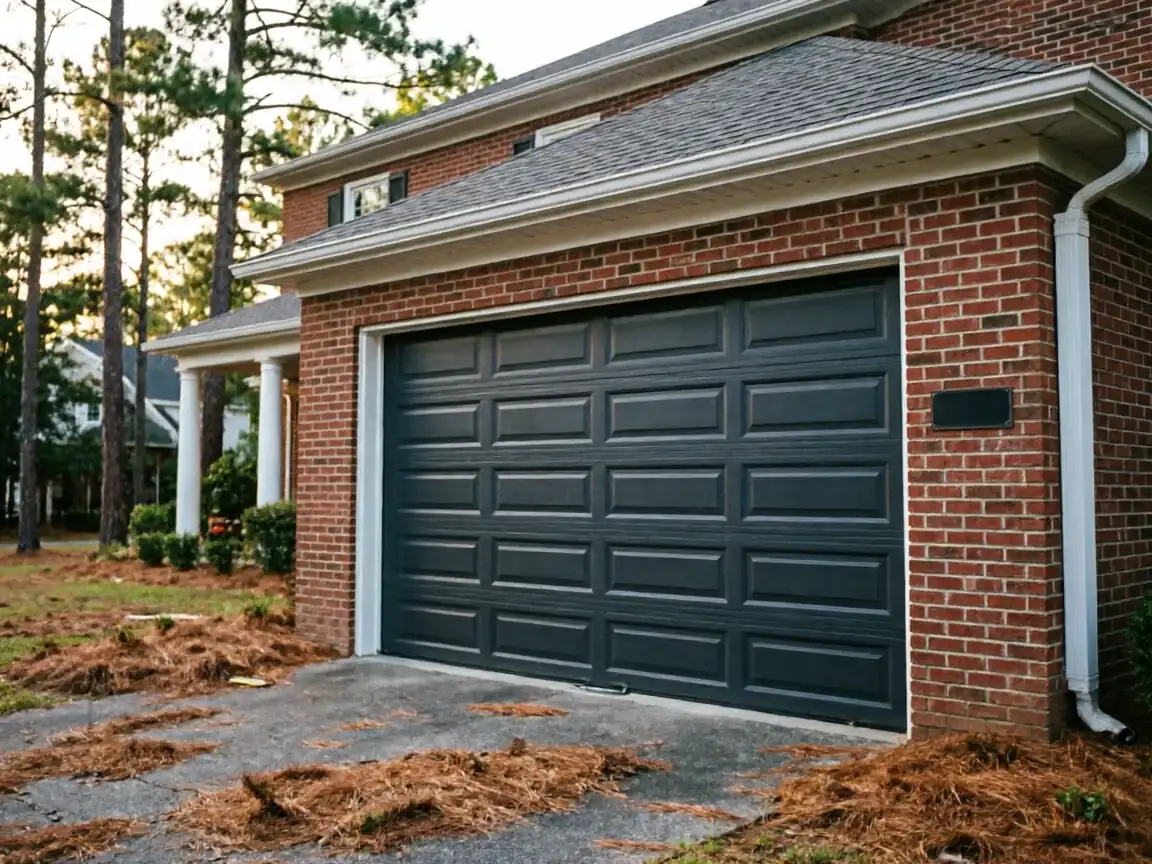
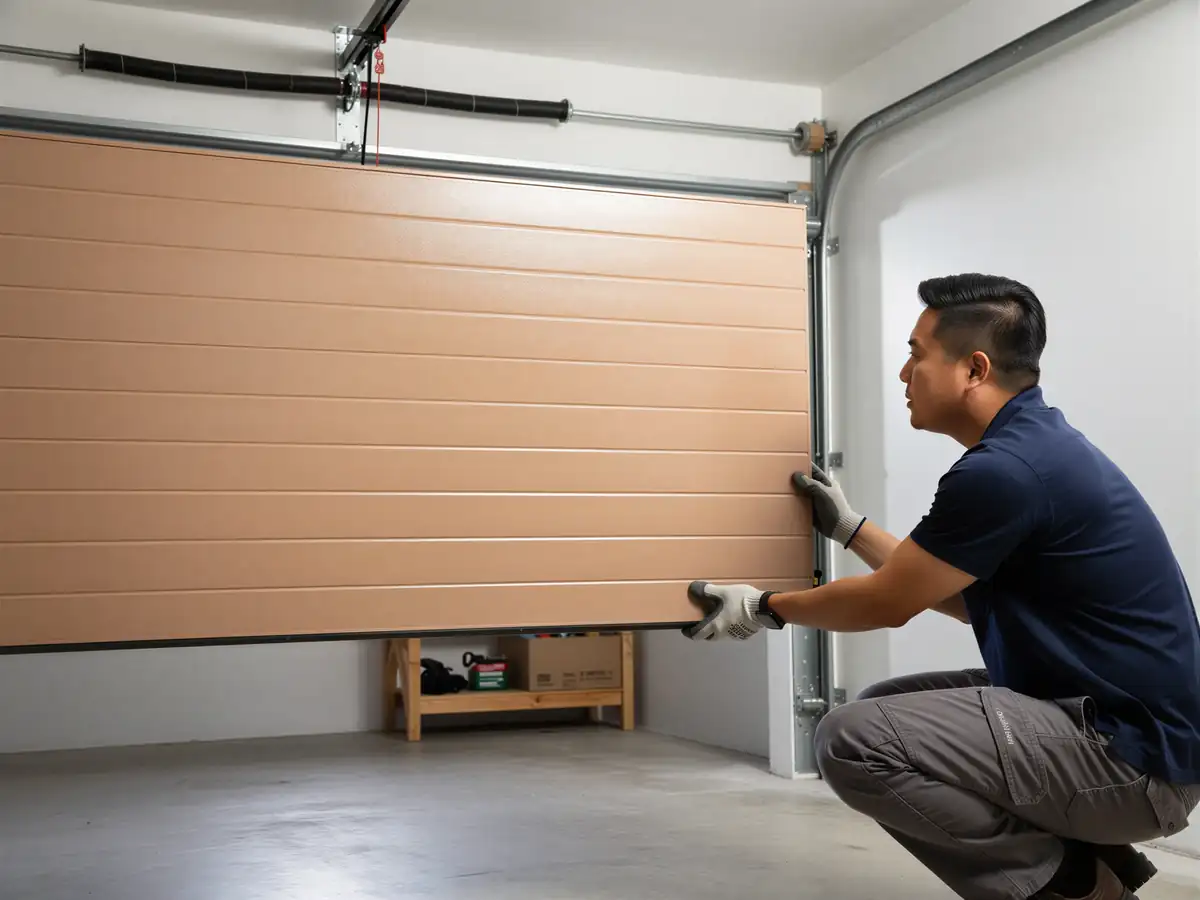
The houses themselves tell a different story than most of the service area. Across our coverage, the typical home dates to around 1982. In Bealeton, the median build year runs closer to 1994 - a decade newer. That matters for installation because builder-grade doors from the mid-90s came in a narrower range of standard sizes, usually matched to attached two-car garages, and the opener mounts and header clearances were built to that era's code, not the older post-and-beam framing you'd find on a 1970s house. When we quote a new door here, we're measuring against 1990s rough openings, not older ones.
With 1,684 households in Bealeton and a median income of $103,365, this isn't a stripped-down market either - most owners here are replacing a tired 30-year-old door with something insulated and quieter, not patching the cheapest option available.
How to Book
Because the job starts with a 16-mile drive, we book Bealeton installs as a single coordinated visit where we can: we'll ask for your door's rough opening width and height, the headroom above the opening, and whether you want insulated panels before we leave Gainesville, so the truck that shows up already has the right door section on board instead of a second trip to re-measure.
If you're not sure of your measurements, that's fine - we'll take them on the first visit and come back for the install once the door's ordered. What we try to avoid is two separate trips for something that could've been one, since the drive time adds real cost to a job either way.
Check our coverage page for Bealeton to confirm we're running your area that week, then call to set the visit. We'll ask what's wrong with the current door or opener up front so we're not guessing at parts when we arrive.
The Complications
This region sits in a severe cold climate band
And that affects what we recommend for a new door more than most owners expect. A single-layer steel door with no insulation - common on houses built in the early-to-mid 1990s, which is most of Bealeton's housing stock - loses heat fast and tends to sweat on the inside face in deep cold, which rusts out the bottom panel and the hinges from the inside over years.
The other complication is weight
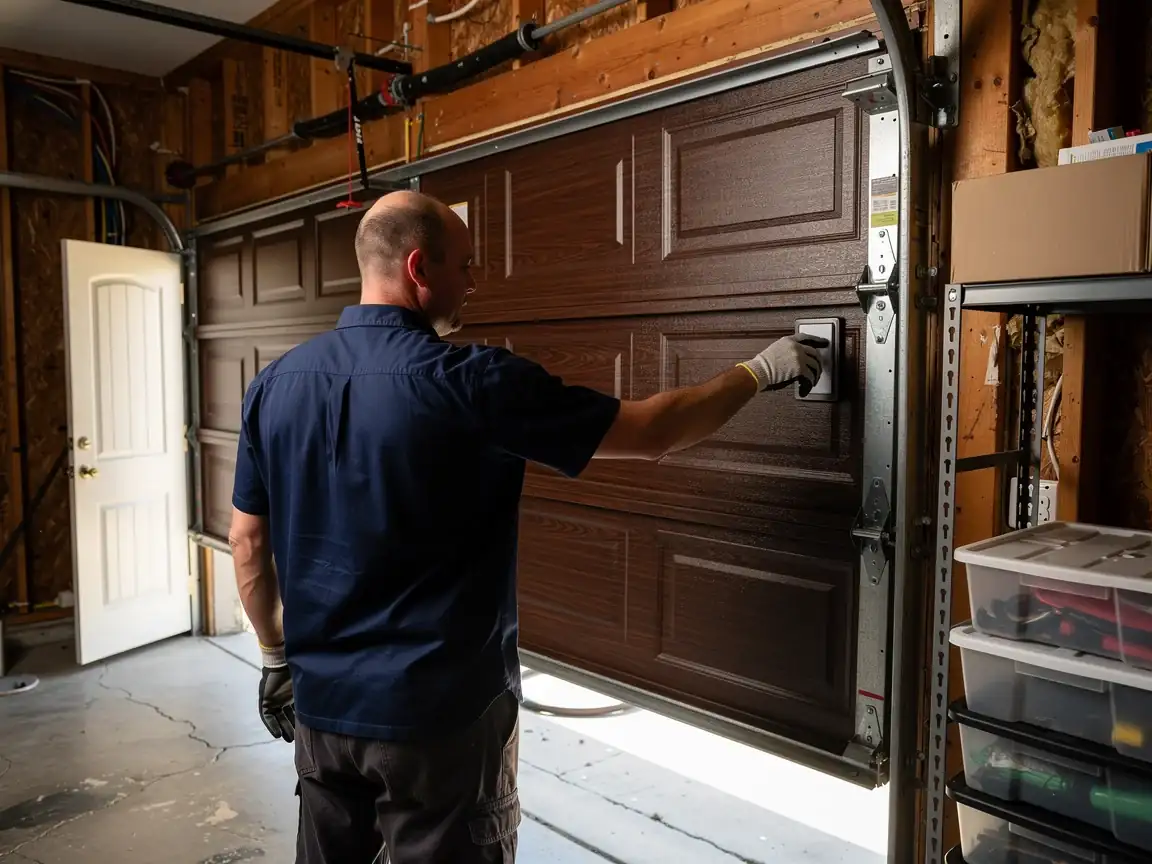
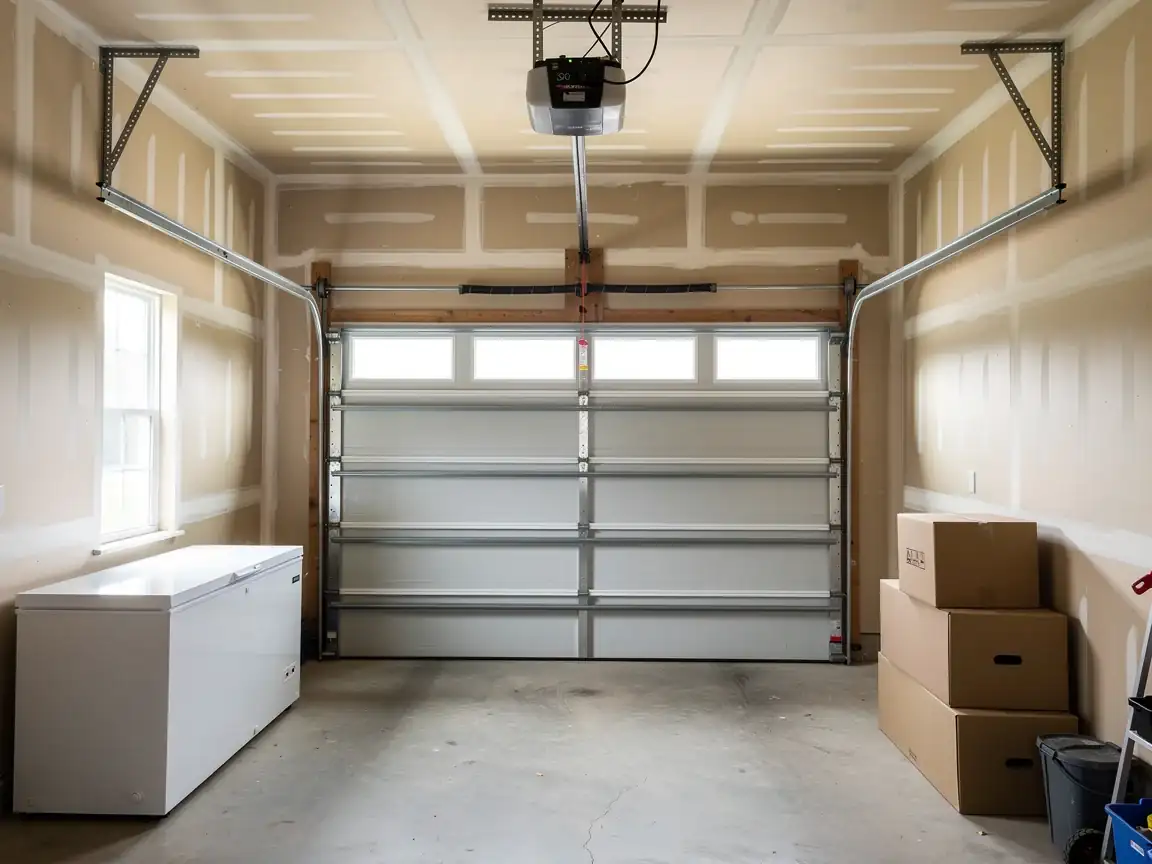
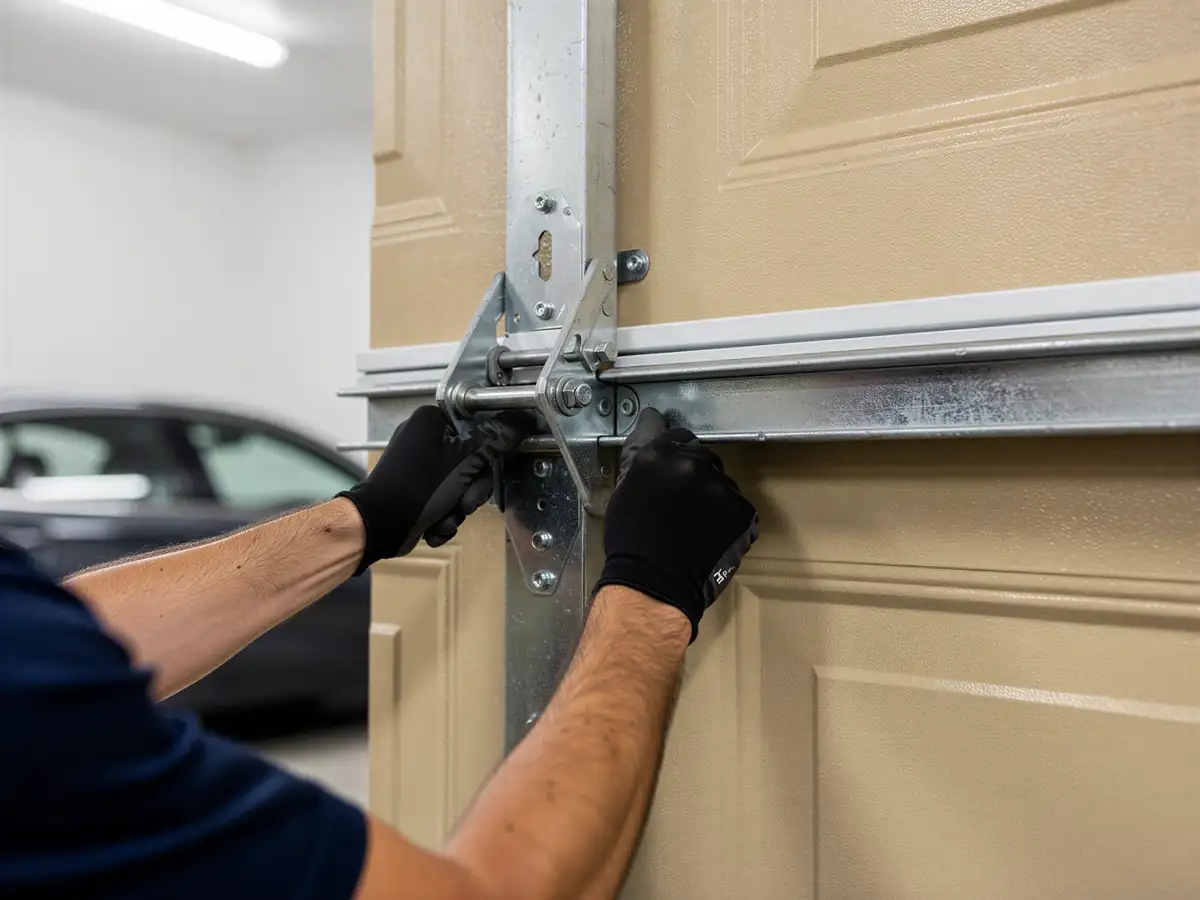
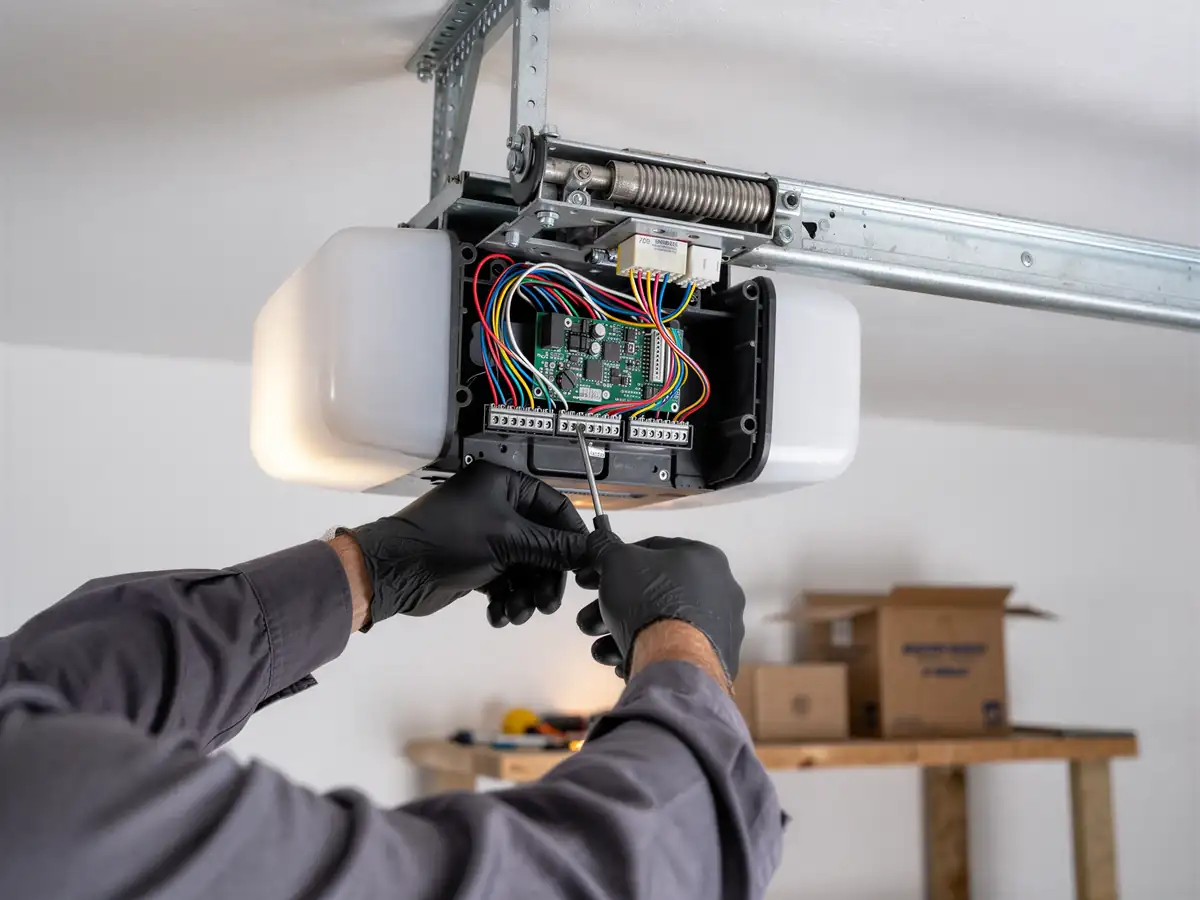
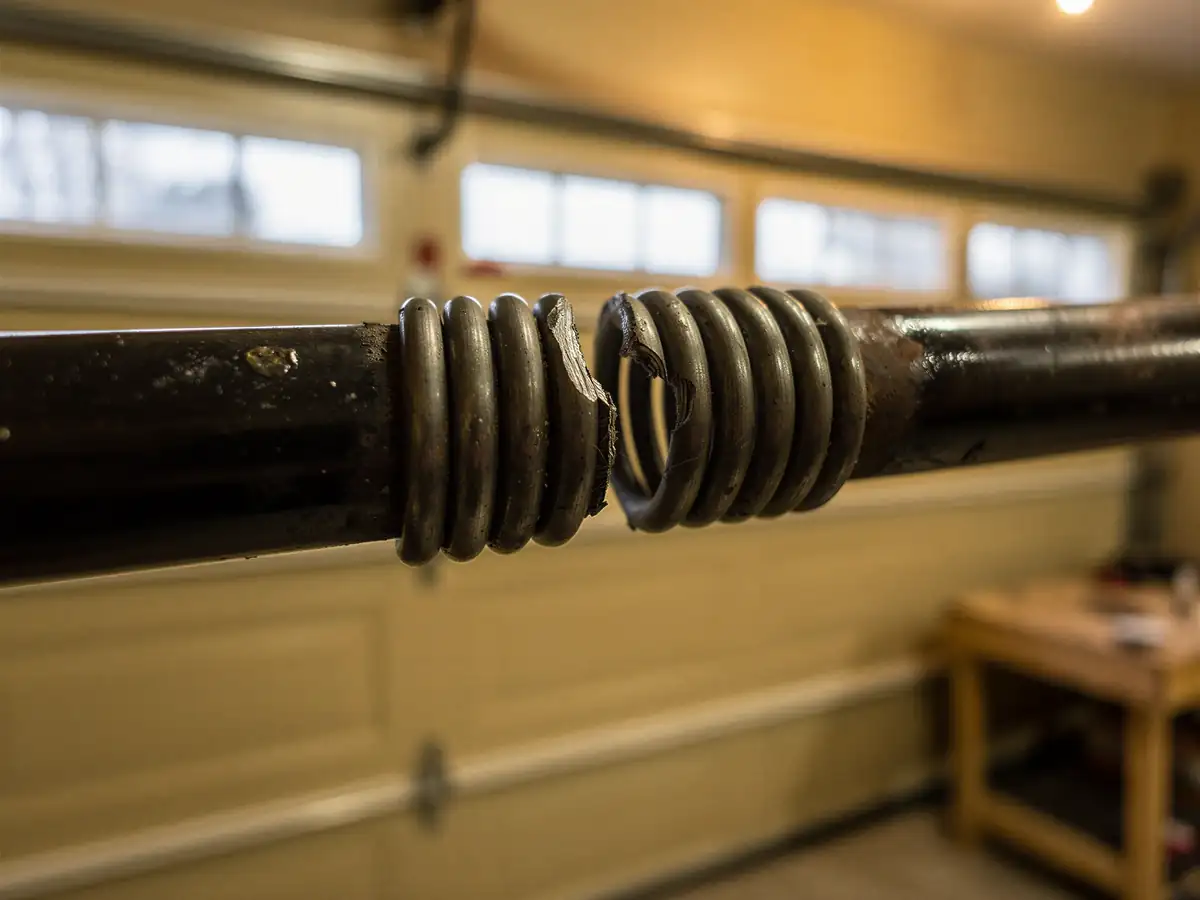
A 1990s-era door was usually matched to a torsion spring sized for that door's original weight. Swap in a heavier insulated door without re-rating the spring, and the opener strains on every cycle - it'll open and close, but the gears wear fast and the opener itself fails early. Any new install has to treat the door and the spring as one decision, not two separate ones.
We can't make every job a same-day turnaround given the drive from Gainesville
And we won't pretend otherwise - a new install here is a planned job, not a walk-up fix.
What You Are Seeing
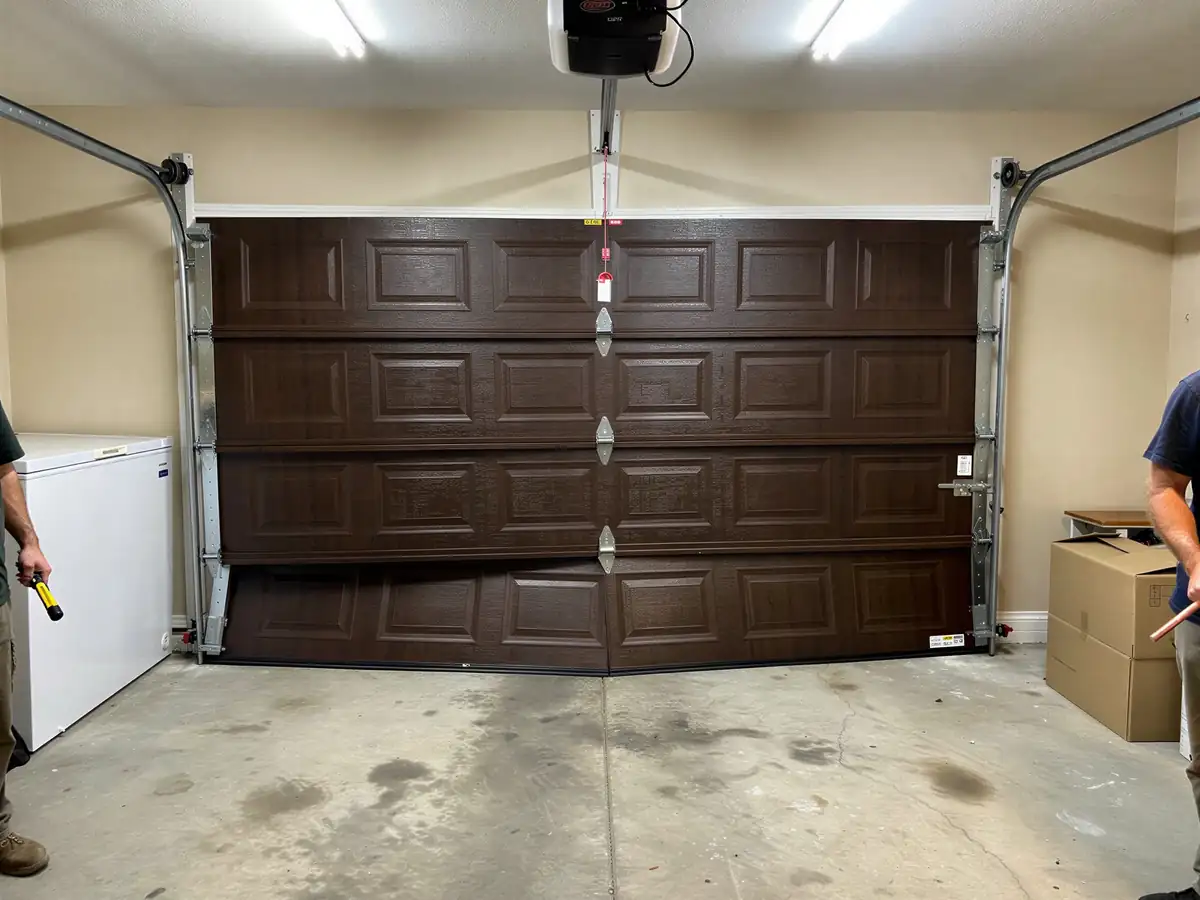
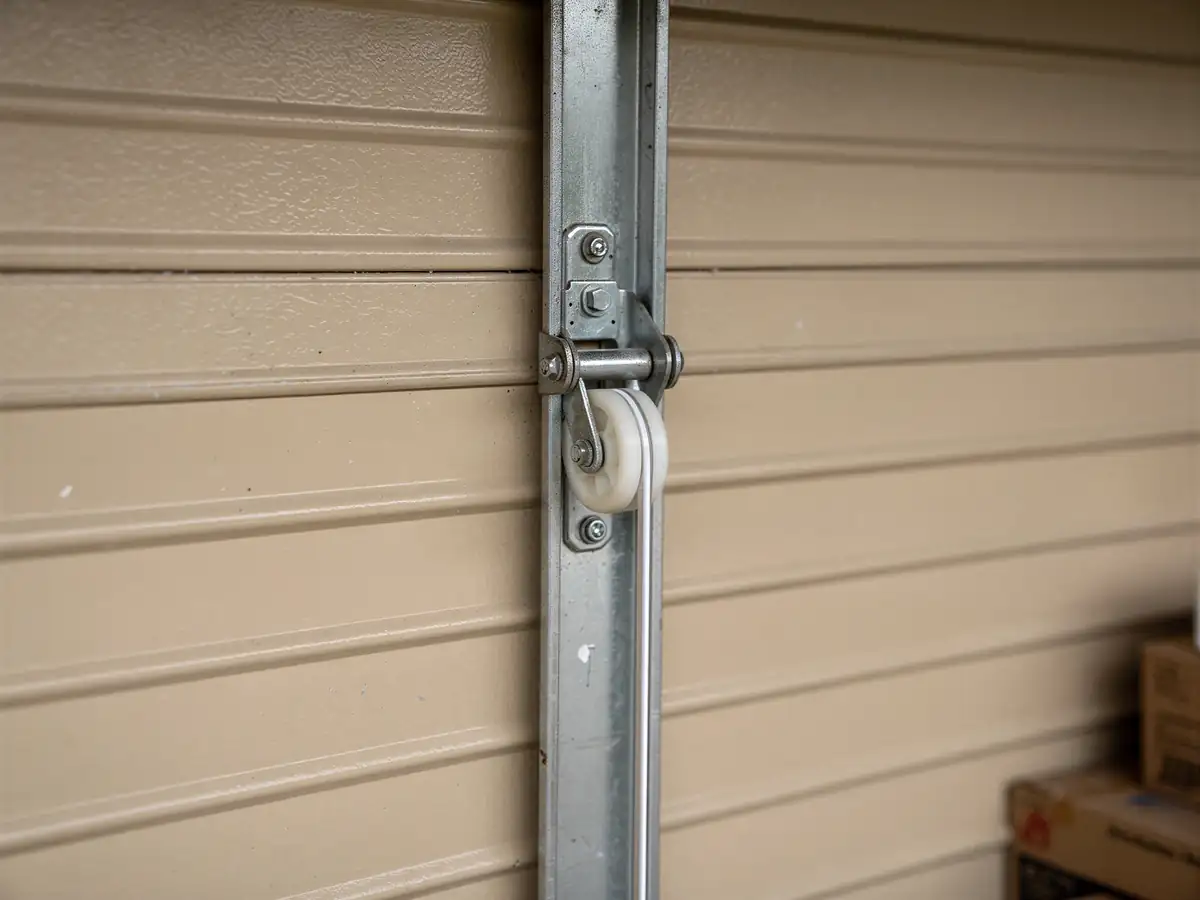
If your Bealeton house was built anywhere near that 1994 median, the door is likely original or a first replacement, and it's showing its age the same way most doors from that build era do: sagging in the middle of the bottom panel, rollers that grind instead of roll, and a bottom seal gone stiff and cracked from winters in a severe cold band.
Some owners see the door start slow on cold mornings and assume the opener's dying - often it's the torsion spring losing tension as steel fatigues with age, and the opener is just struggling to compensate. Others notice daylight at the bottom corners even with the door shut, which on a 1990s steel door usually means the track's bent slightly out of plane rather than the door being the wrong size.
None of this means the opener or the hardware is bad - it means the door it was built for is at the end of its run, and in a market where most homes are closing in on 30 years old, that's a normal point to be replacing rather than patching.
Stocked Parts
We carry common torsion springs, standard rollers, and the opener models we install most on the truck, which covers the bulk of Bealeton calls without a return trip. Where this gets harder is odd or discontinued door widths - some 1990s builder doors used sizes that aren't standard stock anymore, and if your opening falls outside the common range, the replacement door panel has to be special-ordered, which adds lead time we can't shorten by driving faster.
We'll tell you straight if your job needs an ordered part rather than something off the truck - better to know that at the quote than to have a crew standing in your driveway waiting on a panel that isn't coming today.